Great Egret
Ardea alba · Herons & egrets
Great Egret in flight
Staten Island, 5 July 2026
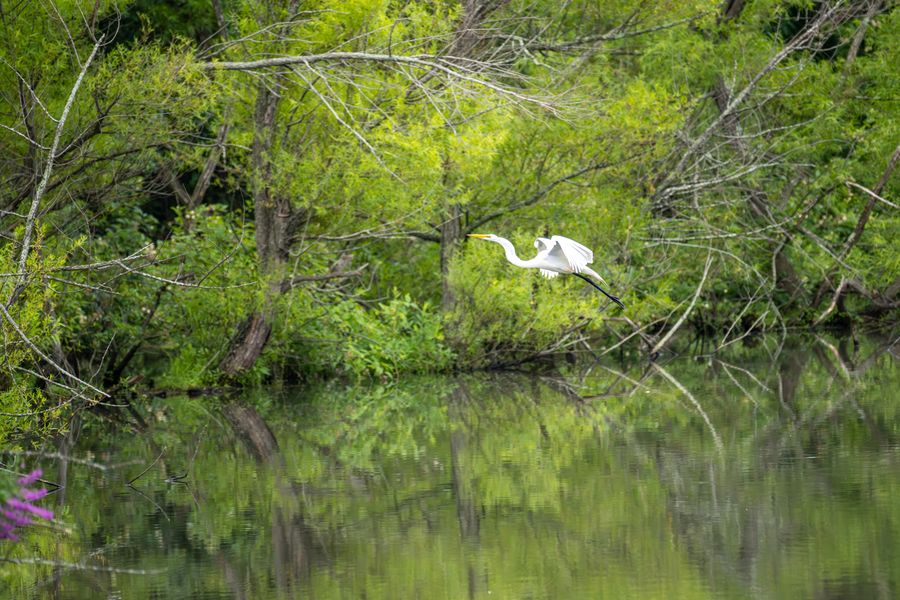
A Great Egret over a pond on Staten Island in July, one of the harbour's breeding birds on its way between the roost islands and a feeding pond. Great Egrets nest in colonies on the small islands of New York harbour and fish every park pond in the city.
The yellow bill and black legs separate it from the smaller Snowy Egret, which reverses both colours. Egrets were hunted almost to disappearance around 1900 for their breeding plumes, and the outrage helped found the National Audubon Society - worth remembering looking at a bird now common enough to be unremarkable over a pond like this.
Great Egret swallowing a fish
Prospect Park, 25 May 2026
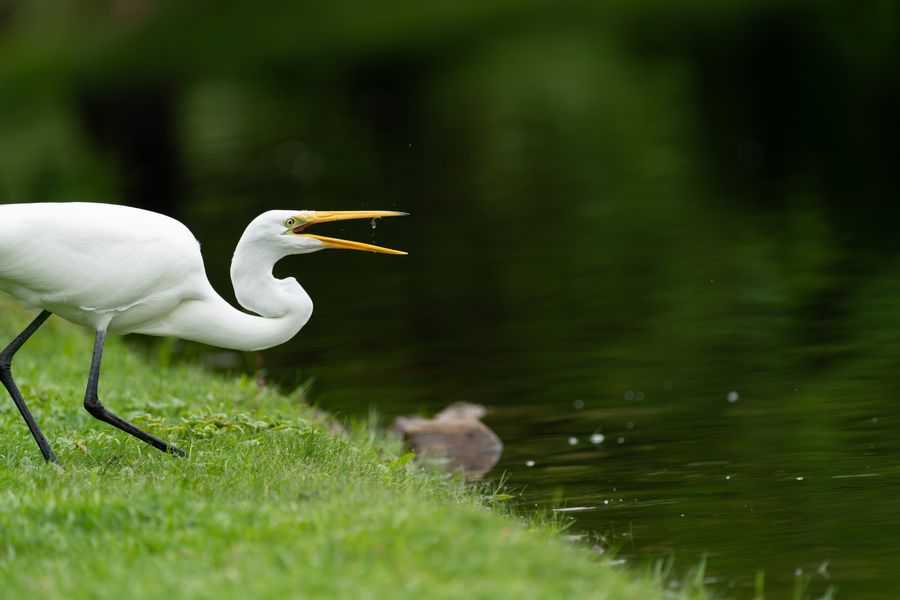
A Great Egret on Prospect Park Lake with a fish already flipped head-first before going down. Great Egrets fish the city's park lakes through the summer and roost on the harbour islands, and a lake with sunfish in it is a reliable place to find one.
Herons have no teeth and don't chew, so a fish has to be positioned so its scales and fins fold the right way to slide down the throat rather than catch on the way. A fumbled catch is often tossed and re-caught several times in the air before the bird is satisfied with the angle.
Great Egret stalking the shallows
Prospect Park, 25 May 2026
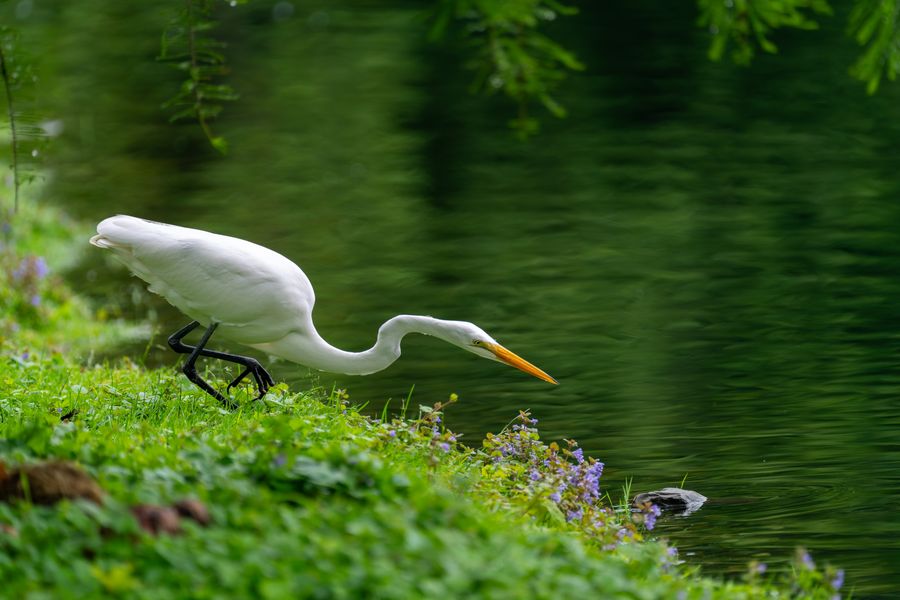
A Great Egret working the waterline of Prospect Park Lake in late May at a deliberate, almost frame-by-frame walk. Great Egrets nest in colonies on the harbour islands and fish every park lake in the city through the summer.
The strike, when it comes, is essentially a spring uncoiling: the S-curve permanently held in a heron's neck lets it snap the head forward far faster than a simple muscular lunge could manage, covering the last foot or so to the prey in a fraction of a second. The all-yellow bill and black legs separate it from the smaller Snowy Egret, and in late May the green skin between bill and eye is a sign of breeding.
Great and Snowy Egrets
Everglades National Park, 6 February 2026
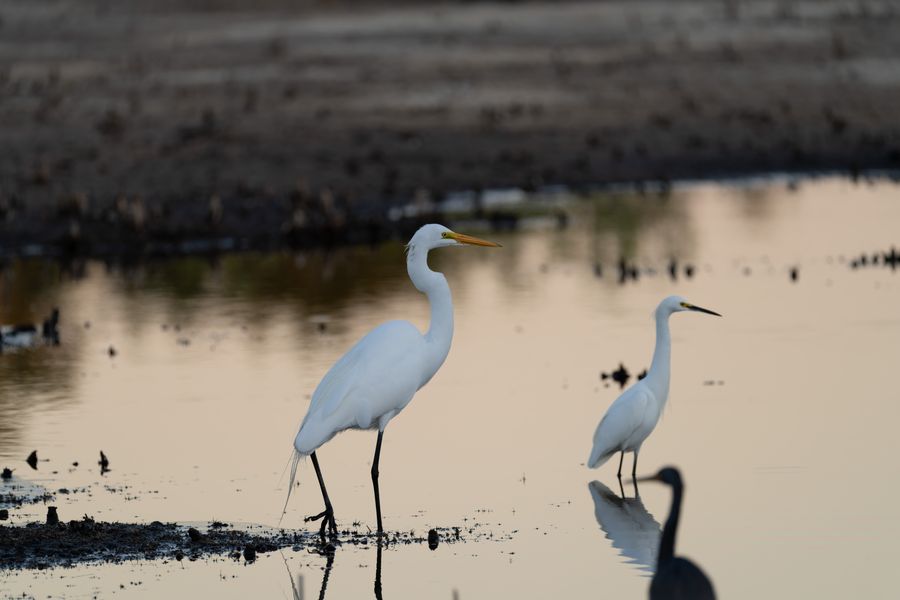
A Great Egret in front and a Snowy Egret behind, noticeably smaller, in the Everglades in February. The two share the shallows across the whole of the American South, and side by side the difference is obvious, even though both are white, long-necked birds easily confused at a distance.
The Snowy is the one with the black bill and black legs ending abruptly in bright yellow feet, a combination sometimes described as golden slippers. The Great has a yellow bill and black feet, and stands a foot taller.
Egret and lagoon
Everglades National Park, 6 February 2026
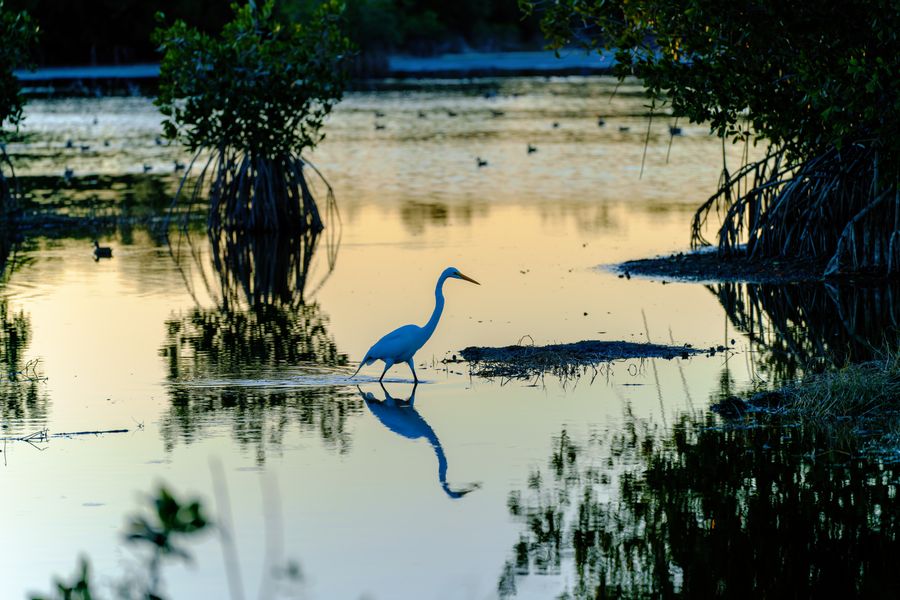
A Great Egret working the near edge of a mangrove-lined lagoon in the Everglades at dusk, its reflection complete in still water, with a raft of small waterfowl too distant to identify out on the open water behind. Great Egrets fish the shallows across the South, and this lagoon is the kind of water they were nearly hunted out of.
The Everglades were the centre of the plume trade that nearly wiped this species out around 1900 - the breeding plumes fetched more than gold by weight - and the campaign to stop it produced both the National Audubon Society and, eventually, the park itself. The egret is the society's emblem.
Great Egret at dusk
Everglades National Park, 6 February 2026
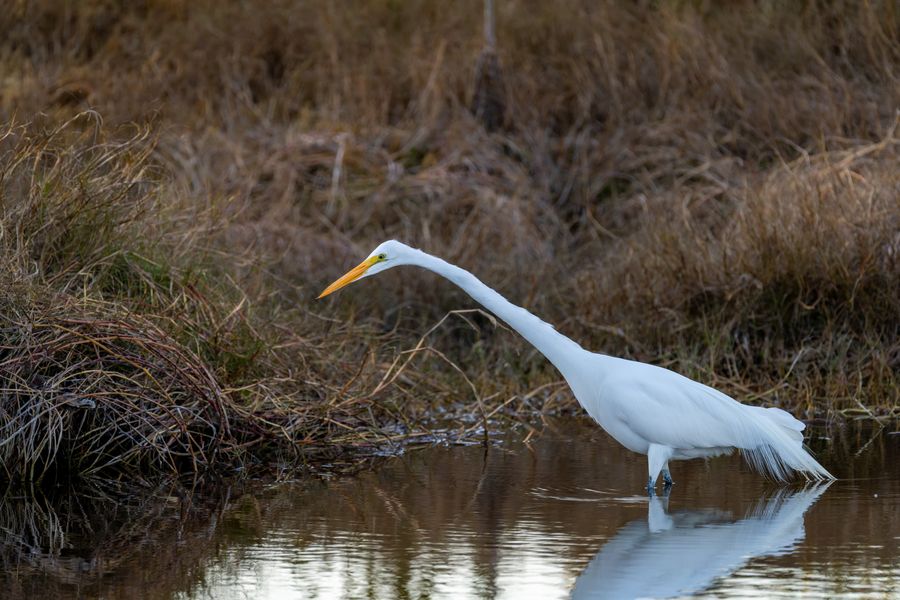
A Great Egret at dusk in the Everglades, the largest of the white egrets in North America and one that very nearly wasn't. It fishes the shallows across the whole of the South, and the Everglades rookeries were the centre of the plume trade that nearly ended it.
Plume hunters supplying the hat trade brought the species close to extirpation in the United States by the early 1900s, killing breeding adults for the long plumes grown only in that season and leaving chicks to starve in the nest. The outrage over the killing helped found the National Audubon Society, whose symbol the bird has been ever since.
Great Egret, breeding plumage
Everglades National Park, 6 February 2026
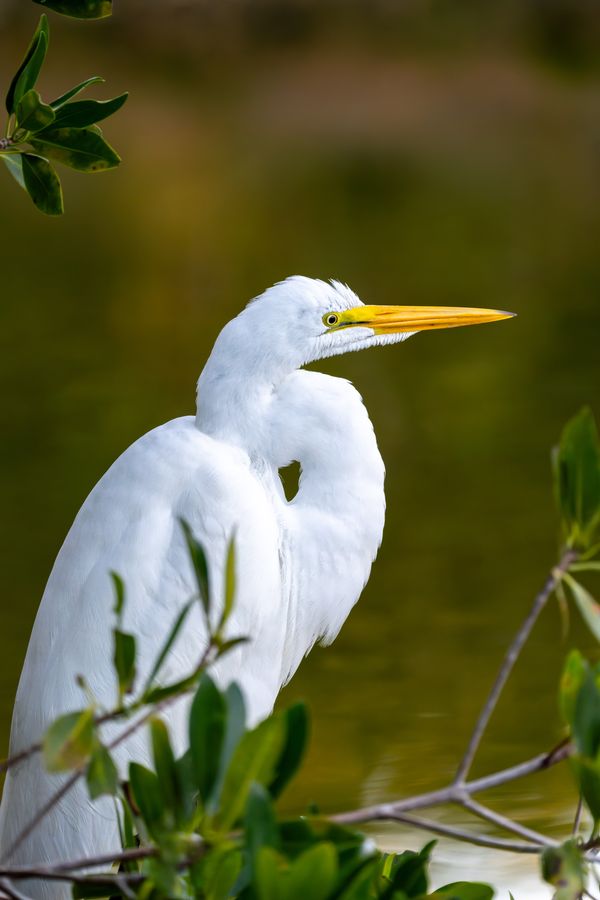
A Great Egret in breeding plumage in the Everglades in February, the loose, lacy plumes along the back on show. Great Egrets nest in colonies in the mangroves here and fish the shallows all round them, and the Everglades rookeries were where the species made its last stand a century ago.
The plumes are the aigrettes that very nearly finished the species off. They are grown only in breeding season, and useful to the bird only as a courtship display, which made the timing of the plume hunt especially costly: adults shot for their feathers in spring left that year's chicks in the nest to starve.
Great Egret at the mangrove edge
Everglades National Park, 6 February 2026
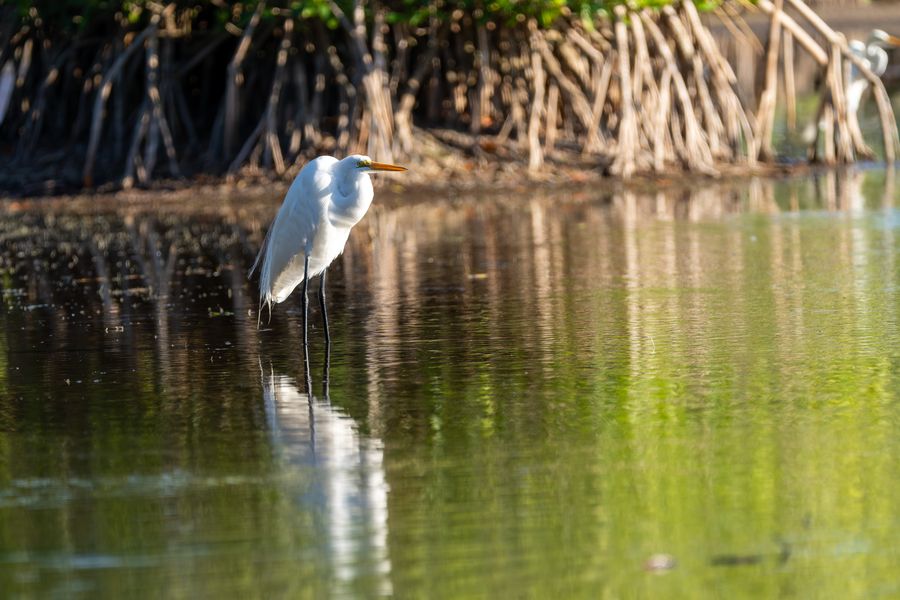
A Great Egret working the mangrove prop roots at the edge of a channel in the Everglades. Great Egrets fish every kind of shallow water across the South, and the mangrove edge is a particularly good one: the roots trap small fish and crustaceans against the tide, which is presumably what this bird was after rather than the open water beyond.
The roots are the mangrove's own answer to mud with no oxygen in it. They breathe through pores above the waterline, and the tangle they make is the nursery for most of the fish on the reef.
Great Egret wading
Everglades National Park, 6 February 2026
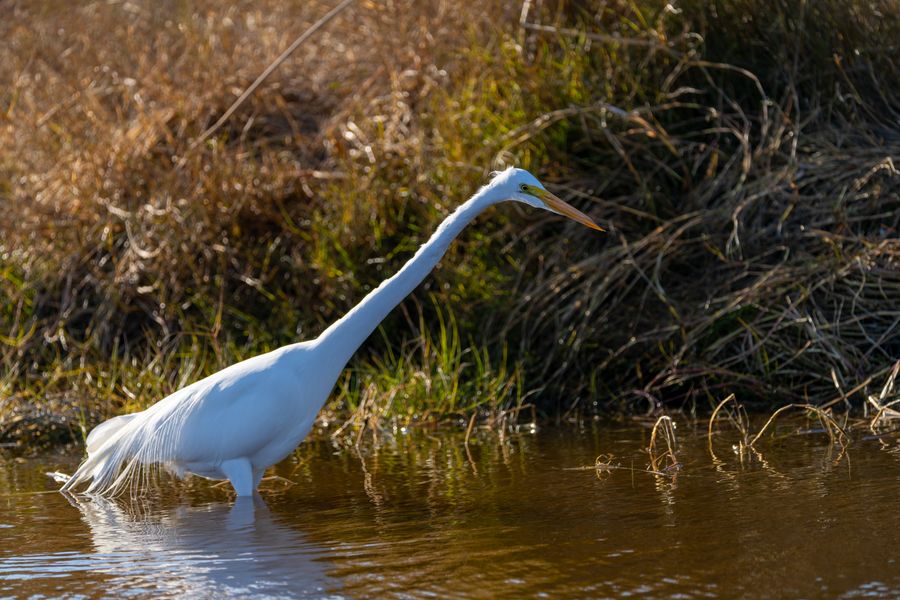
A Great Egret in the classic hunting posture in the Everglades in February, neck extended low and level over the water, weight forward, ready to unfold into a strike. It is the big white heron of the shallows across the American South, and the Everglades sloughs are where it made its last stand a century ago.
The species will stand motionless like this for long minutes at a stretch, which is part of why it made such an efficient target for plume hunters. A still bird is an easy one.
Great Egret, head and neck
Everglades National Park, 6 February 2026
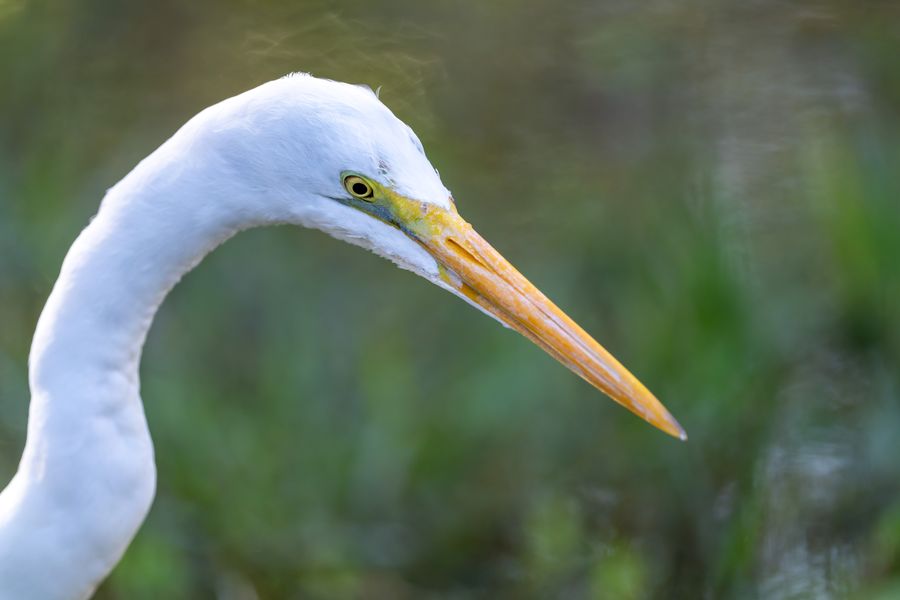
A Great Egret head and neck in the Everglades in February, in breeding condition. Great Egrets fish the shallows of every kind of water across the American South and the Everglades is the heart of their range, where the plume trade nearly finished them.
The bare skin between the bill and the eye, the lores, has deepened to a richer green than it shows for most of the year, which alongside the orange-yellow bill and black legs is a reliable seasonal marker for a breeding bird; outside the season the lores are plain yellow. The back-mounted breeding feathers called aigrettes were worth more than their weight in gold to the millinery trade around 1900, and the slaughter of nesting colonies for hat feathers was one of the founding causes of the Audubon movement.
Great White Egret, landing
Dungeness, 20 December 2025
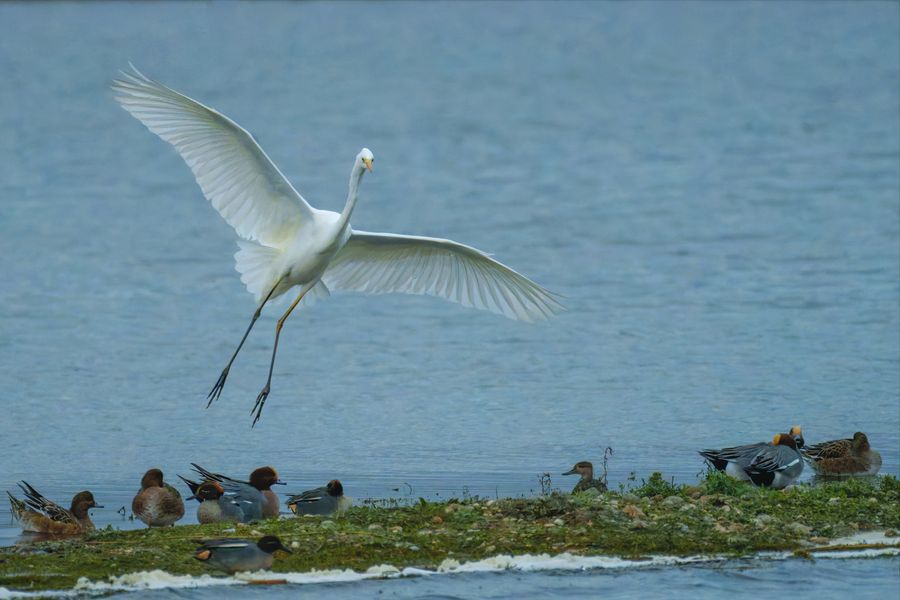
A Great White Egret dropping in on a scrape crowded with teal at Dungeness in December, wings still spread and legs stretched out, the teal unbothered by the arrival. Thirty years ago this would have been a rarity in Kent; the species first bred in Britain in 2012, on the Somerset Levels, and has spread through the southern wetlands since as the climate has warmed.
It is the Great Egret of the Everglades under its British name, at the other side of a range that covers most of the warm world, and the Kent marshes are its newest edge.
Birds, insects, plants and other wildlife, mostly from Brooklyn, with some from further afield.
Every photograph comes with notes on what it is.
Selected
Favourite shots. Filter by subject, or .
Places
Everything, by where it was taken.
Species
Larger catalogue of photos organized by species of animal or plant.
Catalogue
Every photograph, newest first. Narrow it by period, place or species; the three work together.
Updates
Coming soon. Sign up at the bottom of the page for updates.