Tulip
Tulipa sp. · Garden flowers
Pink species tulip
Brooklyn Botanic Garden, 20 April 2025
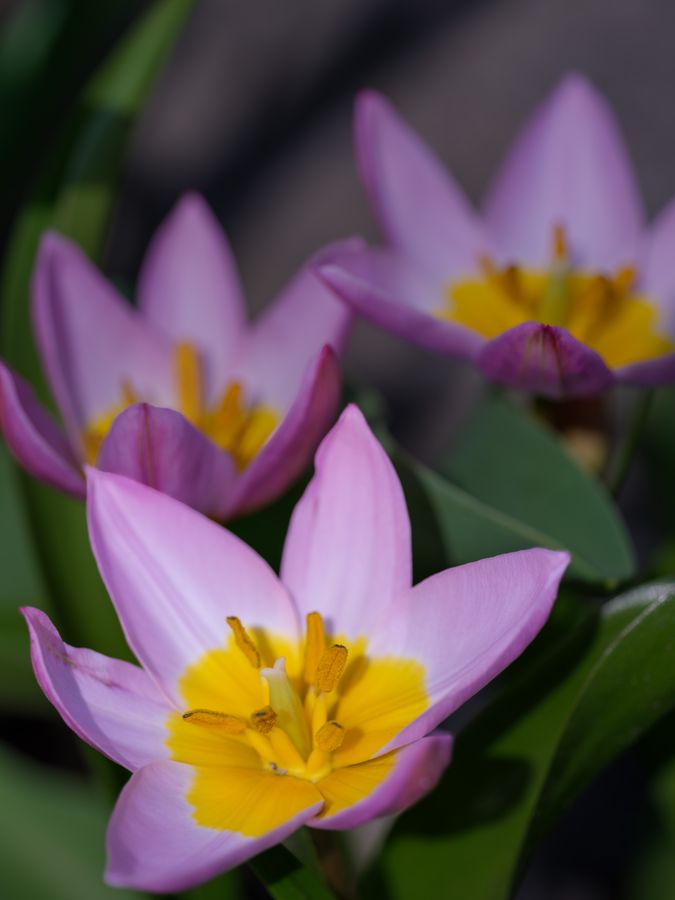
Star-shaped rather than cupped, petals opening flat back to show a bright yellow throat - closer in form to a wild species tulip like Tulipa saxatilis than to the goblet shape most garden tulips keep even fully open.
Saxatilis is the Cretan tulip, growing on rock ledges on the island, and one of the few tulips that spreads by runners underground rather than seed.
Species Tulip
Brooklyn Botanic Garden, 20 April 2025
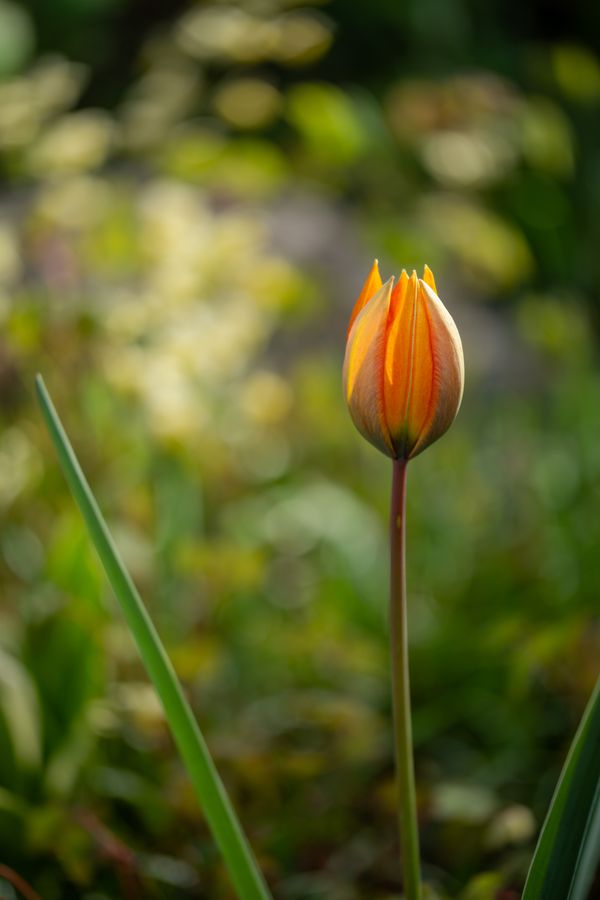
Narrower and more pointed than a garden hybrid, still closed into a slim taper rather than a cup.
Closer in build to the wild tulips of Central Asia that every garden tulip descends from than to the blowsy hybrids nearby. The wild ones grow on the mountain steppes of Kazakhstan and Uzbekistan, and the Turks were breeding them for the Ottoman court a century before the Dutch saw one.
Tulip bud, pink and yellow
Brooklyn Botanic Garden, 20 April 2025
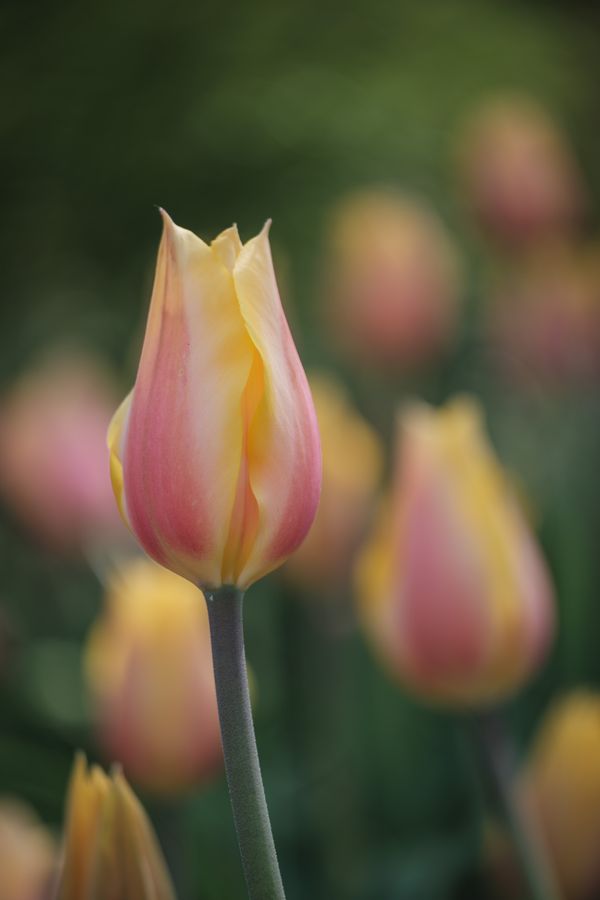
A tulip still fully closed, the petals pink only at their edges over a yellow base. Most bicolour tulips look more like this in bud than they ever will open, when the yellow is pulled to the inside of the cup. What we call the petals are tepals - a tulip has three petals and three sepals that look identical, which is a lily-family habit and the reason the flower is so tidily six-sided.
White among red tulips
Brooklyn Botanic Garden, 20 April 2025
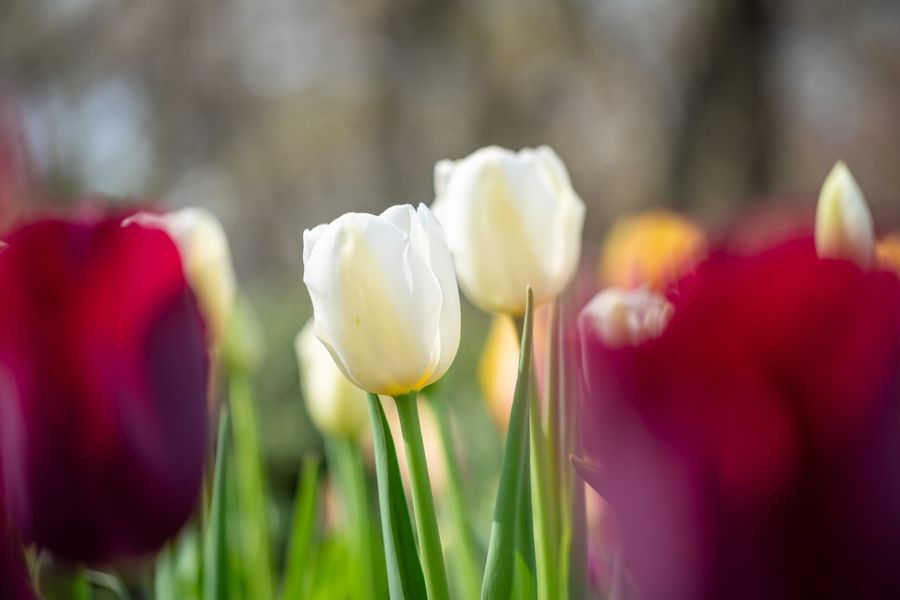
Two white tulips holding the centre of the frame against a wall of deep red neighbours - the kind of block planting a botanic garden does on purpose. Red is the tulip's own colour; the wild species of the Central Asian mountains are mostly red and yellow, and every white, pink and purple one is the work of Dutch and Turkish breeders over four hundred years.
White tulip, backlit
Brooklyn Botanic Garden, 20 April 2025
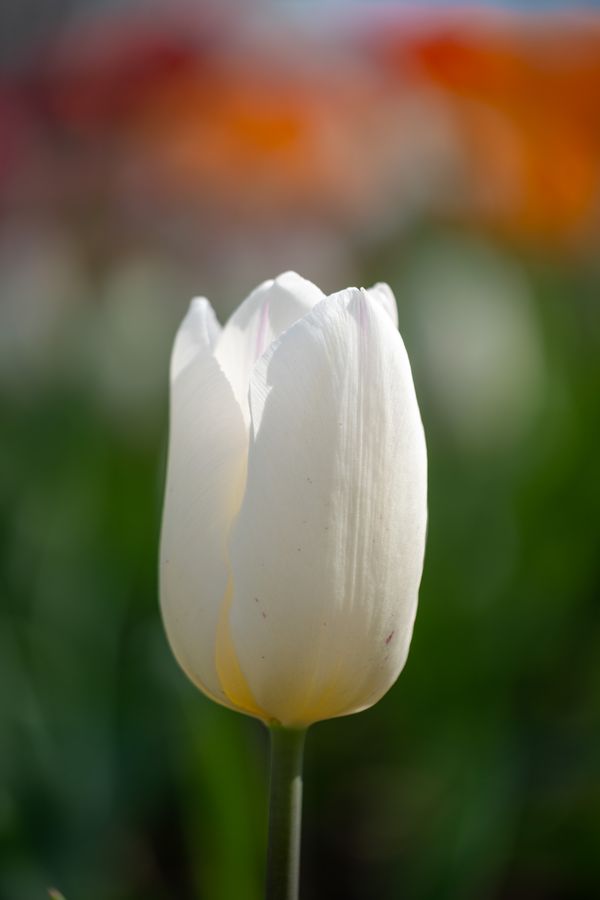
A tulip still closed and lit from behind, which is enough to show a faint yellow flush and a thread of pink running up through petals that read as solid white in direct light. A closed tulip is a tulip that is cold: the petals open and shut with temperature, growing faster on the inside face when it is warm, and a bed of them will open by lunchtime and close again as the evening cools.
Tulip, flame pattern
Brooklyn Botanic Garden, 20 April 2025
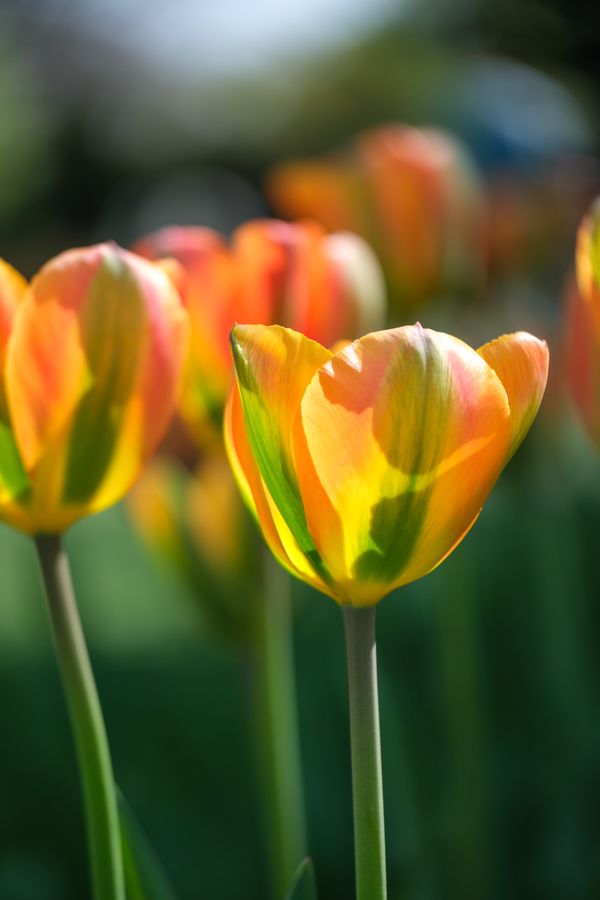
Streaks of green breaking up through orange and yellow - a "flaming" pattern bred deliberately into modern tulips.
It was once caused by a virus, spread by aphids, and prized for exactly this effect during the Dutch tulip mania of the 1630s, when a single broken bulb could change hands for the price of a house. The virus also weakened the bulb, which is why the famous varieties all eventually died out and the pattern had to be bred back in without it.
Birds, insects, plants and other wildlife, mostly from Brooklyn, with some from further afield.
Every photograph comes with notes on what it is.
Selected
Favourite shots. Filter by subject, or .
Places
Everything, by where it was taken.
Species
Larger catalogue of photos organized by species of animal or plant.
Catalogue
Every photograph, newest first. Narrow it by period, place or species; the three work together.
Updates
Coming soon. Sign up at the bottom of the page for updates.