American Goldfinch
Spinus tristis · Finches
American Goldfinch, male, landing
Brooklyn Botanic Garden, 19 August 2026
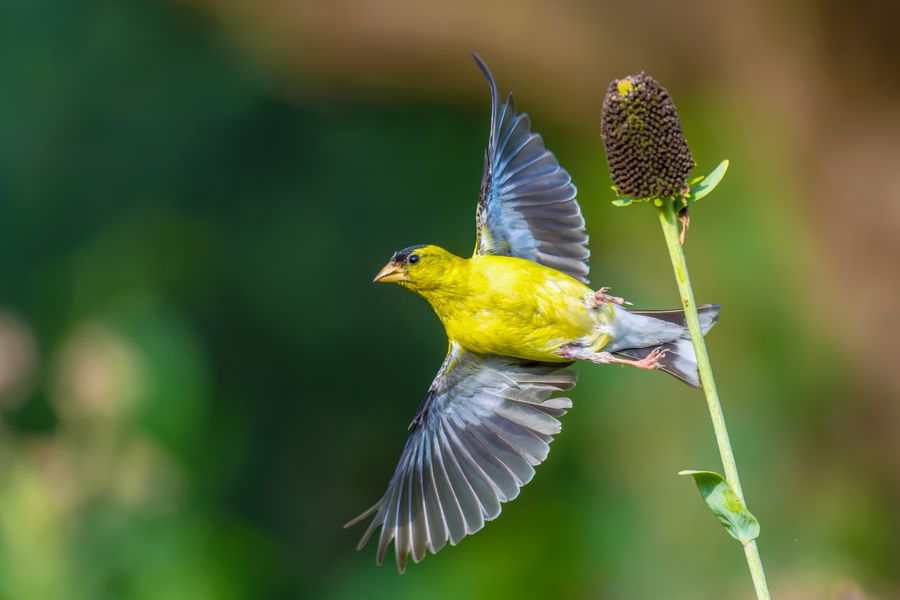
A male American Goldfinch coming in to a spent coneflower head in the August border. Goldfinches are birds of weedy fields and gardens across the continent, and August is their nesting season, later than almost any other North American songbird.
The timing is deliberate: it coincides with the seed set of thistles and coneflowers in high summer, which they need both to feed the young and to line the nest itself with thistledown. A border left to go to seed is a goldfinch's whole year.
American Goldfinch, side profile
Brooklyn Botanic Garden, 19 August 2026
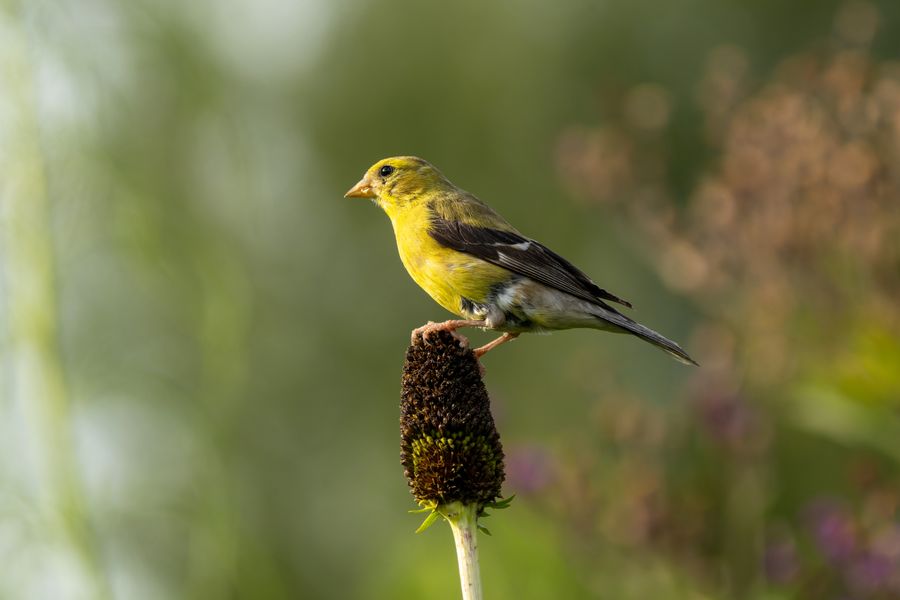
An American Goldfinch side-on on a coneflower head in the August border, the black wings with their white bars showing well against the yellow body. It is the finch of weedy fields and gardens across the continent, and a seed head in late August is its whole business.
No black cap, so a female - or a male already on his way out of breeding colour, since goldfinches are one of the few songbirds to moult twice a year, and by late August the males are beginning the slow fade into the drab olive they wear all winter. The bill is the conical seed-cracker of a finch, pale and slightly pink, and the feet are gripping a stem most birds its size would find too thin to bother with.
American Goldfinch among coneflowers
Brooklyn Botanic Garden, 19 August 2026
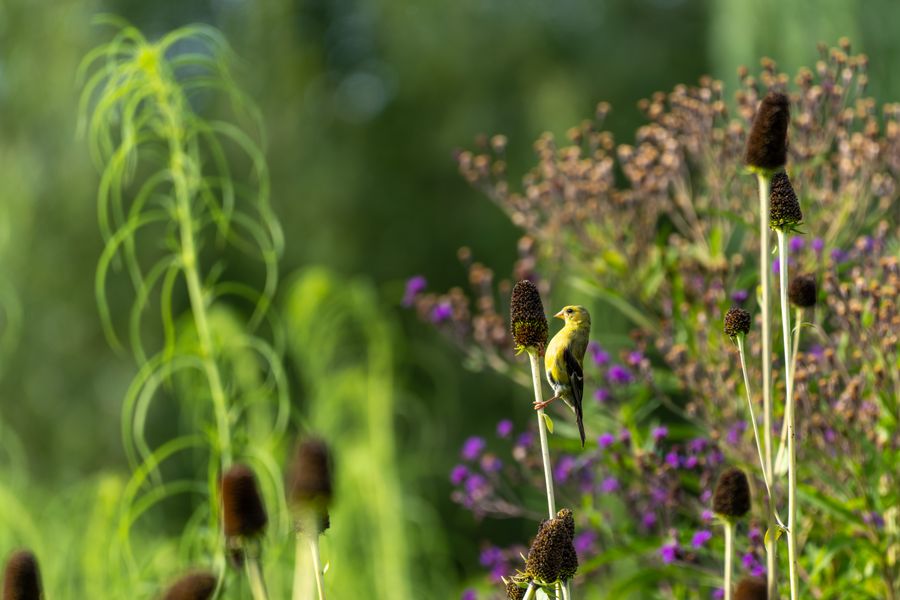
An olive-yellow goldfinch, a female or a bird of the year, clinging to a coneflower stem gone to seed in the August border, with a haze of purple flowers coming into bloom behind. Goldfinches live in weedy fields and gardens across North America, and a border left to go to seed is the whole point of the season for them.
August is the goldfinch's spring: they nest later than almost any other North American songbird, timing it to the seed crop of thistles, coneflowers and their relatives, and the young are fed on regurgitated seed rather than the insects most songbirds rear their chicks on.
American Goldfinch, female, on coneflower
Brooklyn Botanic Garden, 19 August 2026
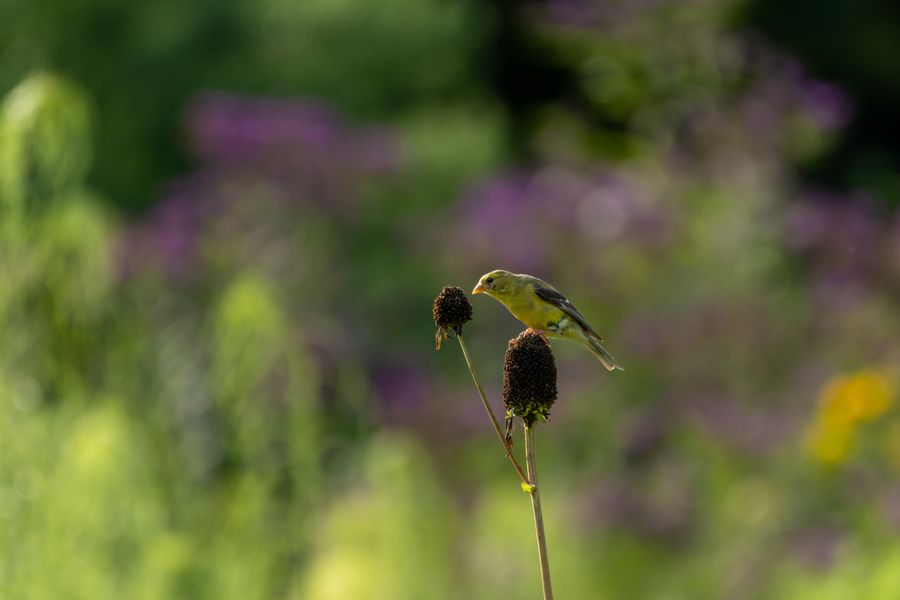
A female American Goldfinch on a coneflower head gone to seed in the August border, working the disc for what's left in it. Goldfinches are birds of weedy fields and gardens across the continent, and August is their nesting season, timed to exactly this seed.
Duller olive-yellow than the male and without his black cap. Goldfinches are about as close to a pure seed-eater as a songbird gets - even the nestlings are raised on regurgitated seed, which is why a cowbird egg laid in a goldfinch nest generally comes to nothing: the cowbird chick can't survive on the diet. The spent seed heads a tidy gardener would cut back are exactly what this bird is here for.
American Goldfinch, male
Brooklyn Botanic Garden, 26 July 2026
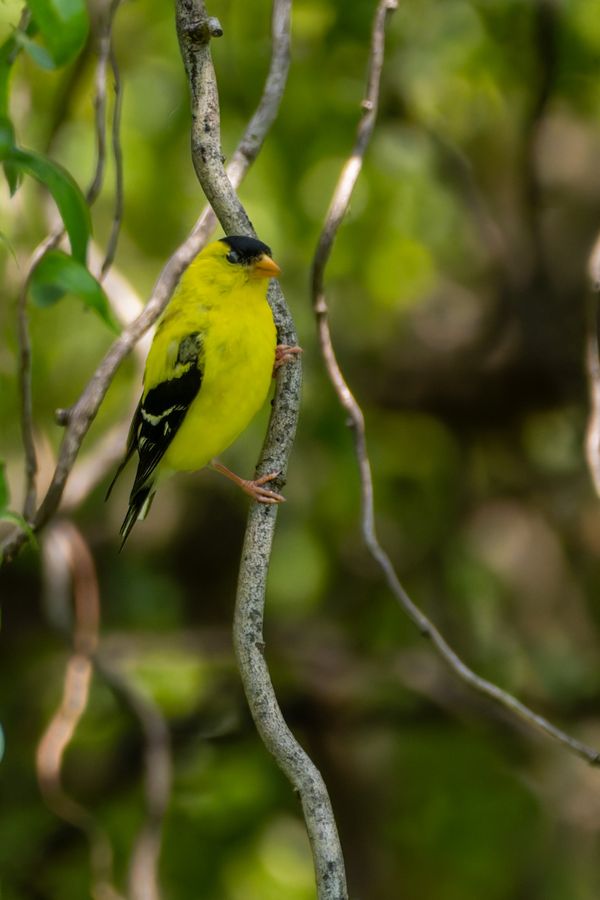
A male American Goldfinch in full breeding yellow in the July border, black cap sharp against it. Goldfinches are birds of weedy fields and gardens across the continent, and July is when they are just beginning to nest, later than almost any other songbird.
The timing is the seed: they wait for thistle and the other composites to ripen, which is what they feed the young. Unusually for a finch, they stay almost entirely vegetarian even as nestlings, at an age when most seed-eating birds switch temporarily to insects.
American Goldfinch on a sweetgum ball
Prospect Park, 14 December 2025
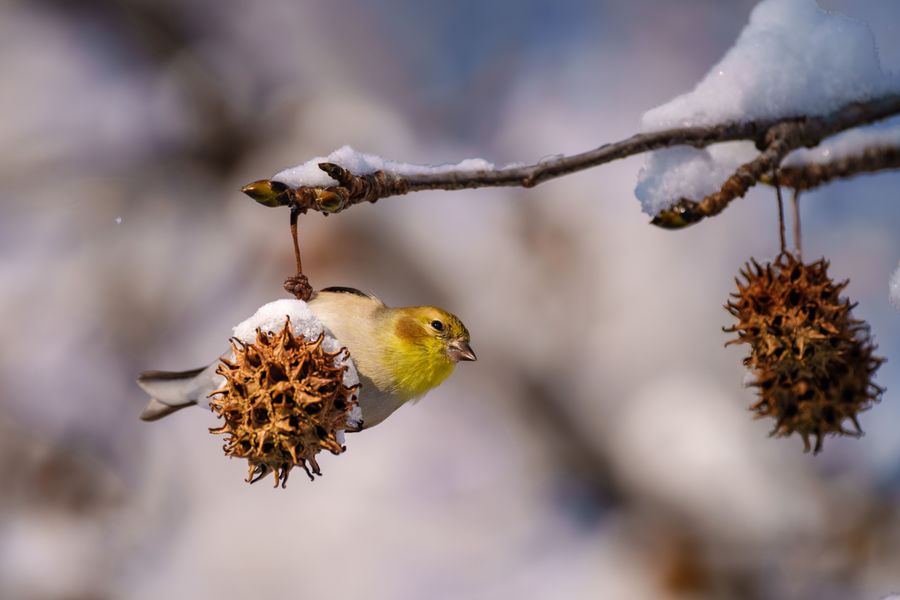
An American Goldfinch hanging upside down off a spiky sweetgum seed ball in Prospect Park in December, working the seeds still held inside it. Goldfinches are birds of weedy fields and gardens across the continent, and in winter they move in flocks from one seed tree to the next.
Drab olive-yellow winter plumage rather than the male's bright breeding gold. Goldfinches are agile enough on a thin, swinging perch that the acrobatics barely slow the feeding. The sweetgum ball is a winter larder: each spike is a capsule, and the seeds fall out through it over months, which is why the finches keep coming back to the same tree.
Birds, insects, plants and other wildlife, mostly from Brooklyn, with some from further afield.
Every photograph comes with notes on what it is.
Selected
Favourite shots. Filter by subject, or .
Places
Everything, by where it was taken.
Species
Larger catalogue of photos organized by species of animal or plant.
Catalogue
Every photograph, newest first. Narrow it by period, place or species; the three work together.
Updates
Coming soon. Sign up at the bottom of the page for updates.