Rose
Rosa sp. · Garden flowers
Raindrops on a rose petal
Brooklyn Botanic Garden, 29 May 2025
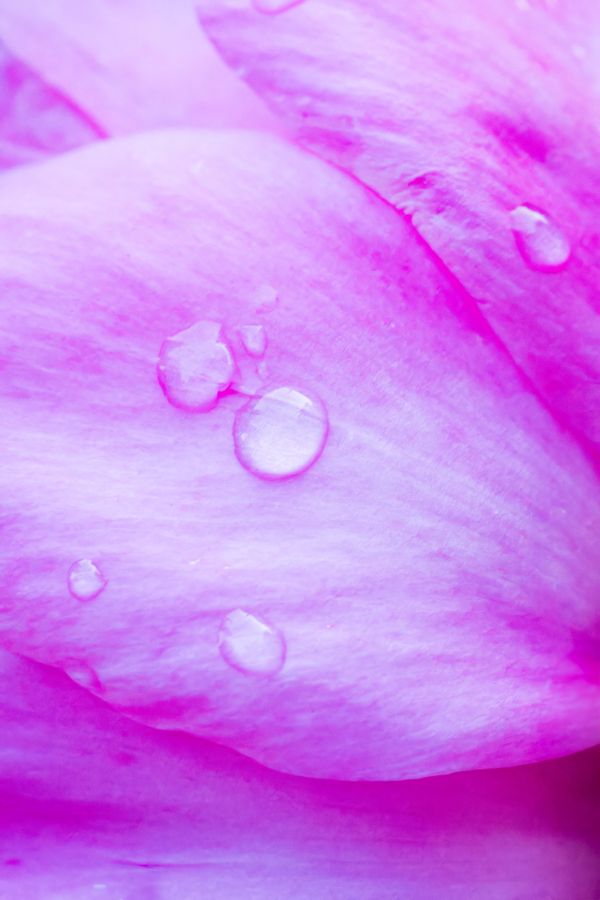
Close enough to lose the flower entirely to its own petal: a rose, magenta shading to white at the base, with water sitting in beads rather than spreading.
That is the petal's own waxy surface at work rather than anything about the rain. The cuticle is water-repellent enough that a drop pulls itself into a lens instead of soaking in, which is also why the first rain after a dry spell leaves a rose looking varnished rather than wet.
White rose, open to the stamens
New York Botanical Garden, 26 May 2025
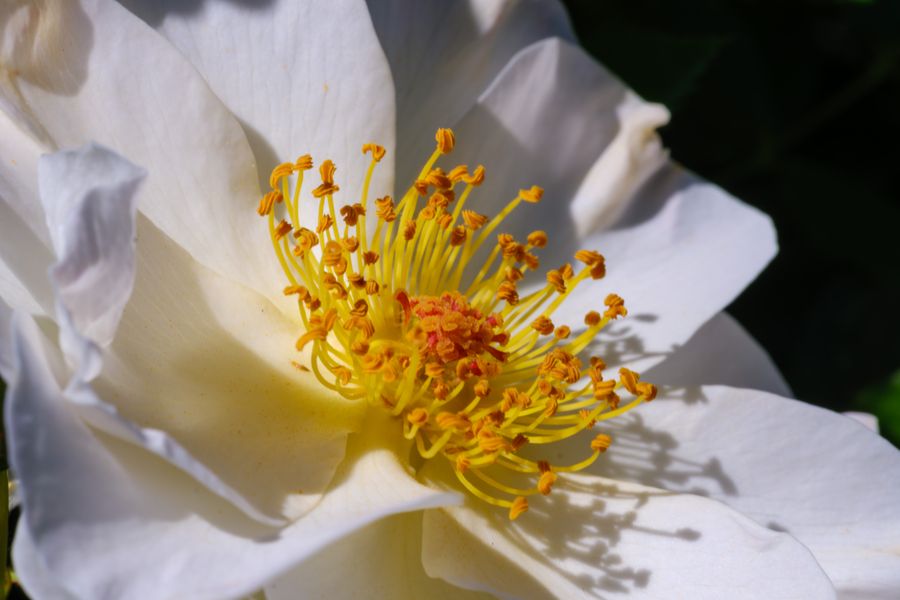
A white rose in the rose garden at the New York Botanical Garden in late May, one of the near-wild kinds with a loose ring or two of petals left open around a full boss of golden stamens, the anthers already curling as they shed their pollen. The pink knot at the centre is the stigmas, dozens of them packed into a dome, which is the mark of a rose - a peony would show a few large carpels there instead.
Not the peony it was first written up as. This is the rose a bee can use. The fully double kinds have bred their stamens into petals and offer no pollen, which is why an open rose hums in June and the doubles are silent.
Rose
New York Botanical Garden, 26 May 2025
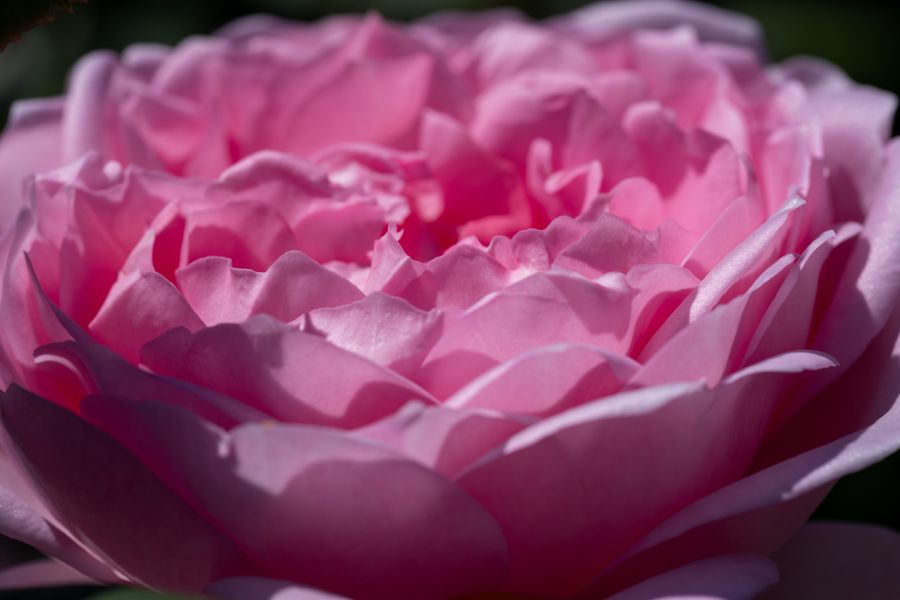
A fully double rose in deep pink, close enough that the flower stops reading as a bloom and becomes overlapping curves - no visible stamens at all, every one of them bred into another petal. A wild rose has five petals. The doubling is a mutation that turns stamens into petals, found and kept by gardeners in China and Persia well over a thousand years ago, and every rose with more than five petals is descended from that accident.
Yellow rose
Kent, 27 November 2020
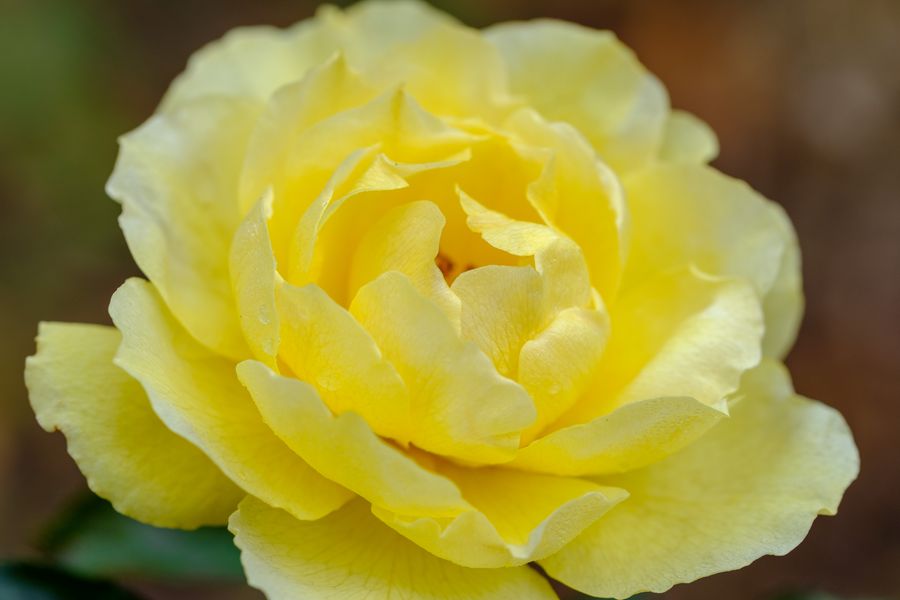
A hybrid tea rose still flowering into late November, which an unpruned bush in a mild year will often manage. Roses respond to frost rather than the calendar, and a few more sheltered weeks without anything hard enough to blacken the buds will keep them opening.
The ruffled, many-petalled centre is entirely a garden trait. A wild rose carries five petals, and centuries of breeding for more of them, at the expense of the stamens they replace, produced flowers like this one.
Rose past its best
Kent, 27 November 2020
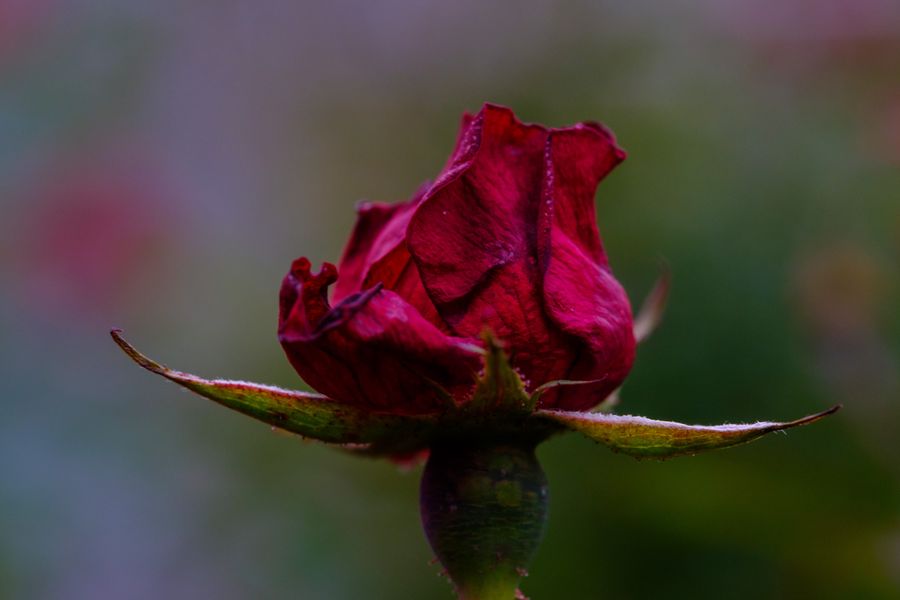
Deep red and folding in on itself rather than freshly open - a bloom left on the bush past its moment, often deliberately this late in the year, when there is little else in a border to look at.
The petal edges have already taken on the dark, papery brown that comes with the first real cold, days ahead of the leaves doing the same. A rose stops when the frost tells it to, not when the calendar does.
Birds, insects, plants and other wildlife, mostly from Brooklyn, with some from further afield.
Selected
Favourite shots. Filter by subject, or .
Places
Everything, by where it was taken.
Species
Larger catalogue of photos organized by species of animal or plant, .
Catalogue
Every photograph, newest first. Type to find something, or narrow it by period, place or species.
Updates
Coming soon. Sign up at the bottom of the page for updates.