Persian Buttercup
Ranunculus asiaticus · Garden flowers
Ranunculus fields, full sweep
Carlsbad, 7 March 2026
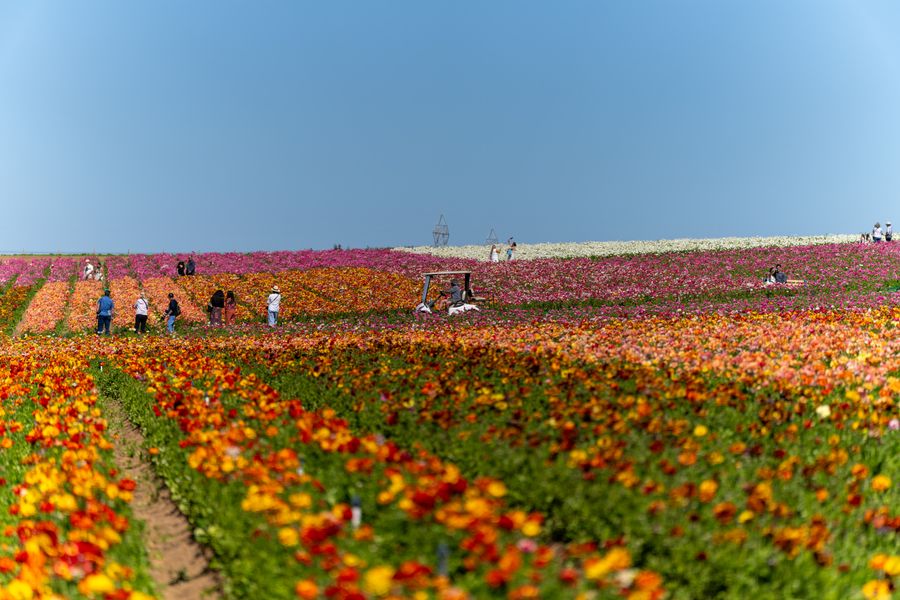
The full sweep of the fields, striped by colour block down to the coastline haze in the distance, with a work cart and visitors giving the rows their scale.
The angular sculptures on the skyline are a fixture of the property rather than anything botanical, land art rather than agriculture. The fields open for about eight weeks a year and are closed and dug the rest of it.
Ranunculus with a bee
Carlsbad, 7 March 2026
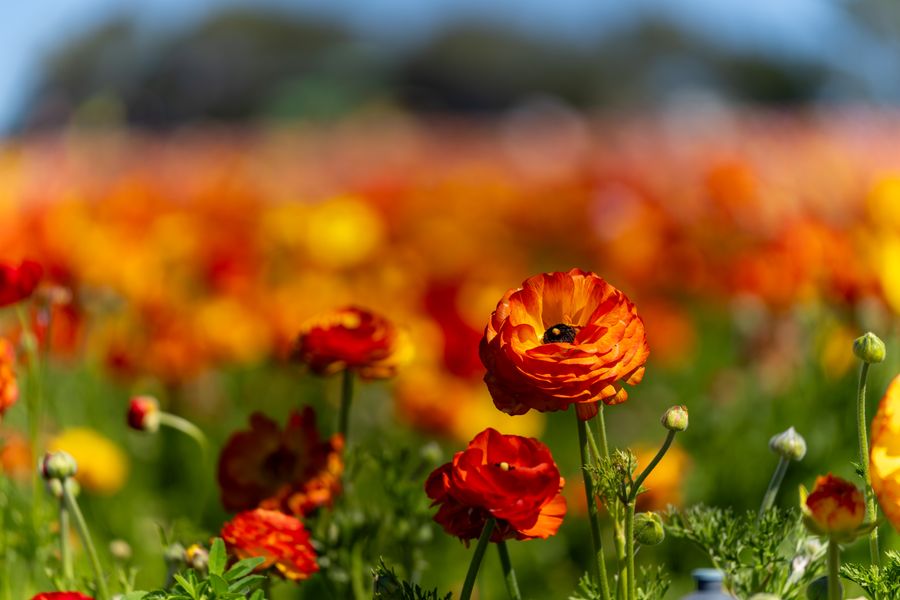
A bee working the centre of the bloom.
The double, heavily layered petals bred into cultivated ranunculus give a bee much less to land on and far more crowded access to the pollen than the flat, open wild form would, but they clearly manage regardless. The farm keeps hives on the edge of the fields, and the honey is sold in the shop.
Ranunculus, paired
Carlsbad, 7 March 2026
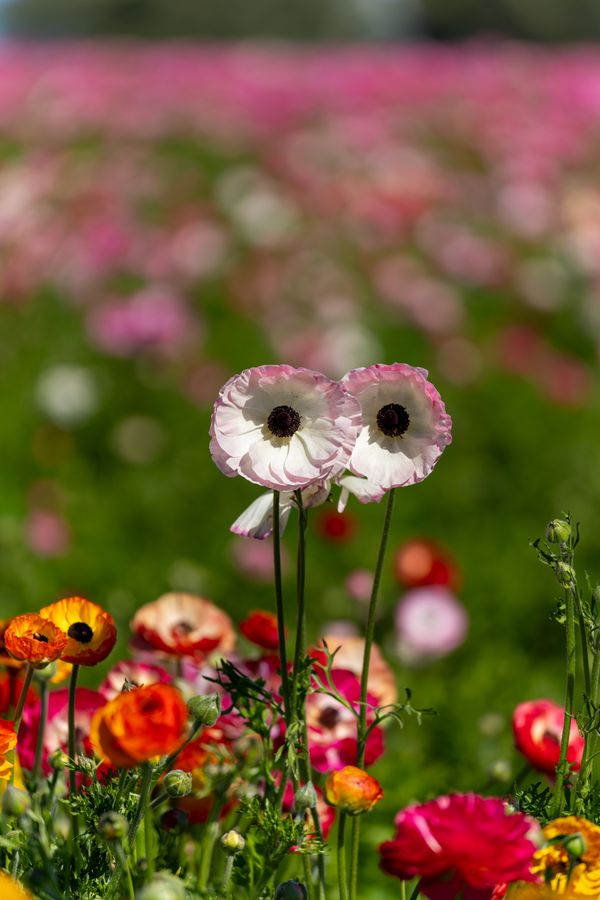
A paler variety than most of the field around it: white with a wash of pink at the petal edge, rather than the saturated reds, oranges and magentas that dominate elsewhere.
The dark centre common to all of them is the flower's own cluster of stamens and pistils, packed tight enough to read as a solid disc rather than individual parts. A ranunculus can carry a hundred petals, all of them bred from what was once five.
Ranunculus, red and yellow
Carlsbad, 7 March 2026
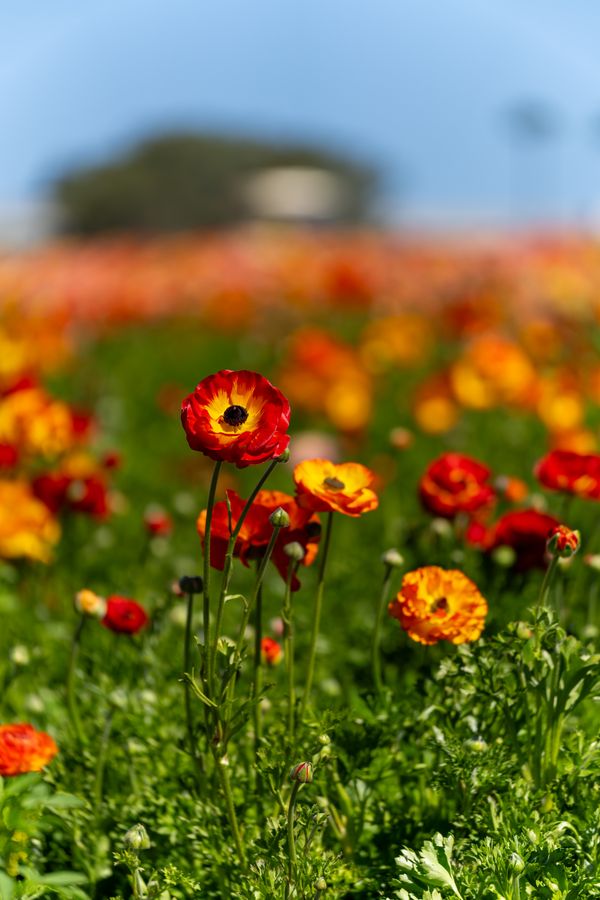
A red-centred and a yellow-centred bloom on the same stand.
Tecolote Ranunculus, the strain grown here, comes in a deliberately wide colour range bred for cut-flower and display use, which is why no two rows in the field are quite the same shade. The strain was bred on this farm from the 1930s by a grower called Frazee, who started with a single field of wild-type flowers.
Ranunculus field, wide view
Carlsbad, 7 March 2026
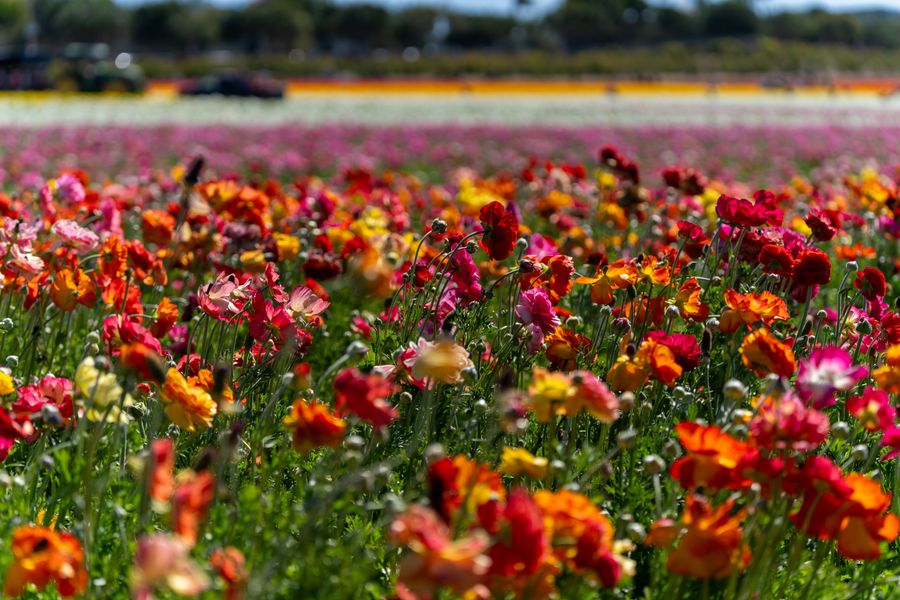
Ground crews work the rows on small utility vehicles rather than on foot for most maintenance.
The plants are grown close and dense enough that a walked row does real damage, so the tractors and carts seen threading between blocks are mostly staying to the access paths cut between varieties. The fields sit on a bluff above the Pacific, which is what keeps the frost off in February.
Ranunculus fields from the rise
Carlsbad, 7 March 2026
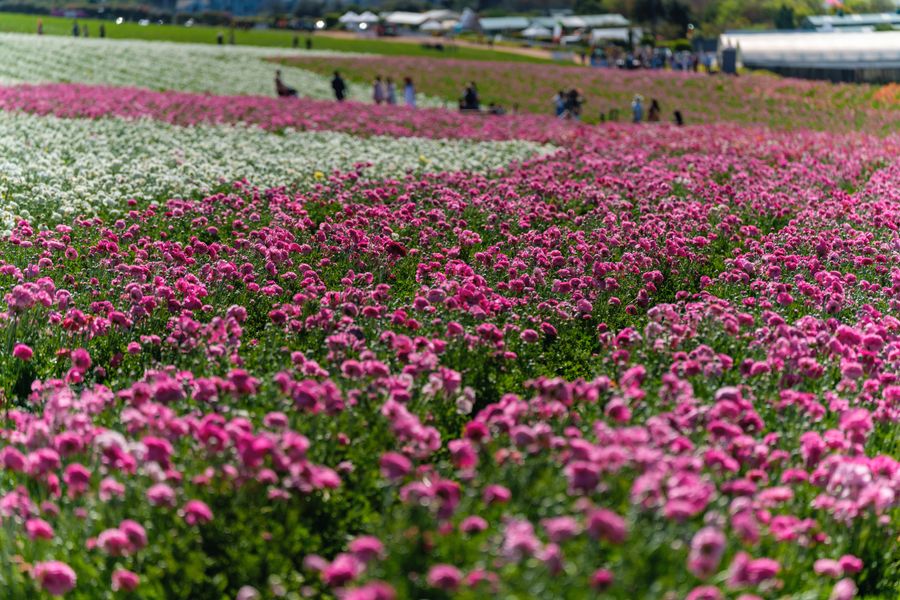
The scale only reads from a slight rise looking back across the rows, with visitors threading between the colour blocks. Fifty-odd acres of a single flower, and none of it for the visitors originally: the Flower Fields are a working farm, and the blooms are cut off and discarded so the plants put their strength into the tubers, which are the actual crop, dug and sold in the autumn.
Ranunculus fields
Carlsbad, 7 March 2026
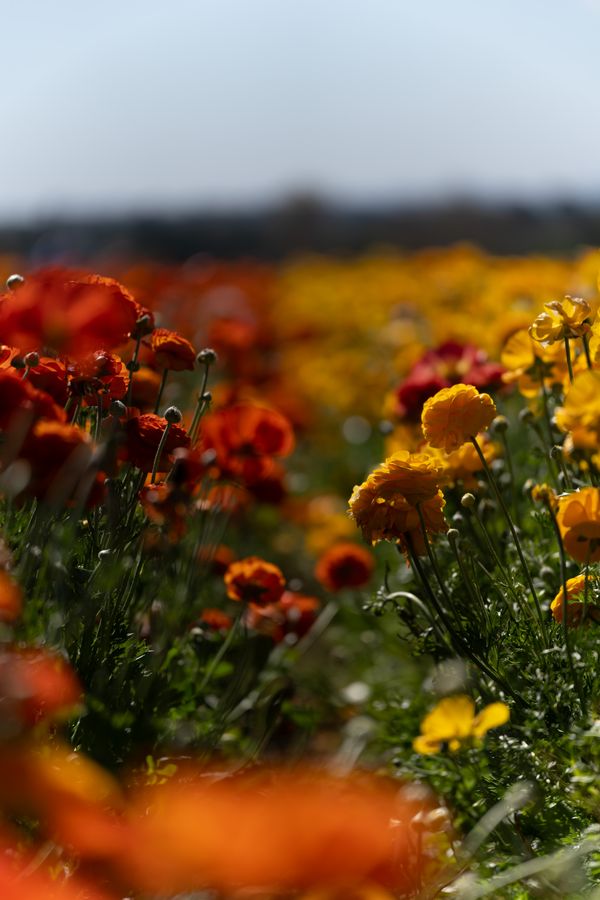
Each colour planted in its own block rather than mixed, which is a growing decision rather than an aesthetic one: it keeps each variety's bloom time and height easier to manage at scale.
The effect from ground level is a solid wall of a single hue giving way sharply to the next. The blooms are not the crop. They are cut off to strengthen the tubers, which are dug in summer and sold round the world.
Ranunculus
Carlsbad, 7 March 2026
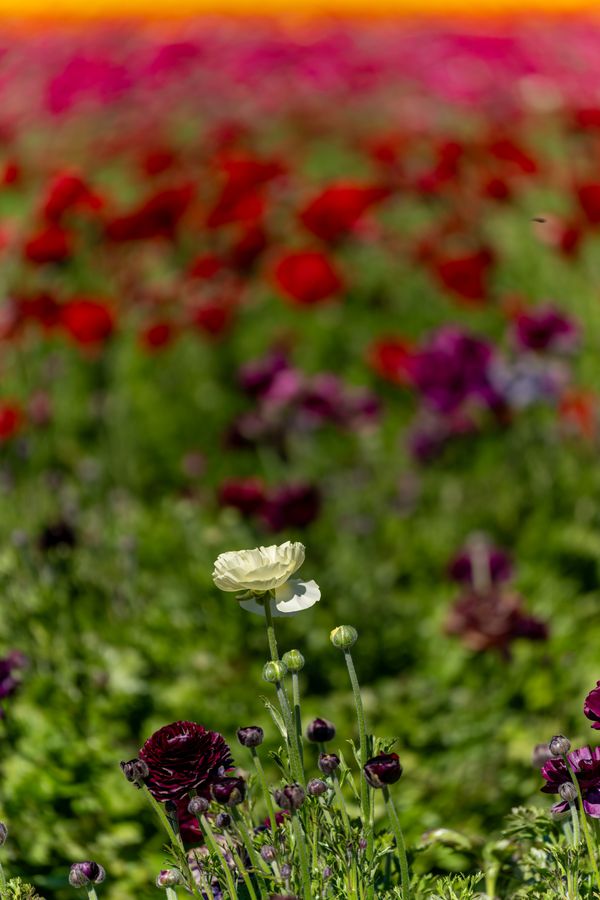
The Persian buttercup in the Flower Fields at Carlsbad, bred for over a century into the densely layered, paper-thin-petalled forms grown commercially today. The wild species is a much simpler five-petalled flower from the eastern Mediterranean and south-west Asia.
Fields like this are planted from tubers each autumn and timed to peak in early spring, which is what fifty acres of a single genus in bloom at once takes.
Birds, insects, plants and other wildlife, mostly from Brooklyn, with some from further afield.
Every photograph comes with notes on what it is.
Selected
Favourite shots. Filter by subject, or .
Places
Everything, by where it was taken.
Species
Larger catalogue of photos organized by species of animal or plant.
Catalogue
Every photograph, newest first. Narrow it by period, place or species; the three work together.
Updates
Coming soon. Sign up at the bottom of the page for updates.