Brown Pelican
Pelecanus occidentalis · Seabirds
Brown Pelican in the evening light
San Diego, 6 March 2026
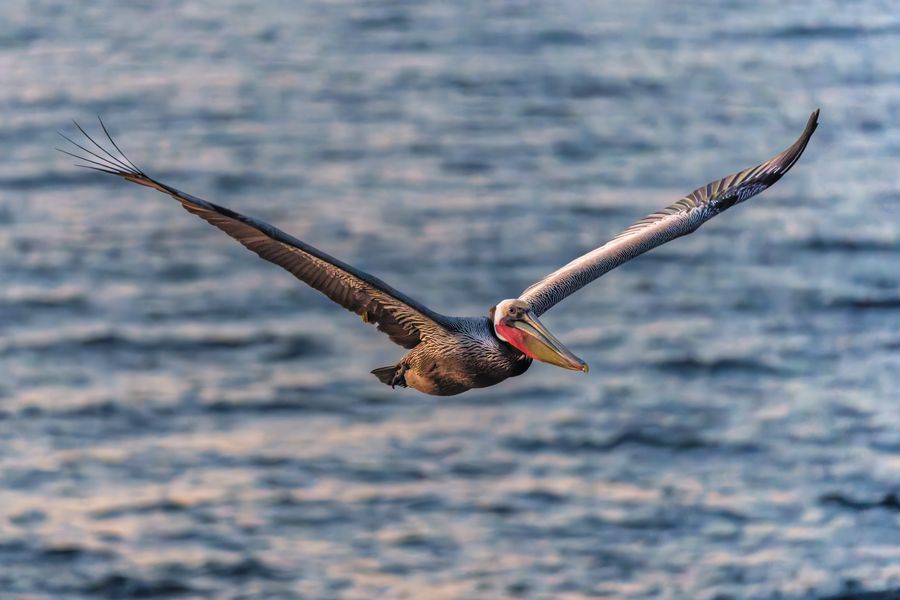
A Brown Pelican in the evening light at La Jolla, in full breeding plumage: red gular pouch, dark belly, the wine-coloured stripe down the back of the neck. The low sun turns the underside gold rather than the usual flat grey-white.
The plumage is at its richest for a few weeks around nesting; by midsummer the pouch fades and the neck goes back to white. The pouch itself holds three gallons, more than the stomach, and the bird drains it before swallowing the fish.
Brown Pelican in flight
San Diego, 6 March 2026
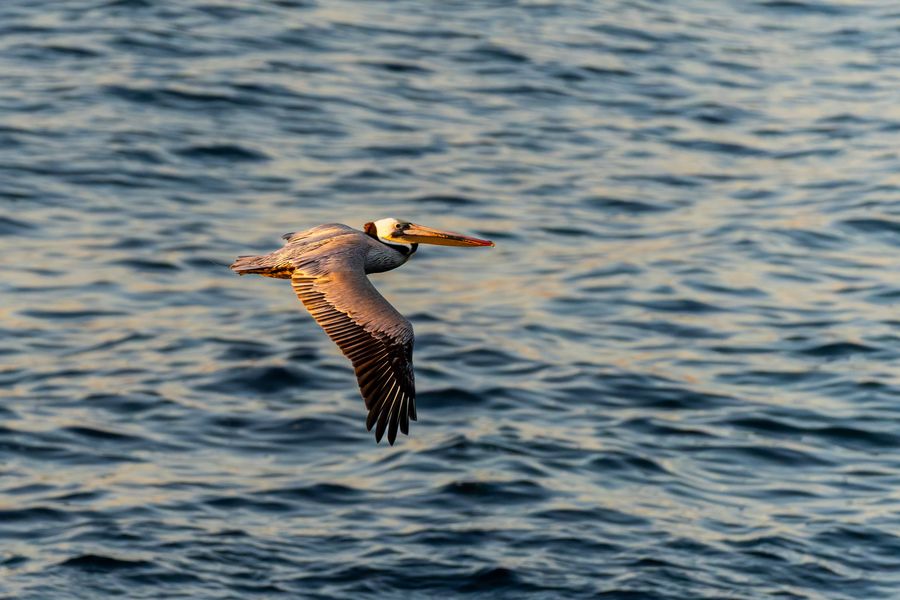
A Brown Pelican flying low over the water off La Jolla, in a line with the others, an inch above the swell. This is the pelican of the American coasts, from here round to the Carolinas, and it spends its days patrolling the surf line for fish.
Pelicans fly this low to ride the cushion of compressed air that forms just above the surface under each wing - ground effect, the same principle that lets a jet burn less fuel a few feet off a runway. It costs them noticeably less energy than flying higher, which is why a foraging line of pelicans so rarely climbs.
Brown Pelican
San Diego, 6 March 2026
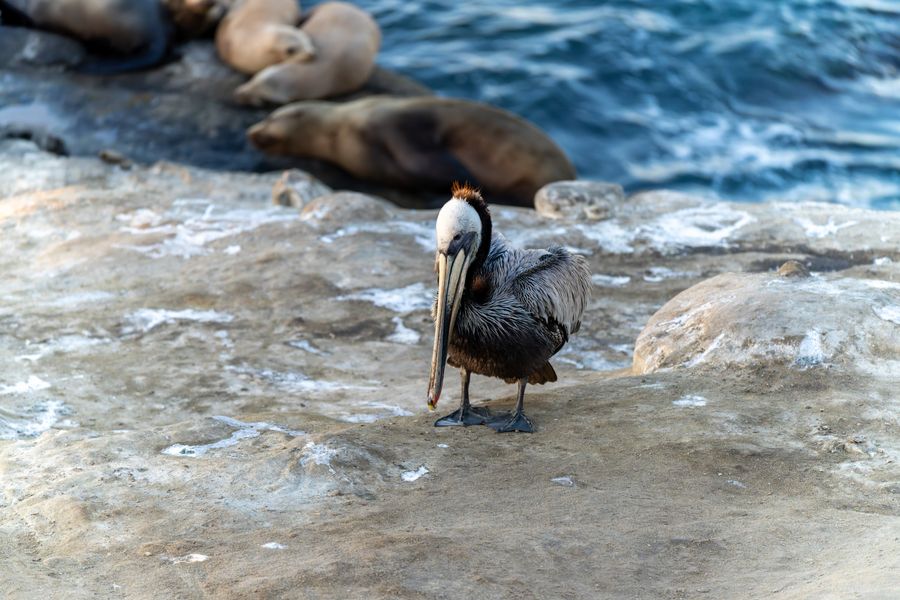
A Brown Pelican on the rocks at La Jolla in breeding condition, visible in the wine-red hindneck stripe and the yellow-washed crown, both of which fade to plain grey and white for the rest of the year. Brown Pelicans nest colonially on offshore rocks and islands along this coast and fish the inshore water by diving.
They were themselves a conservation story: DDT thinned their eggshells to the point of collapse through the mid-twentieth century, and the population only recovered after the pesticide was banned in 1972. It came off the endangered list in 2009.
Brown Pelican
Tulum, 23 November 2023
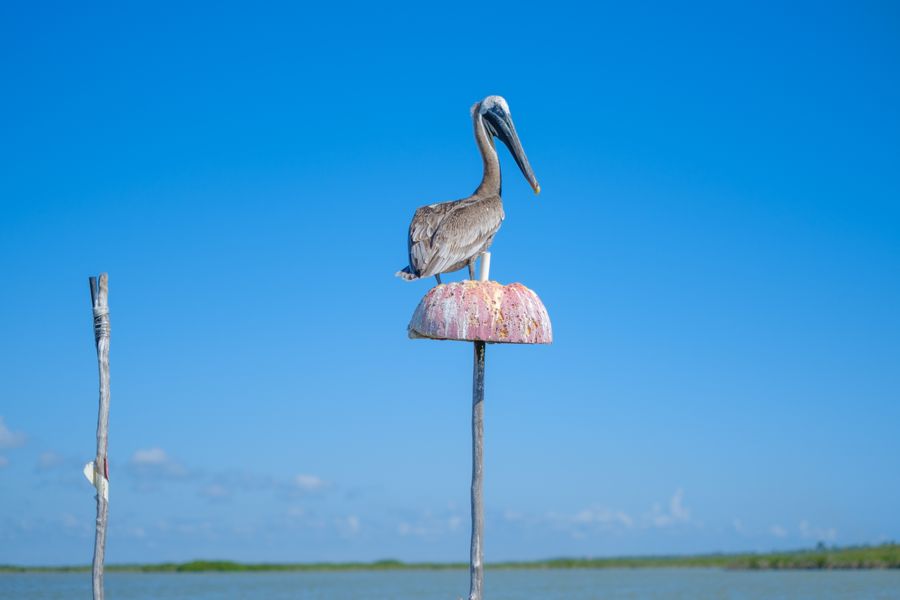
A Brown Pelican riding the air a few feet above the sea off Tulum, the pelican of the American coasts from here round to the Carolinas and down both sides of the continent. It fishes the inshore water by diving, and this low glide is the far more economical way it covers most of its time.
The only pelican that plunge-dives for its food: it spots a fish from the air and drops straight in from height, folding its wings back at the last moment, where every other pelican fishes by scooping at the surface. Air sacs under the skin of the breast cushion the impact, and the bird always hits the water turning slightly left, to protect the windpipe on the right side of its neck.
Birds, insects, plants and other wildlife, mostly from Brooklyn, with some from further afield.
Every photograph comes with notes on what it is.
Selected
Favourite shots. Filter by subject, or .
Places
Everything, by where it was taken.
Species
Larger catalogue of photos organized by species of animal or plant.
Catalogue
Every photograph, newest first. Narrow it by period, place or species; the three work together.
Updates
Coming soon. Sign up at the bottom of the page for updates.