Eastern Tiger Swallowtail
Papilio glaucus · Butterflies
Eastern Tiger Swallowtail on Joe Pye weed
Brooklyn Botanic Garden, 12 July 2026
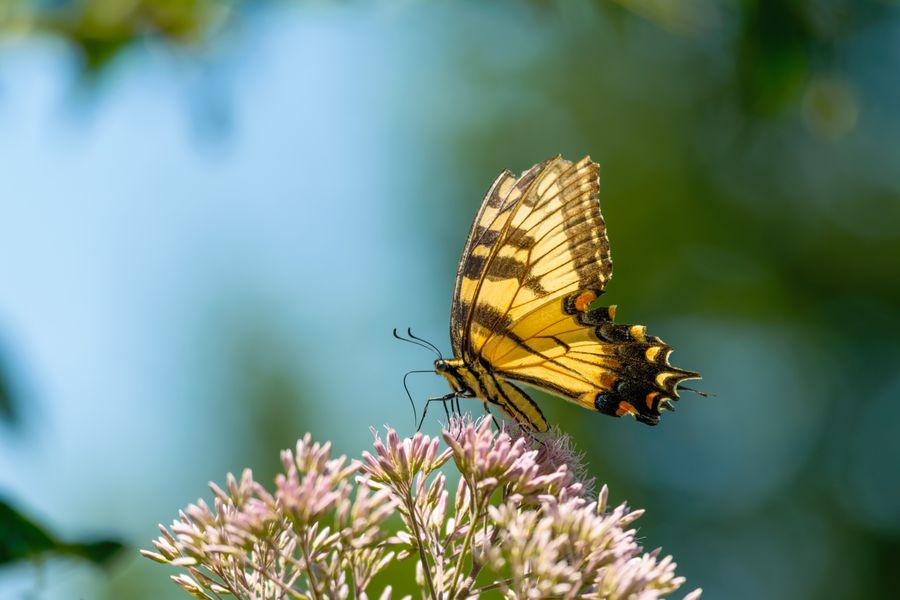
An Eastern Tiger Swallowtail with the wings held fully open and flat to the sun on Joe Pye weed, in the July border at the Botanic Garden. The pose is as much about regulating body temperature as display, since a butterfly's flight muscles need to be warm to work.
The blue crescents and orange spots along the trailing edge of the hindwing are more pronounced here than on a typical male, again pointing to a female. The tails are decoys, and a bird that strikes at them leaves with a scrap of wing and no butterfly.
Eastern Tiger Swallowtail approaching Joe Pye weed
Brooklyn Botanic Garden, 12 July 2026
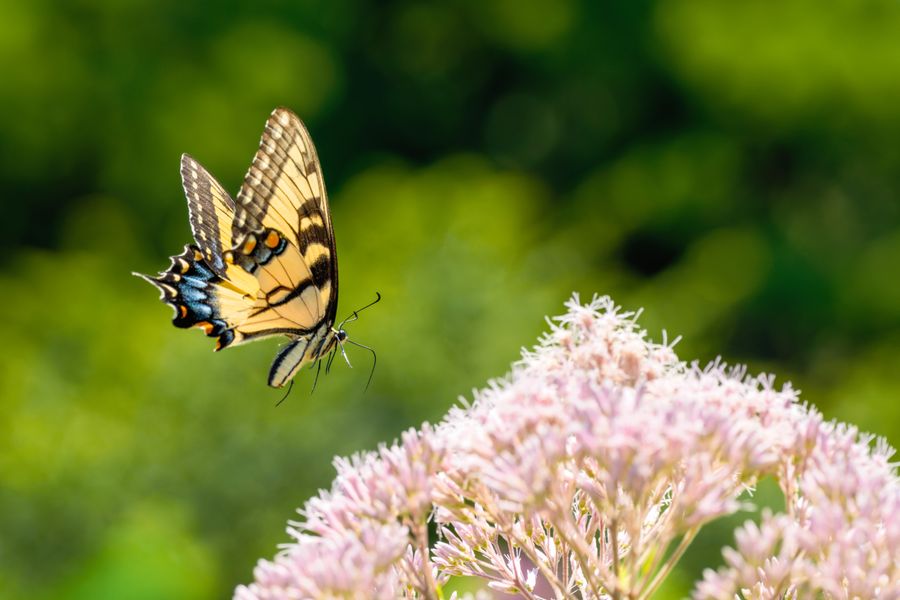
An Eastern Tiger Swallowtail coming in to land on Joe Pye weed in the July border, wings cupped and legs reaching. This is the big yellow butterfly of the eastern woods, at home in every park and garden from Florida to Ontario, and Joe Pye weed in July is where it feeds.
The extensive blue on the hindwing marks this as a female; males carry much less of it. This form, yellow with black tiger stripes, is the common one in the northern part of the range, where the dark female form is rarer.
Eastern Tiger Swallowtail
Brooklyn Botanic Garden, 26 July 2025
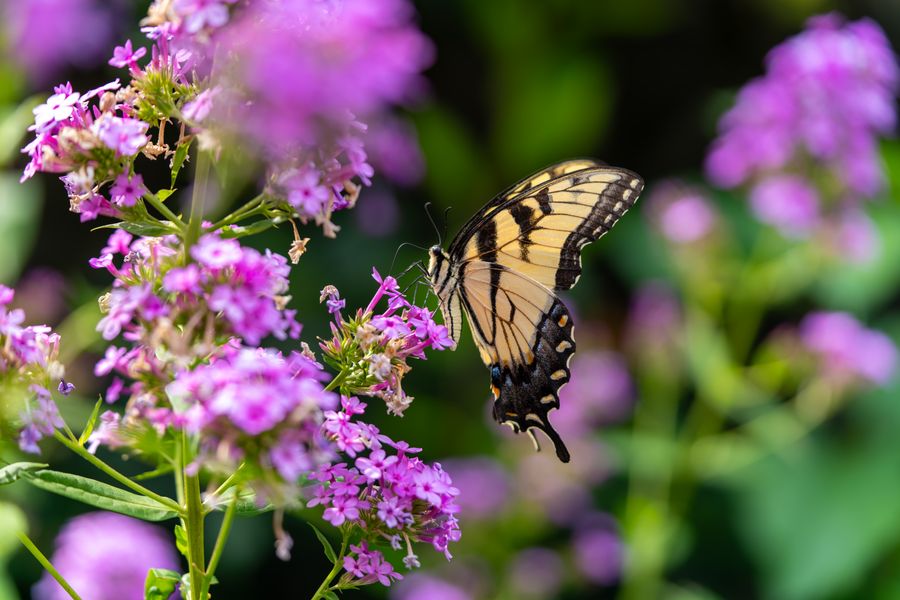
An Eastern Tiger Swallowtail in the July border at the Botanic Garden, one of the most familiar large butterflies in the East. It lives in the deciduous woods and gardens from Florida to Ontario, breeds on wild cherry and tulip tree, and comes to a Brooklyn border for the zinnias.
Told from the similar Canadian and Appalachian tiger swallowtails mainly by range and a broader black border. Females come in two forms: yellow like the male, or almost entirely black, a mimicry of the toxic pipevine swallowtail that becomes commoner toward the south, where the model itself is commoner. A dark female in Brooklyn is a good sign the pipevine swallowtail is around too.
Tiger Swallowtail on a zinnia
Brooklyn Botanic Garden, 12 July 2025
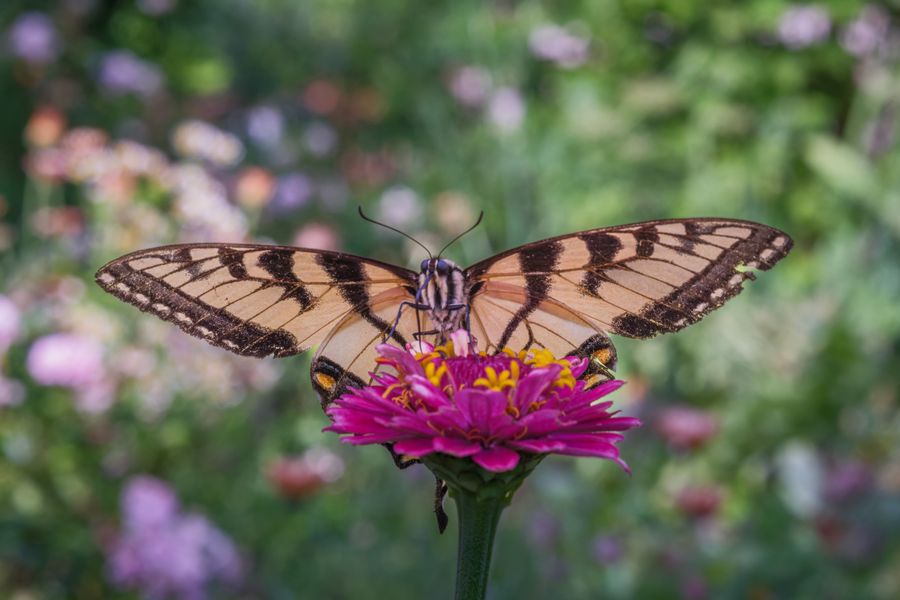
An Eastern Tiger Swallowtail on a zinnia in the July border, proboscis down into the central disc where the nectar actually is. This is the butterfly of every eastern garden in summer, and a zinnia's flat top makes a good landing platform for something this size, which is why the two are so often photographed together.
The showy outer petals of a zinnia are sterile ray florets. The business of the flower is the ring of tiny yellow disc florets in the middle, which open a few at a time over weeks, and the swallowtail is drinking from those.
Tiger Swallowtail, wings spread
Brooklyn Botanic Garden, 12 July 2025
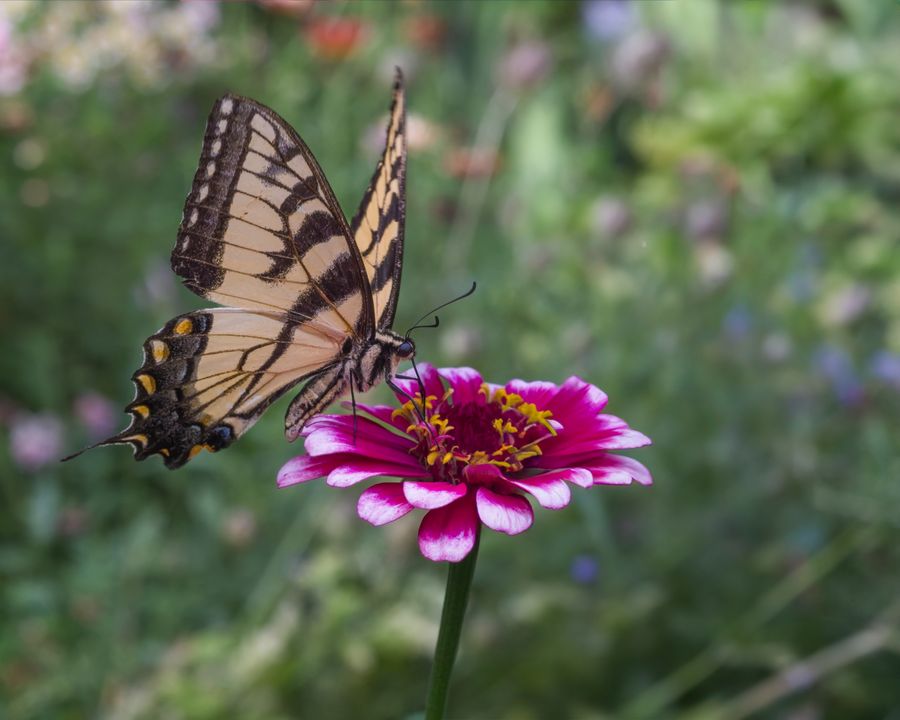
An Eastern Tiger Swallowtail basking on a magenta zinnia in the July border, wings held flat rather than folded and the full stripe pattern on display. It is the big yellow butterfly of the eastern woods and gardens, from Florida to Ontario, and a zinnia bed in July is where it spends the afternoon.
Basking like this is thermoregulation as much as display: a butterfly's flight muscles need to be at around 30 degrees to work, and the dark stripes soak up sun faster than the yellow. The tails are decoys; a bird strikes at them and the butterfly flies off short a piece of hindwing.
Birds, insects, plants and other wildlife, mostly from Brooklyn, with some from further afield.
Every photograph comes with notes on what it is.
Selected
Favourite shots. Filter by subject, or .
Places
Everything, by where it was taken.
Species
Larger catalogue of photos organized by species of animal or plant.
Catalogue
Every photograph, newest first. Narrow it by period, place or species; the three work together.
Updates
Coming soon. Sign up at the bottom of the page for updates.