Osprey
Pandion haliaetus · Raptors
Osprey over Prospect Park
Prospect Park, 30 May 2026
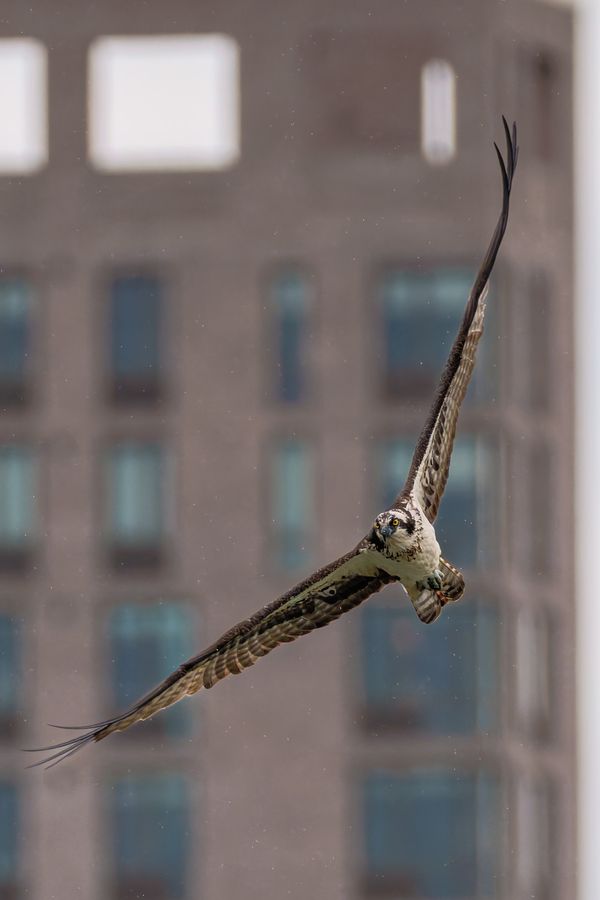
An Osprey banking hard against an apartment block on the edge of Prospect Park, nowhere near open water and simply passing overhead rather than hunting the neighbourhood. Ospreys eat almost nothing but fish, and the park's lake is too small and shallow to be much of a draw; the harbour is where this bird nests.
The bent, angular wings and dark wrist patches give the silhouette away at a distance, gull-like in a way a Red-tailed Hawk's never is. The feet are the real specialisation: a reversible outer toe lets an osprey grip a fish with two talons forward and two back, and spiny pads on the soles keep a wet, thrashing catch from sliding free.
Osprey calling
Prospect Park, 30 May 2026
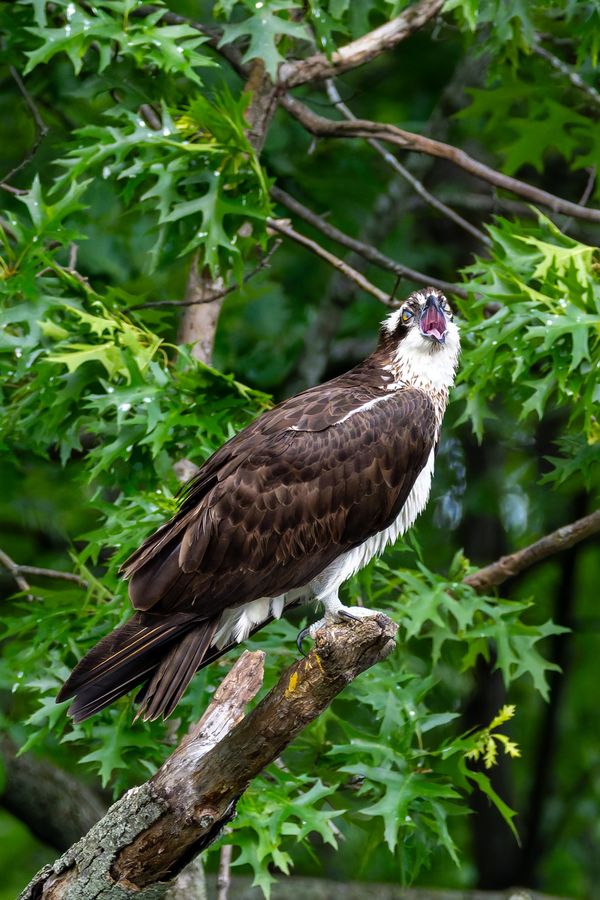
An Osprey over Prospect Park Lake at the end of May with its feathers still slicked down from a dive, bill open on a sharp whistled call. Ospreys nest around New York harbour on platforms and channel markers and come to the park's lake to fish.
Ospreys hunt almost exclusively live fish, diving feet-first from as much as a hundred feet up, and come up with something roughly one time in four. The call is the other thing to know: a thin, high whistle, nothing like the scream Hollywood gives every bird of prey, which is a Red-tailed Hawk's dubbed over whatever eagle is on screen.
Ospreys grappling in flight
Prospect Park, 23 May 2026
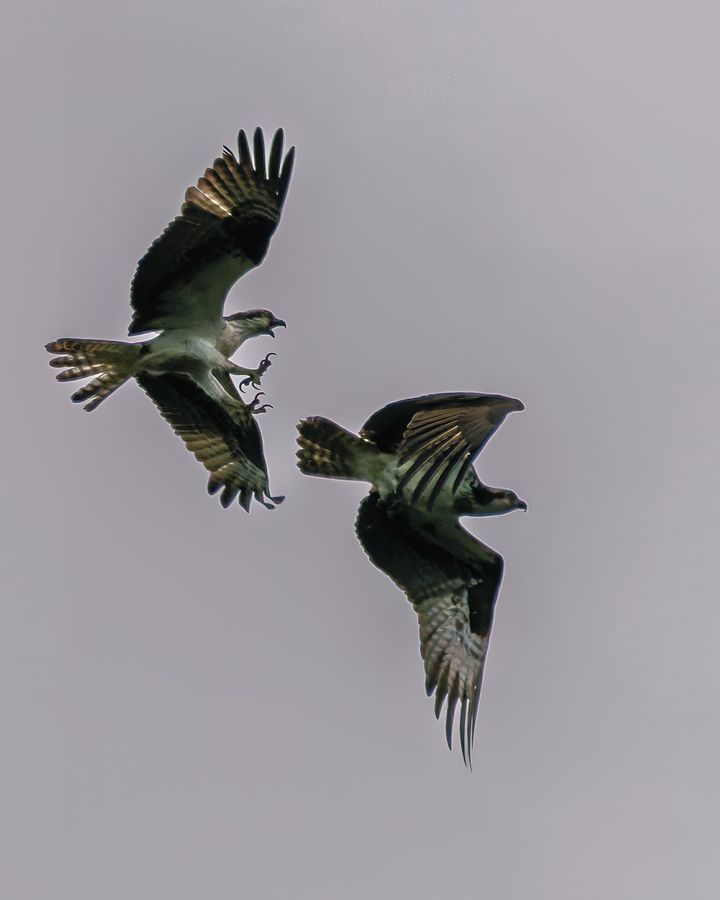
Two Ospreys with talons extended and nearly locked, mid-air over Prospect Park Lake, almost certainly contesting the same fishing water. Ospreys hunt every coast and lake on earth outside Antarctica, and the ones over Brooklyn are back from South America to nest around the harbour.
It could be a territorial confrontation or a courtship display; Ospreys are known to grapple talons in both. Either way it is a reminder of what the feet are built for. Ospreys live almost entirely on live fish taken feet-first from the water, and the grip meant for a slippery, struggling catch works just as well on a rival.
Osprey banking
Green-Wood Cemetery, 25 April 2026
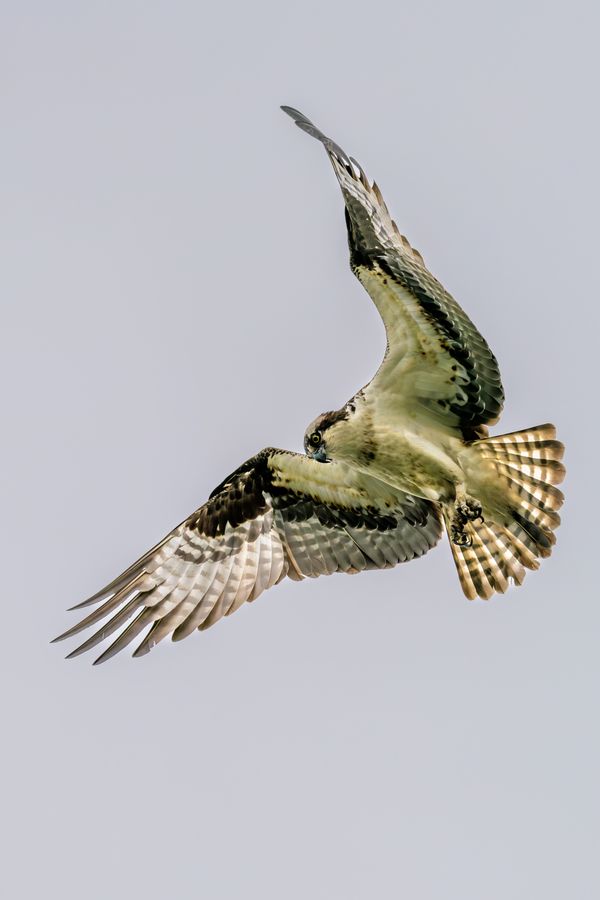
An Osprey banking steeply over Green-Wood Cemetery in April, back from South America and on its way to a nest on the harbour. Ospreys are on every continent but Antarctica, always near water, and New York's have come back from near-extinction to nest on platforms and channel markers all round the bay.
The dark comma-shaped patch at the wrist and the black mask through the eye are the field marks that separate an osprey from any other large raptor at a distance, even in a bank like this. A reversible outer toe and barbed pads on the soles of the feet exist for no other purpose than gripping a slippery fish pulled straight out of the water.
Osprey, feathers soaked
Prospect Park, 11 October 2025
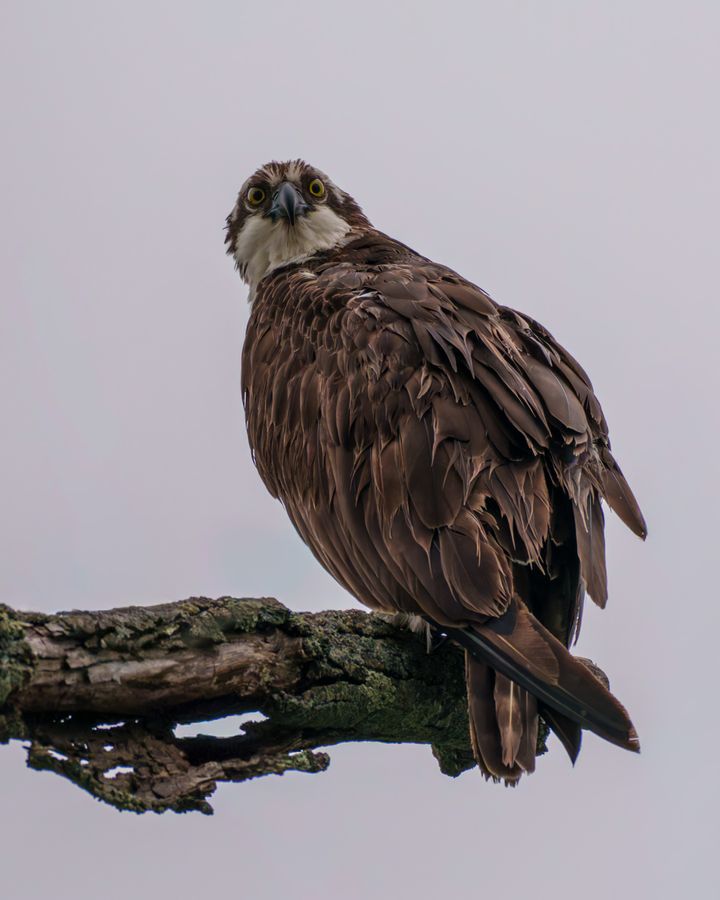
An Osprey newly out of Prospect Park Lake in October and not yet dry, the feathers lying in wet spikes and the whole bird bulked up by how much water they are holding. Ospreys fish every coast and lake on earth outside Antarctica, and the ones over Brooklyn in October are on their way from the harbour nests to South America.
A vigorous shake, still to come, will throw off most of it. Ospreys are unique among raptors in going fully underwater after a fish, sometimes submerging completely - a wetting no eagle or hawk ever risks. Dense, oily plumage and nostrils that close on impact are what make the dive survivable.
Osprey
Yellowstone, 10 August 2021
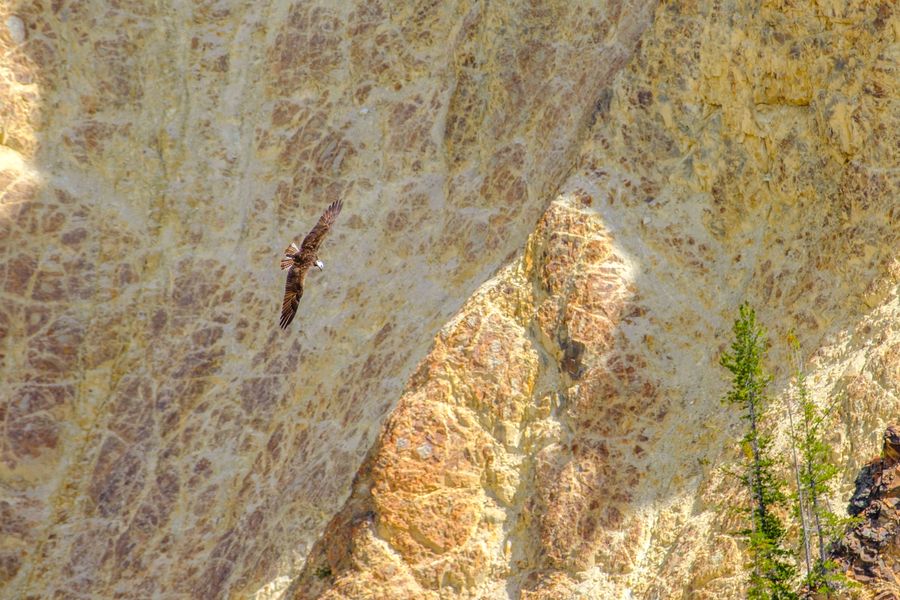
An Osprey hunting the Grand Canyon of the Yellowstone on a long glide with the wall behind it. Ospreys are fish hawks of every coast and river on earth outside Antarctica, and the Yellowstone's trout are what keep them in the canyon.
They are the only raptor that lives almost entirely on live fish, and they are built for it in odd ways: a reversible outer toe so they can carry a fish with two toes each side, spicules on the soles for grip, and closable nostrils for the moment they hit the water. They go in feet first, from as much as thirty metres, and come up with something roughly one time in four.
Osprey on the nest
Yellowstone, 10 August 2021
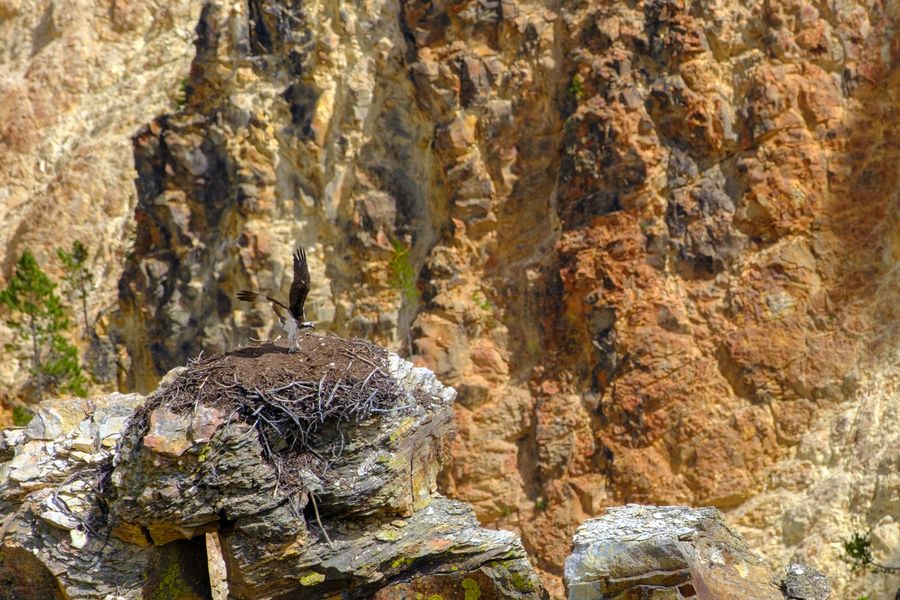
An Osprey on its nest on a rock pinnacle in the Grand Canyon of the Yellowstone, several hundred feet above anything that might want the young and a short flight from the river. Ospreys are on every continent but Antarctica, wherever there is fish and a safe place to nest, and the canyon's spires have held them for as long as anyone has looked.
The nest is a stick platform added to year after year by the same pair. Some go on for decades and end up enormous. Ospreys mate for life and return to the same structure, so a nest is effectively a piece of inherited property.
Osprey on a nest platform
Salt Marsh, 23 May 2021
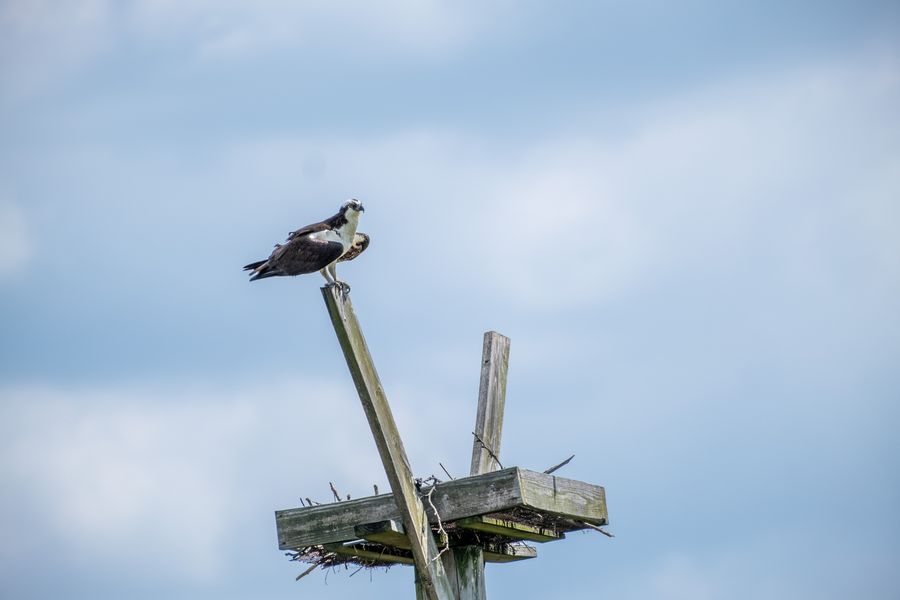
An Osprey on a nest platform over the salt marsh in May, likely still building or just laid; the nest itself is barely started. Ospreys nest around the whole of New York harbour now, on platforms, channel markers and pylons, and the salt marshes of Jamaica Bay hold dozens of pairs.
The platform is artificial, and that is now the normal state of affairs for an East Coast osprey. Nesting sites collapsed along with the population in the mid-twentieth century, and volunteer-built poles like this one were a large part of how the birds came back. Ospreys take readily to a platform over open water, away from ground predators.
Birds, insects, plants and other wildlife, mostly from Brooklyn, with some from further afield.
Every photograph comes with notes on what it is.
Selected
Favourite shots. Filter by subject, or .
Places
Everything, by where it was taken.
Species
Larger catalogue of photos organized by species of animal or plant.
Catalogue
Every photograph, newest first. Narrow it by period, place or species; the three work together.
Updates
Coming soon. Sign up at the bottom of the page for updates.