Peony
Paeonia sp. · Garden flowers
Peony, fully open
New York Botanical Garden, 26 May 2025
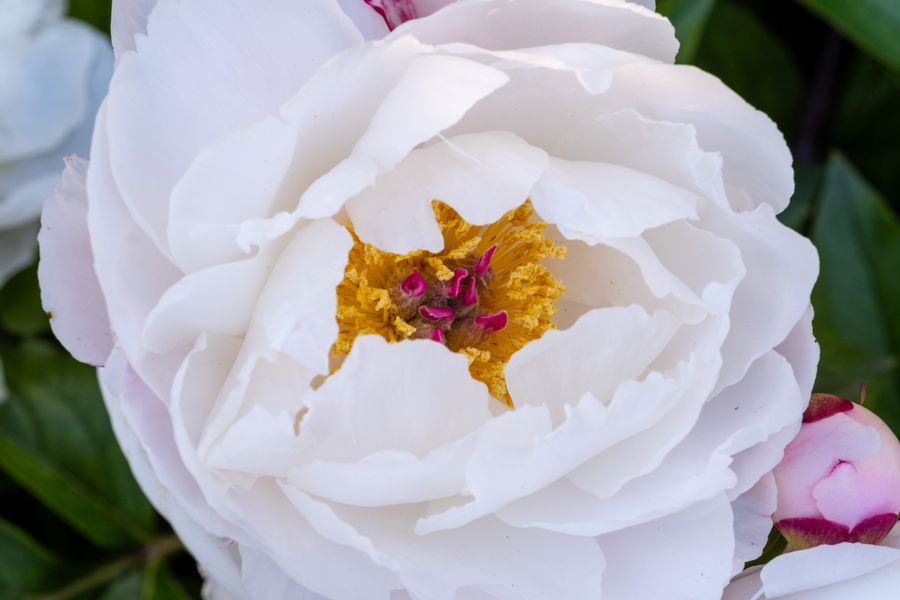
A full, ruffled white peony with a few carmine-tipped staminodes breaking up the gold at the centre, and a pink bud waiting behind it. Peonies are named for Paeon, physician to the Greek gods, and the roots were medicine long before the flowers were ornament; the Chinese were breeding them for the garden by the seventh century, when they were the imperial flower and a good plant changed hands for gold.
White peony, one ring of petals
New York Botanical Garden, 26 May 2025
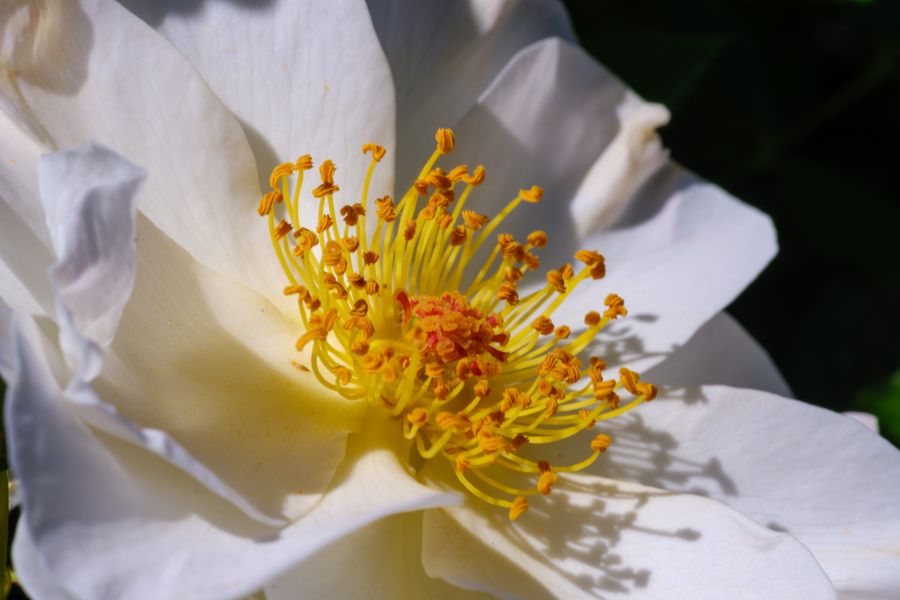
Closer to the wild single form than a garden peony usually gets - one ring of broad white petals left wide open around a full, undiminished boss of golden stamens and a scatter of magenta stigmas at the centre.
This is the peony a bee can use. The doubles have bred their stamens into petals and offer nothing, which is why the singles hum in June and the doubles are silent.
Peony and bud
Goodnestone, 1 June 2024
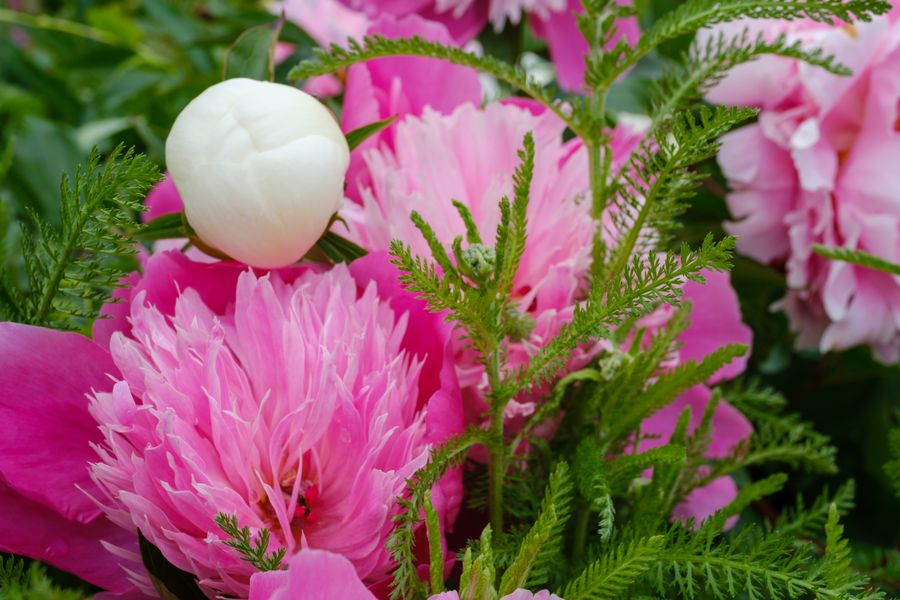
A fully double peony open, and a tight round bud beside it still pale rather than pink - peony buds show little colour until close to opening. The buds are often sticky with a sweet secretion, and ants farm it, which is where the old gardener's tale comes from that peonies need ants to open; they don't, but the ants do no harm and probably keep other insects off.
Peonies below the church tower
Goodnestone, 1 June 2024
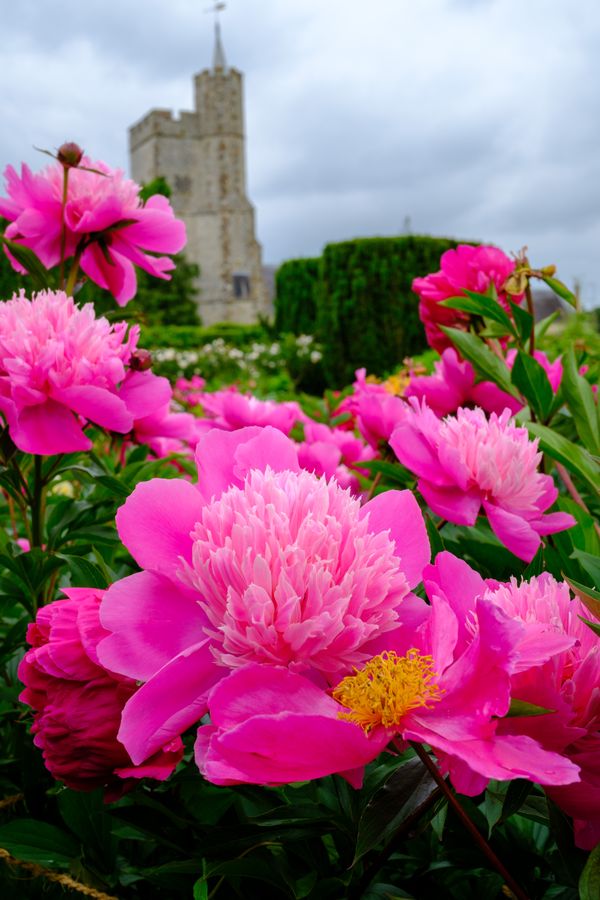
Fully double peonies, the flower form bred so hard toward petals that almost nothing of the stamens survives, with the flint tower of the parish church standing behind them beyond the garden wall. Peonies are absurdly long-lived for a border plant - a clump can flower for a century in the same spot and resents being moved - so a planting like this may well be older than anyone tending it.
Peony
Goodnestone, 1 June 2024
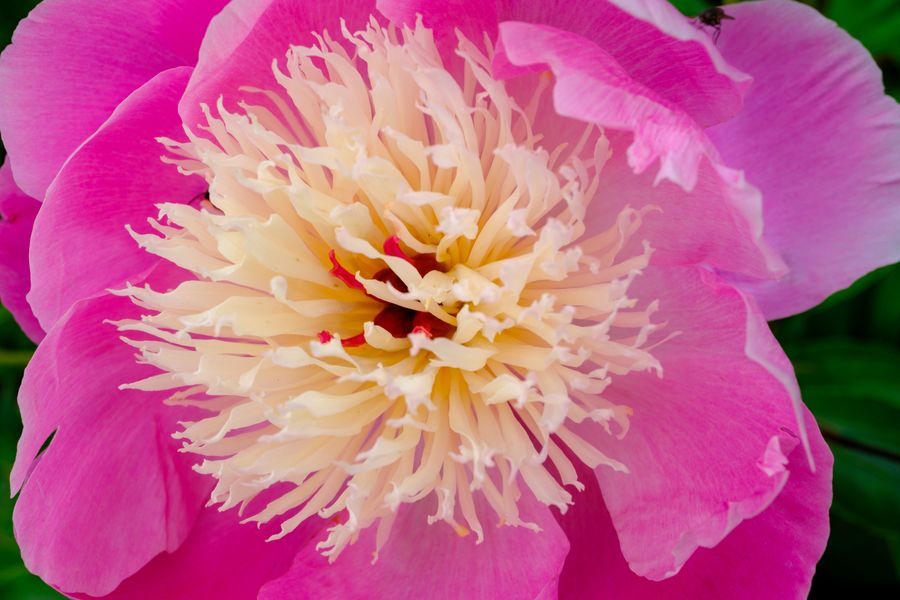
An anemone-form peony: broad outer guard petals doing the usual peony display, but the centre replaced with a dense ruff of narrow cream petaloids instead of the mass of gold stamens a single-flowered variety would show.
Bred for exactly this effect, and a good way to tell the anemone and Japanese forms from the plain single at a glance. The petaloids are stamens that have half-turned into petals, which is how every double flower in cultivation began.
Birds, insects, plants and other wildlife, mostly from Brooklyn, with some from further afield.
Every photograph comes with notes on what it is.
Selected
Favourite shots. Filter by subject, or .
Places
Everything, by where it was taken.
Species
Larger catalogue of photos organized by species of animal or plant.
Catalogue
Every photograph, newest first. Narrow it by period, place or species; the three work together.
Updates
Coming soon. Sign up at the bottom of the page for updates.