Daffodil
Narcissus sp. · Garden flowers
Daffodil, streaked
Brooklyn Botanic Garden, 2 April 2026
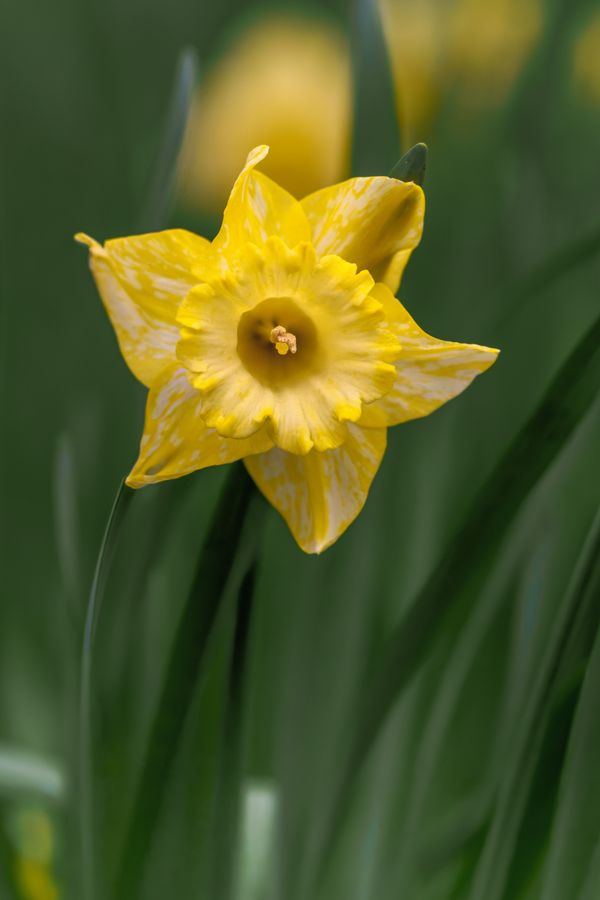
Irregular white feathering breaking up what would otherwise be a solid yellow trumpet and petals.
This kind of streaked, "broken" patterning can be a deliberately bred trait in some cultivars or, in others, the visible symptom of a mosaic virus. I couldn't say with confidence which explains this particular flower. Tulips went through the same thing in the 1600s, and the broken ones were the ones that fetched the price of a house.
Miniature daffodil
Brooklyn Botanic Garden, 20 April 2025
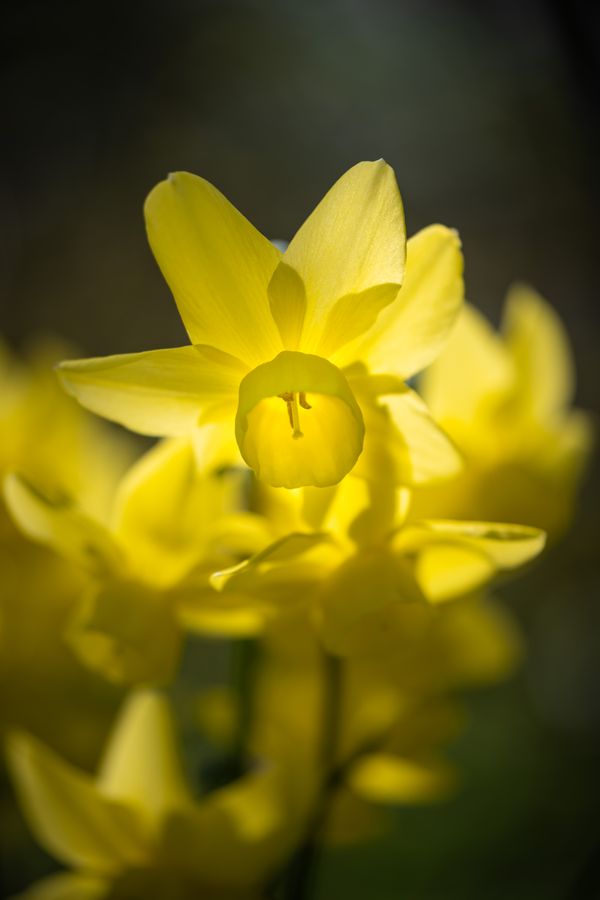
A small-cupped, all-yellow daffodil no more than a couple of inches across, clustered thickly enough that several crowd into the frame - one of the dwarf types bred down from the standard trumpet. Every part of a daffodil carries lycorine, a poison bitter enough that deer, squirrels and rabbits leave the bulbs alone, which is why daffodils naturalise where tulips get eaten.
Daffodil, coral-edged cup
Brooklyn Botanic Garden, 30 March 2025
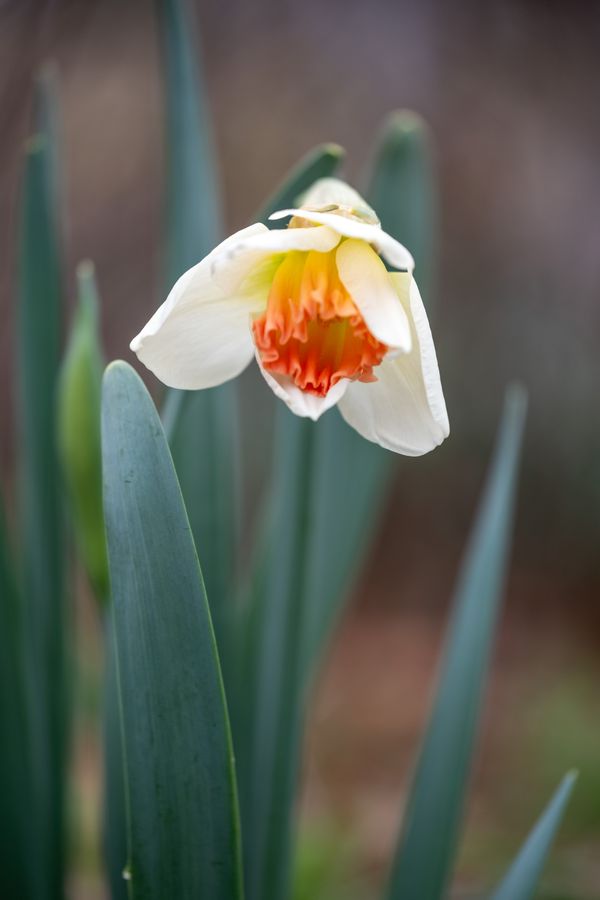
Another large-cupped daffodil, the corona ruffled and edged in a deeper coral-pink. Breeders have pushed the trumpet colour a long way from the plain yellow of the wild species, and pink was the hardest: the colour is unstable, deepening for a day or two after the flower opens and fading in strong sun, which is why the catalogues photograph them in the shade.
Daffodil
Brooklyn Botanic Garden, 30 March 2025
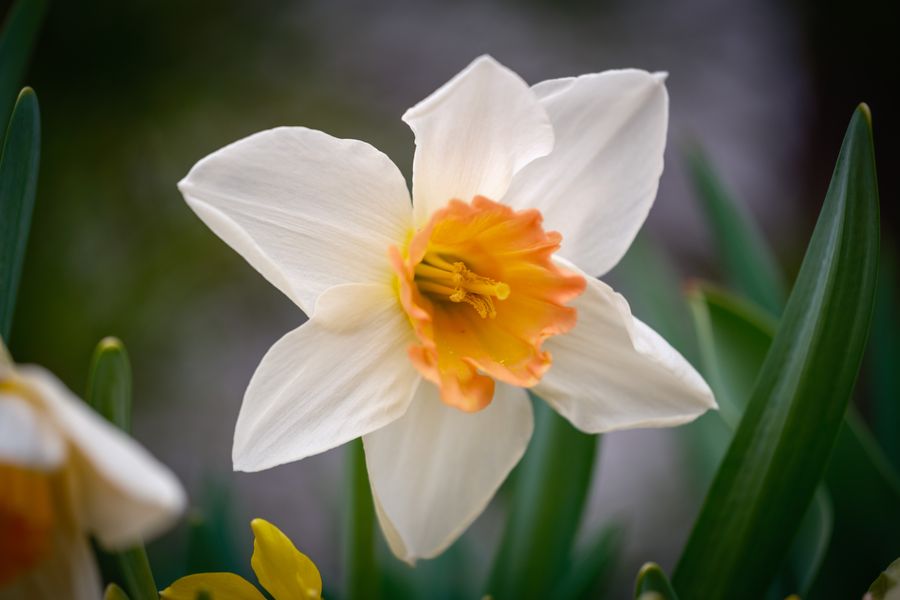
A large-cupped daffodil, white perianth around a corona shading from yellow to coral at the frilled rim - one of thousands of registered cultivars, and not one I'd name past its division. The pink and coral daffodils all trace back to a single chance seedling, 'Mrs R.O. Backhouse', raised in Herefordshire and introduced in 1923; before it there was no such thing.
Daffodil
New York Botanical Garden, 6 April 2021
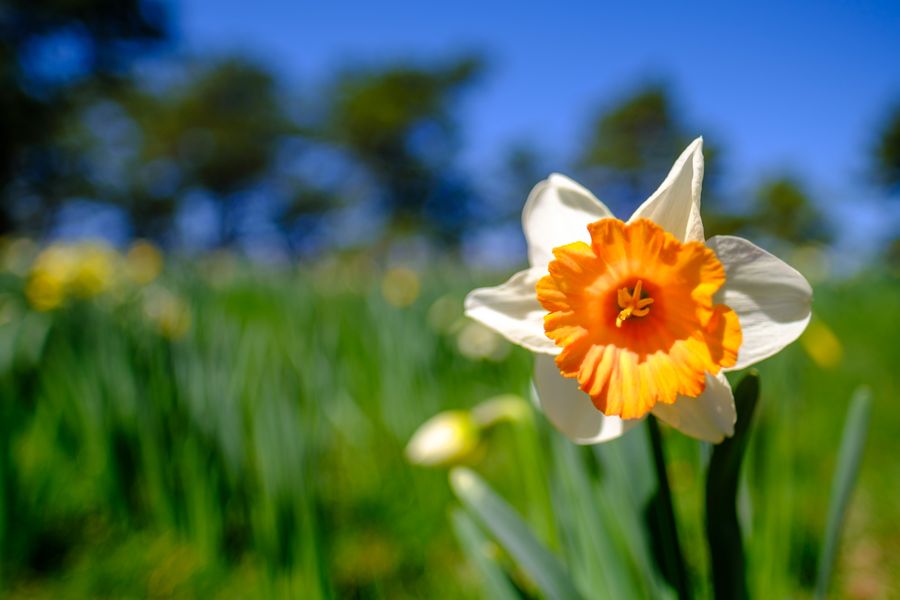
White petals with a short orange cup - one of the large-cupped divisions, of which there are thousands of named cultivars.
The trumpet is not petals at all. It is the corona, a separate structure that sits in front of them, and its colour usually fades or deepens over the few days a flower lasts.
Daffodils, backlit
New York Botanical Garden, 6 April 2021
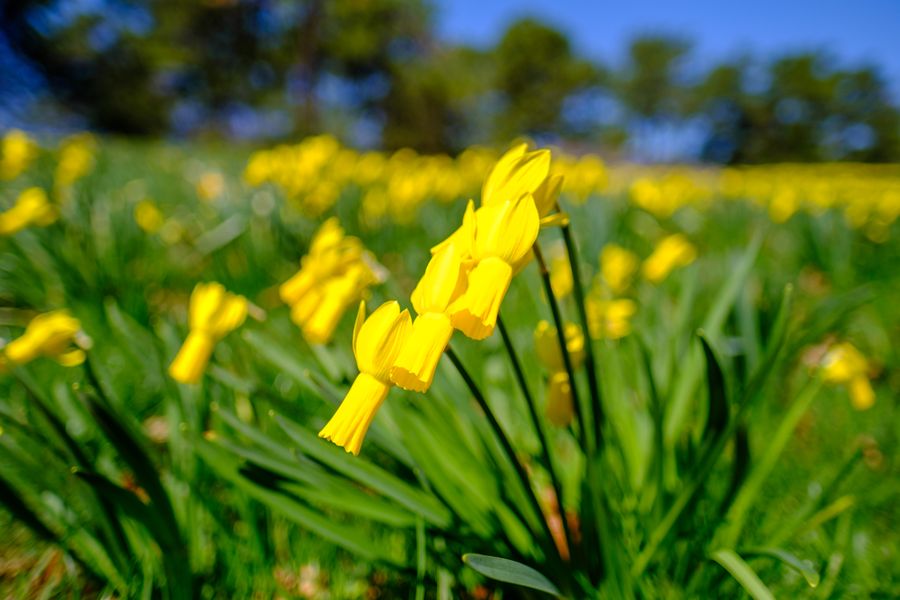
A cyclamineus type, told by the swept-back petals. The flower looks permanently caught in a gust.
The habit is bred from Narcissus cyclamineus, a small wild species from north-west Spain and Portugal that does exactly this on its own. Shot into the light and wide open, which turns the field behind into nothing but colour.
Daffodil Hill
New York Botanical Garden, 6 April 2021
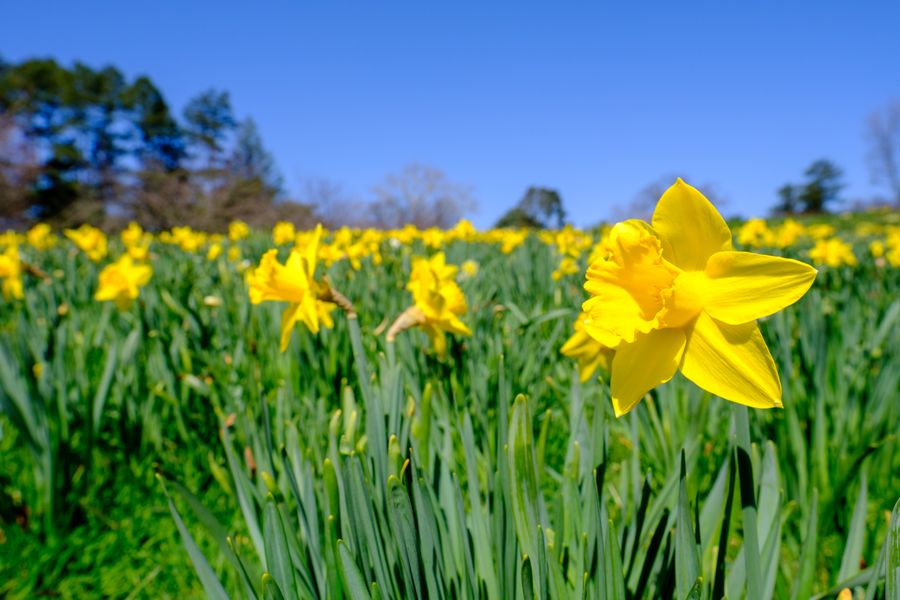
Something over a million bulbs go into the hillside here, and early April is when it pays out.
Daffodils are one of the few garden bulbs that genuinely naturalise in the north-east. Left alone they divide underground and spread, so a planting of this age is mostly the work of the bulbs themselves rather than of anyone with a trowel. Deer and squirrels leave them alone - every part of the plant carries lycorine, which is toxic - which is why they persist where tulips do not.
Birds, insects, plants and other wildlife, mostly from Brooklyn, with some from further afield.
Every photograph comes with notes on what it is.
Selected
Favourite shots. Filter by subject, or .
Places
Everything, by where it was taken.
Species
Larger catalogue of photos organized by species of animal or plant.
Catalogue
Every photograph, newest first. Narrow it by period, place or species; the three work together.
Updates
Coming soon. Sign up at the bottom of the page for updates.