Ring-billed Gull
Larus delawarensis · Seabirds
Ring-billed Gull, first-winter
Prospect Park, 1 March 2026
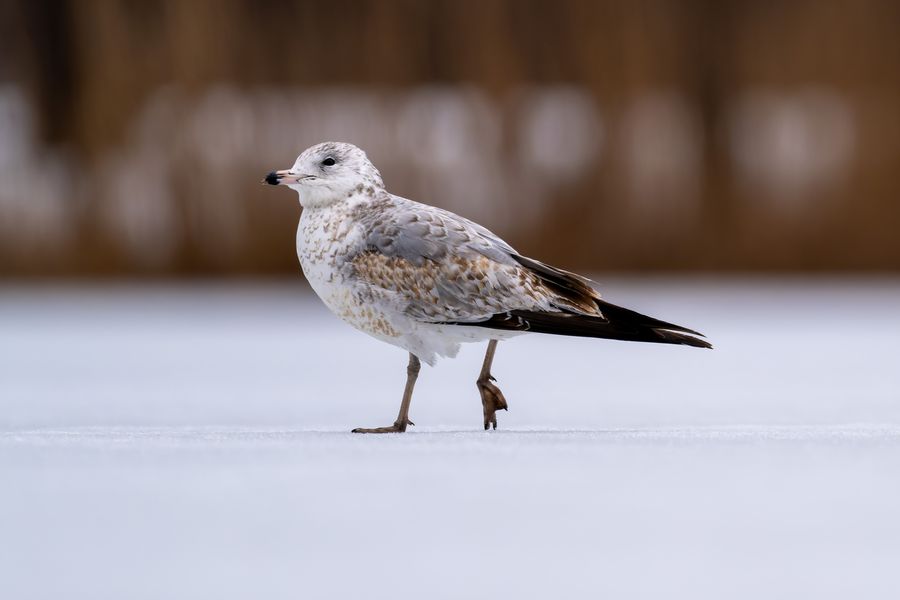
A first-winter Ring-billed Gull mid-stride on the ice, in the mottled brown-and-grey plumage of a bird hatched the previous summer. The tail band - a solid dark bar across an otherwise pale tail - is one of the more reliable marks for ageing a young gull at a glance, along with the pink bill with its black tip. It takes three years to reach the clean grey-and-white of an adult, and the ring around the bill that gives the species its name comes with it.
Ring-billed Gulls, adults
Prospect Park, 1 March 2026
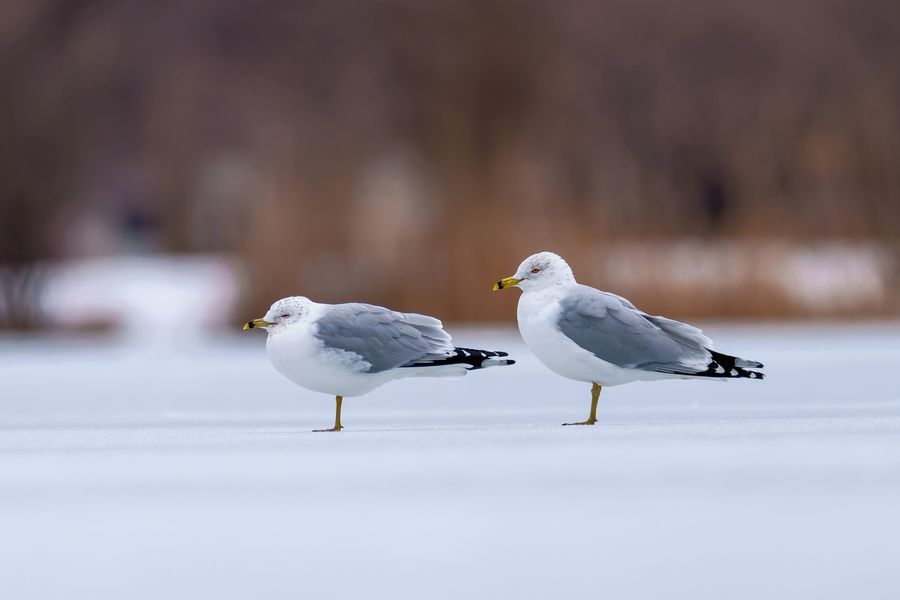
Two adult Ring-billed Gulls on the ice of Prospect Park Lake, the commonest gull of the city's inland water. It breeds on the Great Lakes and the prairies and winters along the coast, and a park lake in Brooklyn is about as far as it goes toward the sea.
Full adult plumage on both: pale grey backs, black-ringed yellow bills, and the red orbital ring around the eye that only shows at close range. The bill ring is the field mark that names the species, though from a distance the size and the pale grey mantle do most of the identifying.
Ring-billed Gull, first-winter
Prospect Park, 1 March 2026
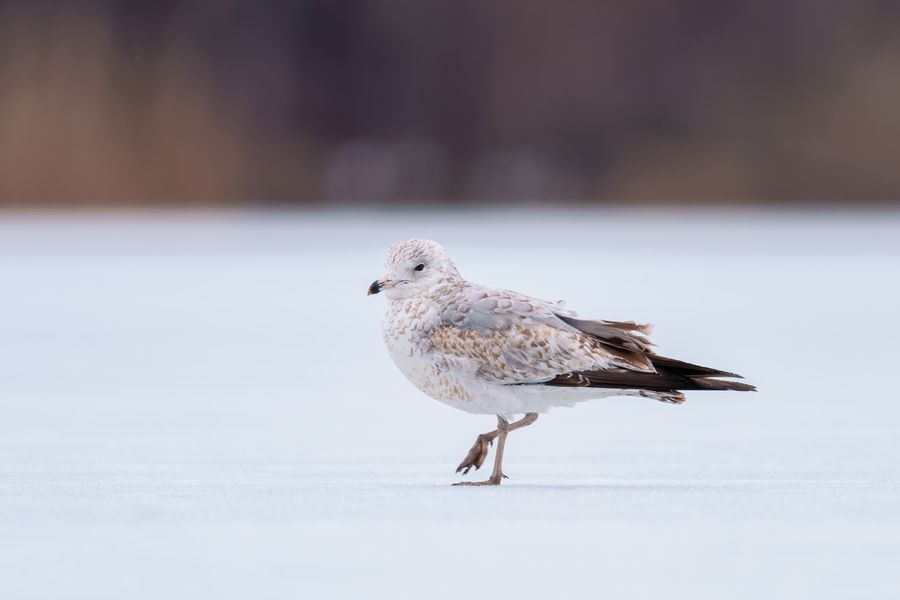
A first-winter Ring-billed Gull mid-stride on the ice of Prospect Park Lake in March, in the mottled brown-and-grey plumage of a bird hatched the previous summer on the Great Lakes. Ring-bills winter on the city's lakes and car parks in hundreds.
The tail band - a solid dark bar across an otherwise pale tail - is one of the more reliable marks for ageing a young gull at a glance, along with the pink bill with its black tip. It takes three years to reach the clean grey-and-white of an adult, and the ring around the bill that gives the species its name comes with it.
Ring-billed Gull in flight
Governors Island, 19 January 2026
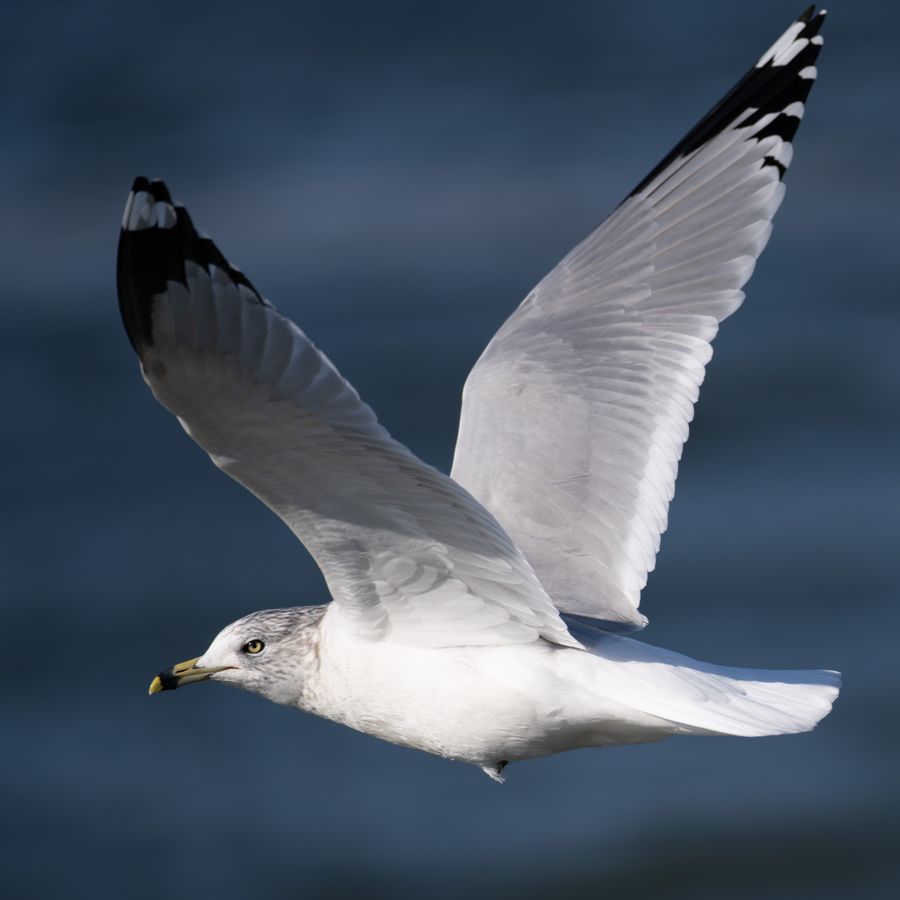
A Ring-billed Gull banking over the harbour off Governors Island in January, hard enough to show almost the full spread of both wings. It is the default gull of inland car parks and harbours across most of the continent, breeding on the Great Lakes and wintering on the coast.
Pale grey above with crisp black-and-white wingtips. Probably the most familiar gull in New York regardless of how little attention it gets. It was nearly wiped out by plume hunters and egg collectors by 1900, and is now one of the commonest birds on the continent.
Birds, insects, plants and other wildlife, mostly from Brooklyn, with some from further afield.
Every photograph comes with notes on what it is.
Selected
Favourite shots. Filter by subject, or .
Places
Everything, by where it was taken.
Species
Larger catalogue of photos organized by species of animal or plant.
Catalogue
Every photograph, newest first. Narrow it by period, place or species; the three work together.
Updates
Coming soon. Sign up at the bottom of the page for updates.