House Finch
Haemorhous mexicanus · Finches
House Finch, orange morph
San Diego Botanic Garden, 7 March 2026
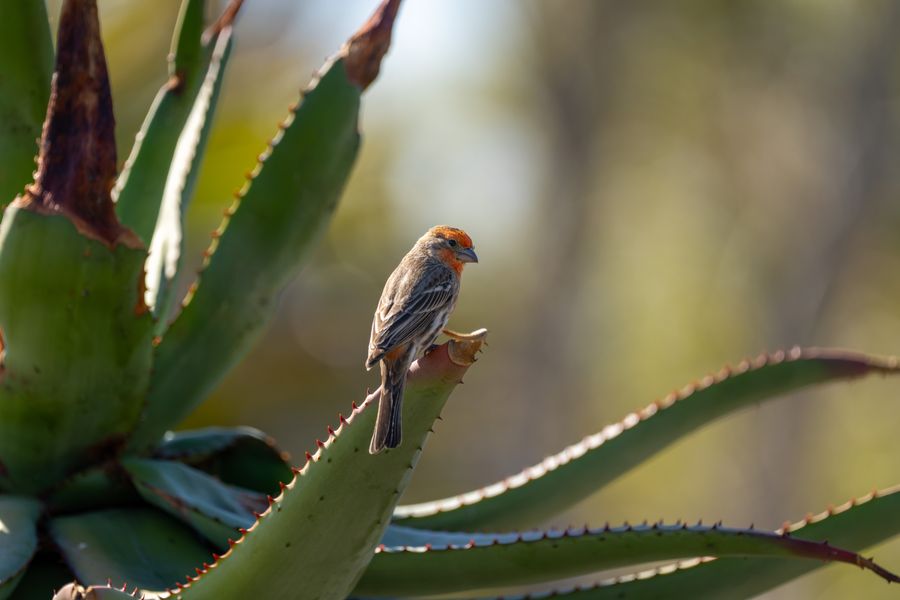
An orange male House Finch in a San Diego garden, in the species' native West. House Finches are birds of dry scrub and town gardens from Mexico to Oregon, and it was Californian birds, sold as cage birds, that seeded the population now across the East.
Male House Finches get their red from carotenoid pigments in food, not from their own body chemistry, and a bird on a diet poor in the right pigments comes out yellow or, as here, orange instead of the usual red. Females reportedly prefer the reddest males they can find, which makes the colour a fairly honest signal of how well a bird has been feeding.
House Finch, orange male, backlit
San Diego Botanic Garden, 7 March 2026
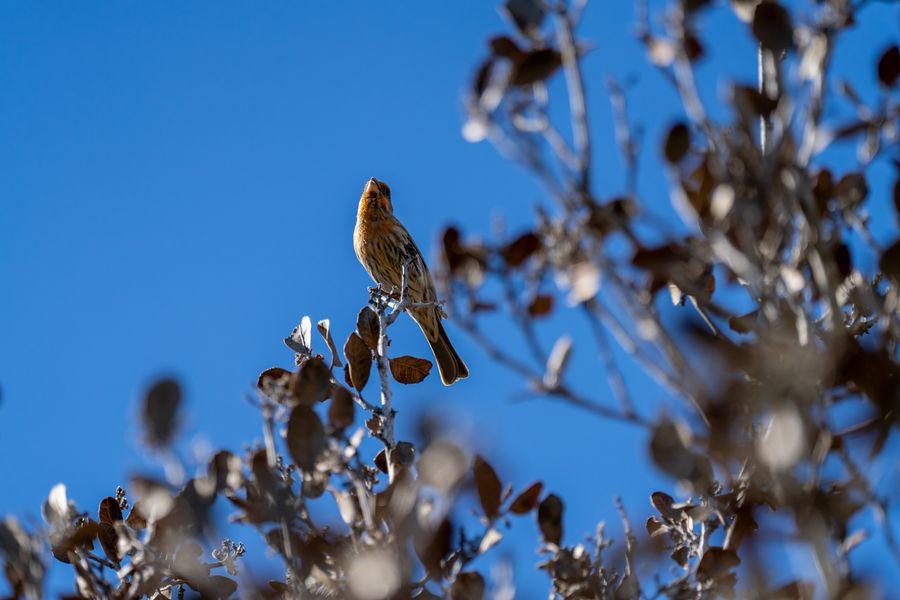
A male House Finch singing from the top of a bush in a San Diego garden, in the part of the country the species comes from - not the Fox Sparrow it was first written up as. A Fox Sparrow is a bulky, spotted bird that keeps to the ground under cover; this one is small, streaked, and up in the open in full sun, which is exactly where a House Finch sings from.
The colour is the interesting part. Most males are red; this one is orange, and the difference is diet rather than genes. The red comes from pigments in the food the bird eats while it grows its new feathers, and a male on the wrong plants comes out orange or even yellow. The females, which choose, prefer the reddest males they can find.
House Finch, female, with a berry
San Diego, 6 March 2026
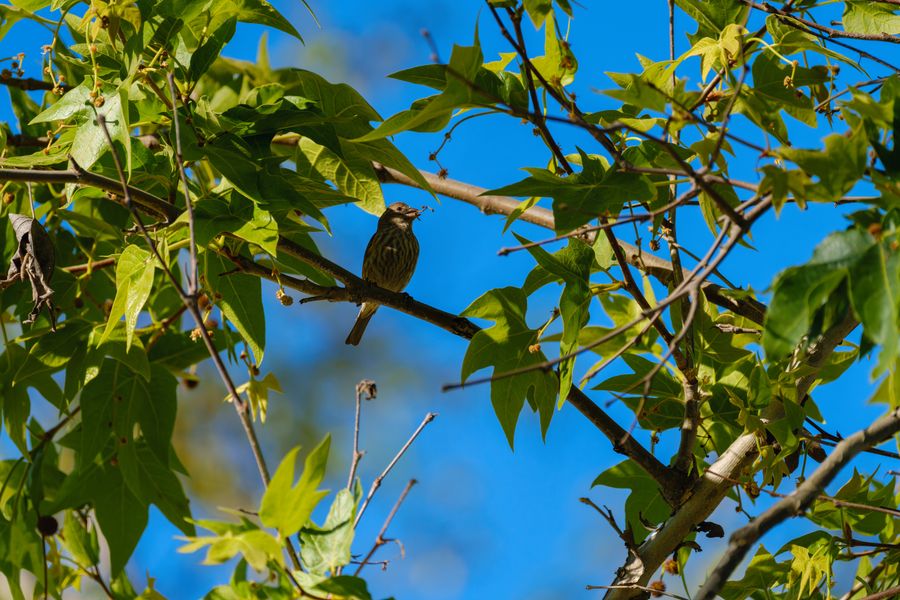
A female House Finch with a berry in a San Diego garden, in the part of the world the species actually comes from. House Finches were a bird of the deserts and towns of the West, and this is their home range; every one in the East descends from cage birds released on Long Island in 1940, sold illegally as "Hollywood finches" and let go ahead of a raid.
A plain streaky brown finch without the male's red head and breast. His colour comes from carotenoid pigments in the diet rather than from sex alone, and a male raised on poor food can end up drably orange or yellow instead of red.
House Finch
Central Park, 26 October 2025
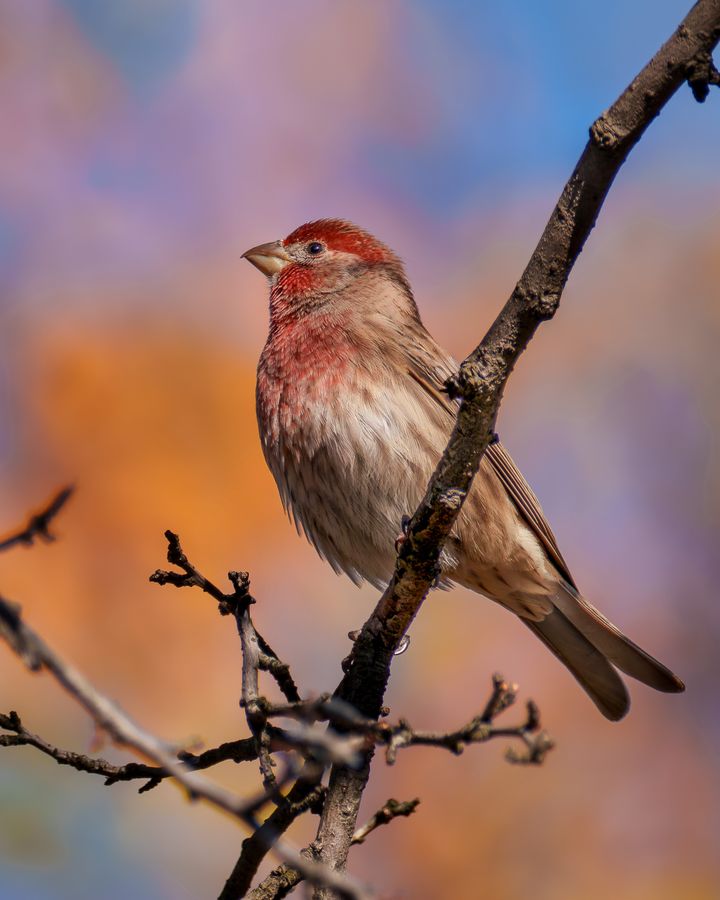
A male House Finch in raspberry-red in Central Park in October, a bird of the dry West that now lives in every town and suburb in the East as well. Every House Finch in the East descends from cage birds released on Long Island in 1940, when a dealer selling them illegally as "Hollywood finches" let them go ahead of a raid.
The intensity and even the hue of a House Finch's colour comes directly from carotenoid pigments in its diet, so redder males are often, quite literally, the better-fed ones. This one is on the raspberry side rather than the brighter orange-red some individuals show.
Birds, insects, plants and other wildlife, mostly from Brooklyn, with some from further afield.
Every photograph comes with notes on what it is.
Selected
Favourite shots. Filter by subject, or .
Places
Everything, by where it was taken.
Species
Larger catalogue of photos organized by species of animal or plant.
Catalogue
Every photograph, newest first. Narrow it by period, place or species; the three work together.
Updates
Coming soon. Sign up at the bottom of the page for updates.