White Ibis
Eudocimus albus · Waders & shorebirds
American White Ibis
Fairchild Tropical Botanic Garden, 7 February 2026
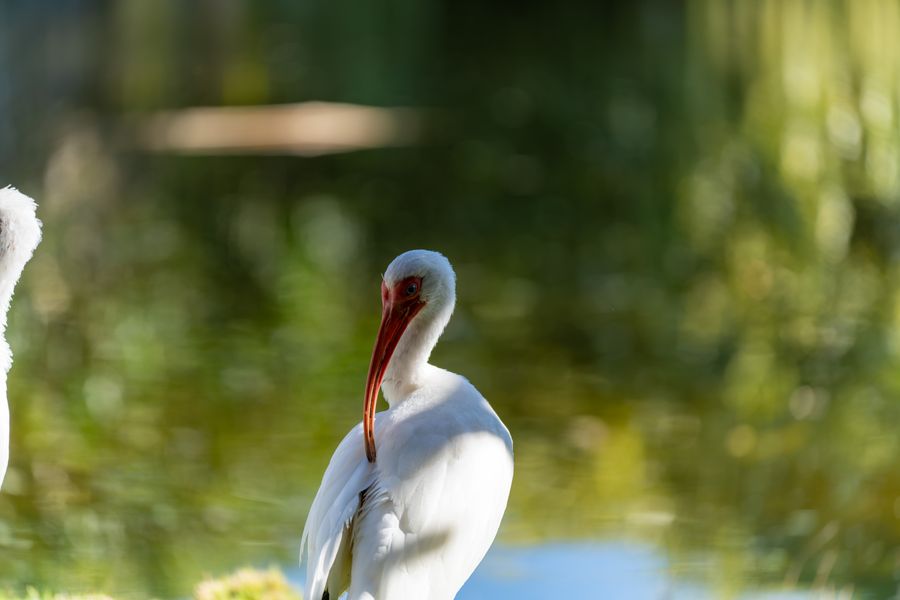
A White Ibis on the lawn at Fairchild in February, in winter colouring, the bare face and legs faded from bright red toward pink-orange. White Ibis are birds of the coastal marshes and swamps of the American South, and they range further from water than most wading birds, onto lawns and golf courses across Florida.
The decurved bill is a probing tool, worked into mud and leaf litter by feel rather than sight to find crayfish and other invertebrates. It is the mascot of the University of Miami, chosen because it is the last bird to leave before a hurricane and the first back.
White Ibis, close portrait
Everglades National Park, 6 February 2026
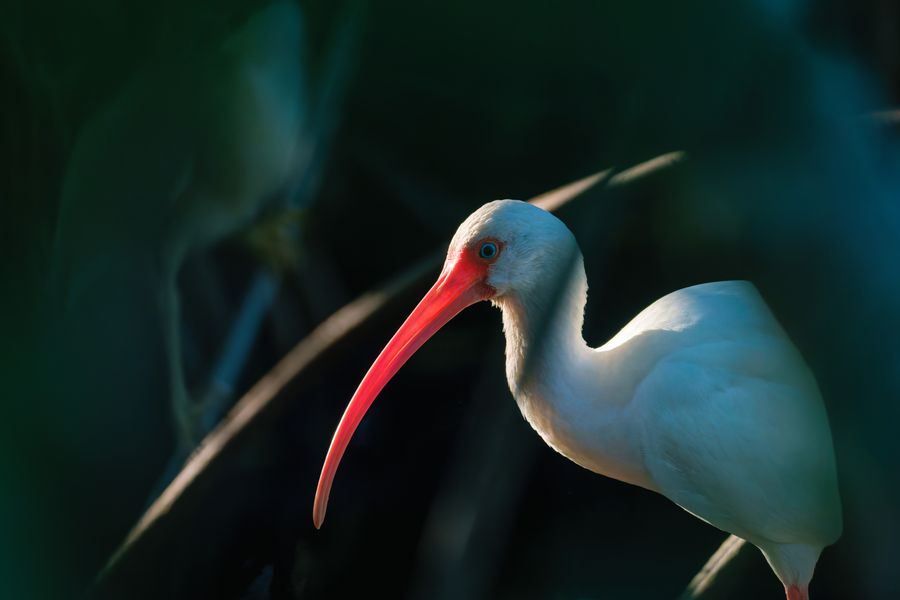
A White Ibis close up in the Everglades in February, an adult by the pale blue eye. It is the ibis of the southern coastal marshes, and the Everglades hold the biggest colonies in the country.
A juvenile's eye is dark brown, one more marker alongside the mottled plumage that separates an immature from a mature one at a glance. The bare red face flushes brighter in the breeding season, and the bill, which reads as pink here, goes almost scarlet for a few weeks in spring.
White Ibis
Everglades National Park, 6 February 2026
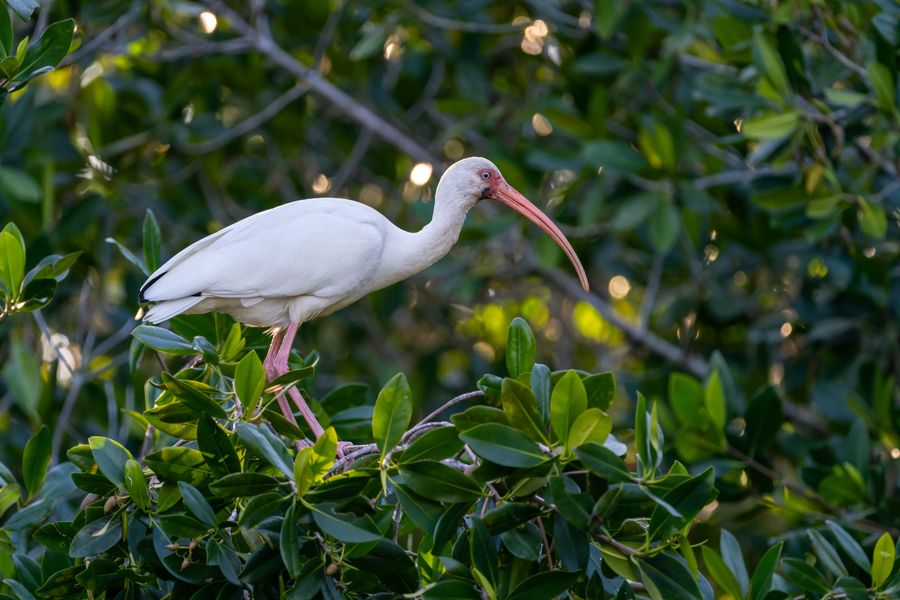
An adult White Ibis in the Everglades in February, in full colouring: blue eye, bare red-pink face, and the same colour running down the long decurved bill and legs. White Ibis are birds of the coastal marshes and swamps of the American South, feeding in flocks in the shallows and, increasingly, on lawns.
They are highly social, feeding, roosting and nesting in large mixed groups, which is why the species has become one of the most reliable sights on a Florida park lawn as well as in a mangrove creek. A taste for insects in short grass works about as well as the crayfish-hunting this bill first evolved for.
White Ibis, immature
Everglades National Park, 6 February 2026
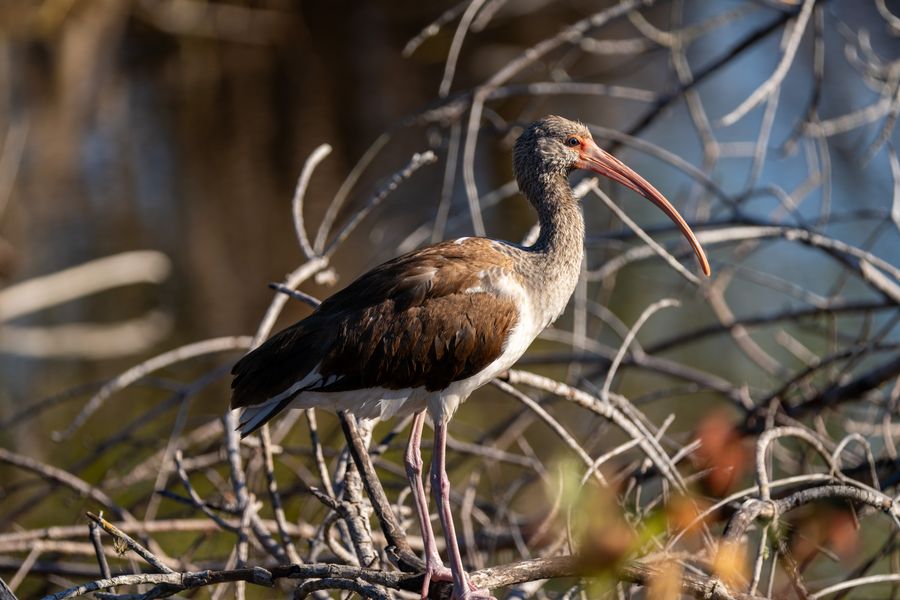
A young White Ibis probing the mud in the Everglades in February, brown and white rather than the all-white of an adult. White Ibis are birds of the coastal marshes and swamps of the American South, feeding in flocks in the shallows, and the Everglades hold tens of thousands.
Juvenile White Ibis keep this mottled plumage for roughly their first year, whitening gradually, with the legs and bill turning from grey to the adult's pink and red well before the body finishes changing. The bill is a probing tool rather than a grabbing one, worked into mud and shallow water by feel to find crayfish and other invertebrates rather than by sight.
Birds, insects, plants and other wildlife, mostly from Brooklyn, with some from further afield.
Every photograph comes with notes on what it is.
Selected
Favourite shots. Filter by subject, or .
Places
Everything, by where it was taken.
Species
Larger catalogue of photos organized by species of animal or plant.
Catalogue
Every photograph, newest first. Narrow it by period, place or species; the three work together.
Updates
Coming soon. Sign up at the bottom of the page for updates.