Snowy Egret
Egretta thula · Herons & egrets
Snowy Egret in flight
San Diego, 6 March 2026
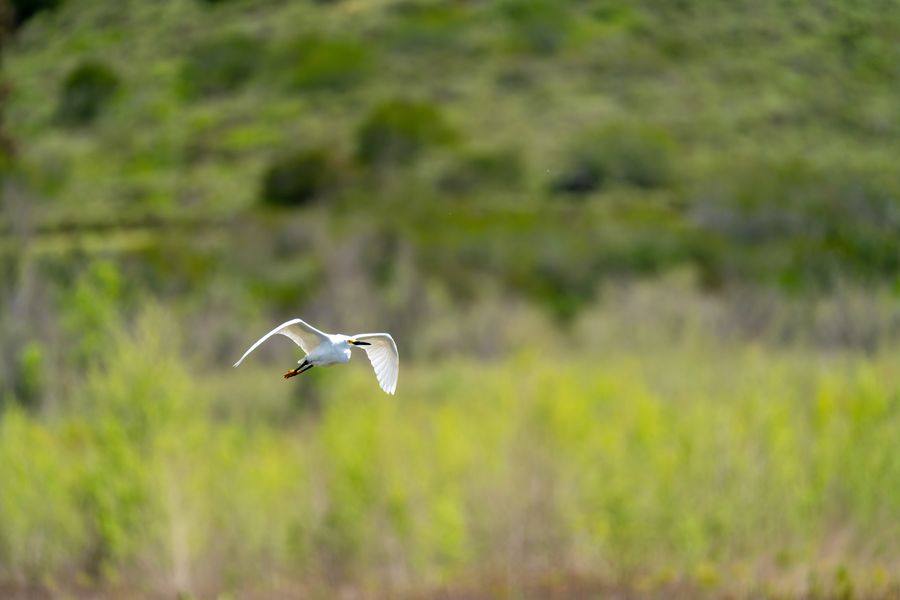
A Snowy Egret in flight over a San Diego lagoon, the black legs trailing and the yellow feet showing. Snowies are birds of the coast and the marsh across the southern United States, and Southern California's lagoons hold them all year.
The black bill and legs against bright yellow feet - "golden slippers", in the old birding shorthand - are the quickest way to separate this species from the larger Great Egret, which has an all-black leg with no yellow at all. Snowy Egrets forage by stirring the bottom with one foot to flush prey, a more active technique than the patient stand-and-wait of most herons.
Snowy Egret, evening light
Everglades National Park, 6 February 2026
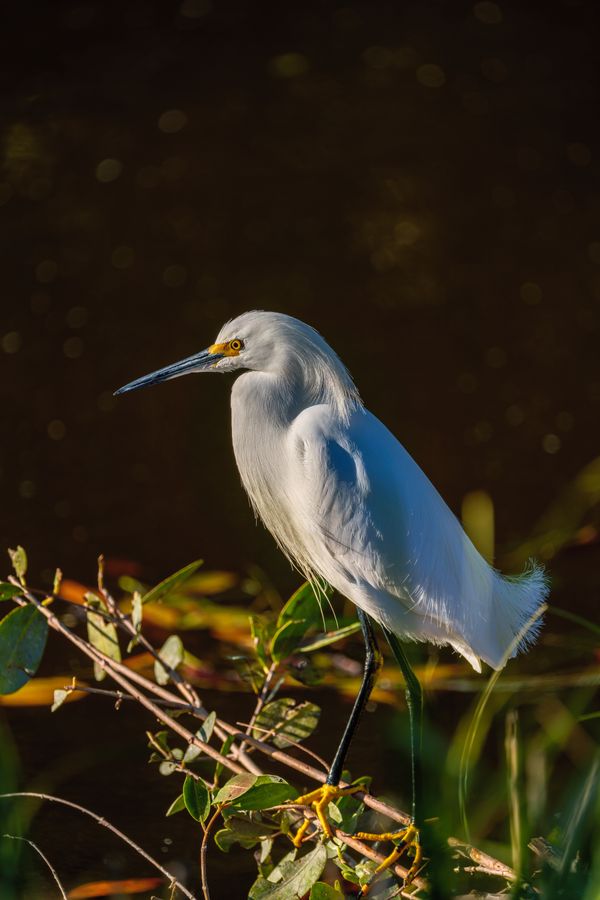
A Snowy Egret in low, warm late-afternoon light in the Everglades, which picks out the plumes along the back and crown. Snowies are herons of the coastal shallows across the South, active hunters that stir the bottom with a foot and run after what moves, where a Great Egret stands and waits.
The plumes are the breeding finery that very nearly finished the species off in the nineteenth century, when the feathers were worth more than their weight in gold to the hat trade. The yellow feet on black legs, "golden slippers", are the quickest way to tell it from the other white herons.
Snowy Egret on a mangrove root
Everglades National Park, 6 February 2026
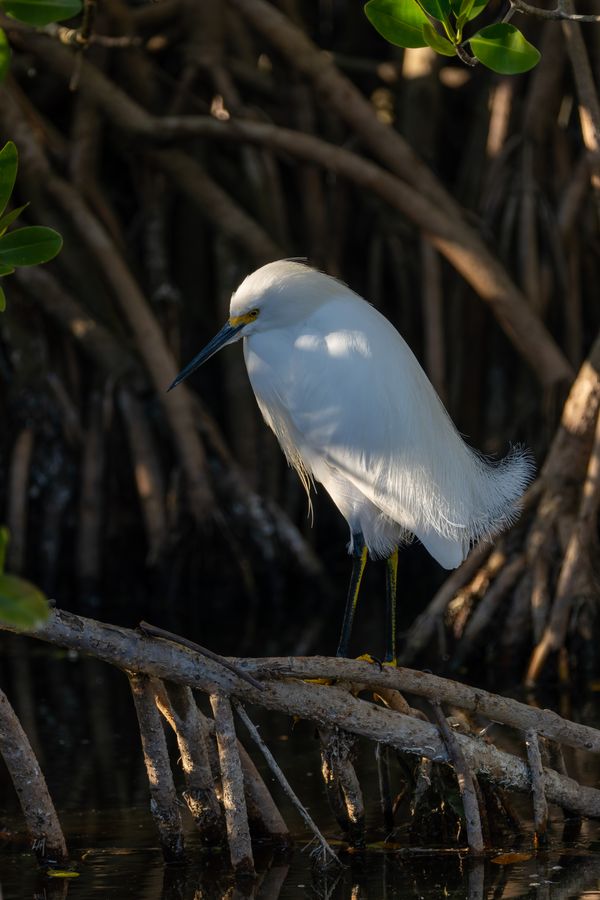
A Snowy Egret on a mangrove root in the Everglades, the yellow feet showing. It is a heron of the coastal shallows across the South, an active hunter that runs, stirs and chases where the Great Egret stands and waits, and the mangrove edge is where it works.
The black legs and bright yellow feet - "golden slippers", in the old birding shorthand - are the quickest way to separate a Snowy Egret from the similar but larger Great Egret, which has black legs and black feet to match. Snowy Egrets put those feet to active use, stirring the bottom to flush prey. The yellow is thought to be a lure as well: fish come to look at the bright thing moving in the mud.
Snowy Egret, breeding plumes
Everglades National Park, 6 February 2026
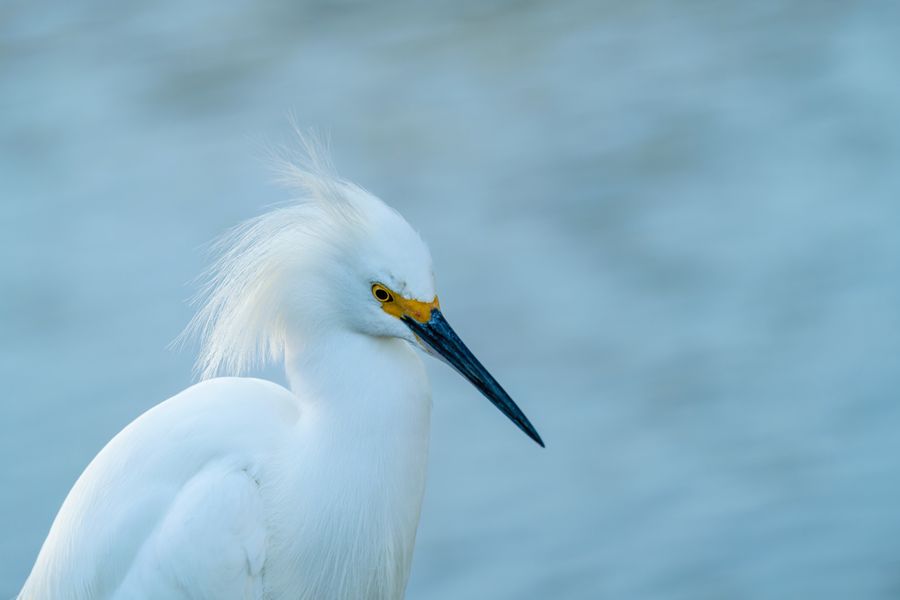
A Snowy Egret in the Everglades in February, the recurved plumes streaming off the back of the head. Snowies are herons of the coastal marshes and shallows across the American South, and the Everglades rookeries are where the plume trade found them.
The plumes are breeding finery, present only for a few months each spring and gone again once the season's chicks have fledged. Snowy Egrets were hit harder than almost any other species by the plume trade around 1900, purely because these particular feathers were considered the most desirable of all - reportedly worth more than their weight in gold at the trade's peak. Two wardens were murdered in Florida protecting the rookeries.
Birds, insects, plants and other wildlife, mostly from Brooklyn, with some from further afield.
Every photograph comes with notes on what it is.
Selected
Favourite shots. Filter by subject, or .
Places
Everything, by where it was taken.
Species
Larger catalogue of photos organized by species of animal or plant.
Catalogue
Every photograph, newest first. Narrow it by period, place or species; the three work together.
Updates
Coming soon. Sign up at the bottom of the page for updates.