Little Blue Heron
Egretta caerulea · Herons & egrets
Little Blue Heron, swallowing
Staten Island, 5 July 2026
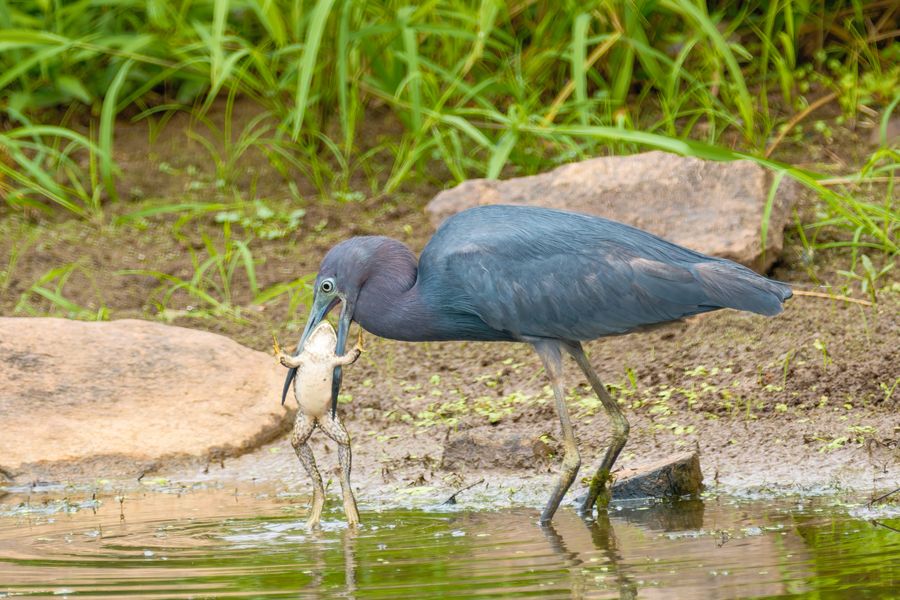
A Little Blue Heron with the frog turned and going down head-first, on the same Staten Island pond.
Herons have no crop to soften food first, so a meal this size is broken down entirely by stomach acid strong enough to dissolve bone - which is also how they deal with the fish spines and turtle shell fragments that turn up in pellet studies of the genus. The heron will not eat again today.
Little Blue Heron, about to swallow
Staten Island, 5 July 2026
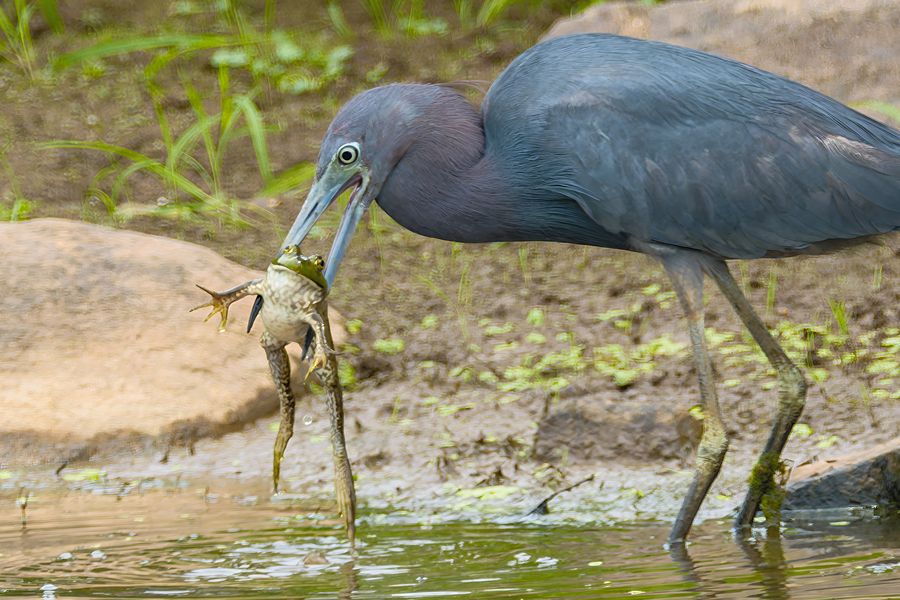
A Little Blue Heron with a frog gripped crosswise in its bill on a Staten Island pond, working out how to turn it head-first. Swallowing anything this size sideways would risk a leg or an elbow catching in the throat.
The frog is still very much alive at this point, legs spread and straining against the bill. Little Blue Herons hunt by wading slowly and deliberately rather than standing and waiting, which is how this one got close enough to a well-grown frog to take it.
Little Blue Heron with a frog
Staten Island, 5 July 2026
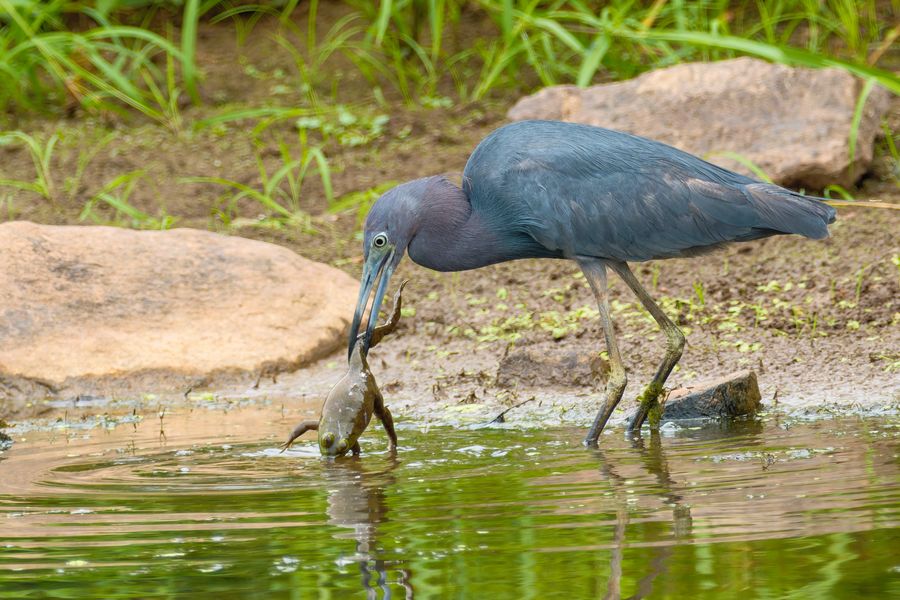
A Little Blue Heron with a frog on Staten Island in July, come up with something too large to swallow whole in a hurry. Little Blue Herons breed in the harbour colonies and fish the freshwater ponds of the outer boroughs, wading slowly and deliberately rather than standing and waiting, which is how this one worked close enough to a well-grown frog to take it.
Slate-blue body, a maroon head and neck, a pale blue bill tipped in black: full adult plumage, quite different from the white first-year birds easy to mistake for a Snowy Egret. The frog is most likely a Bullfrog, though a big Green Frog would look much the same at this range.
Little Blue Heron at dusk
Everglades National Park, 6 February 2026
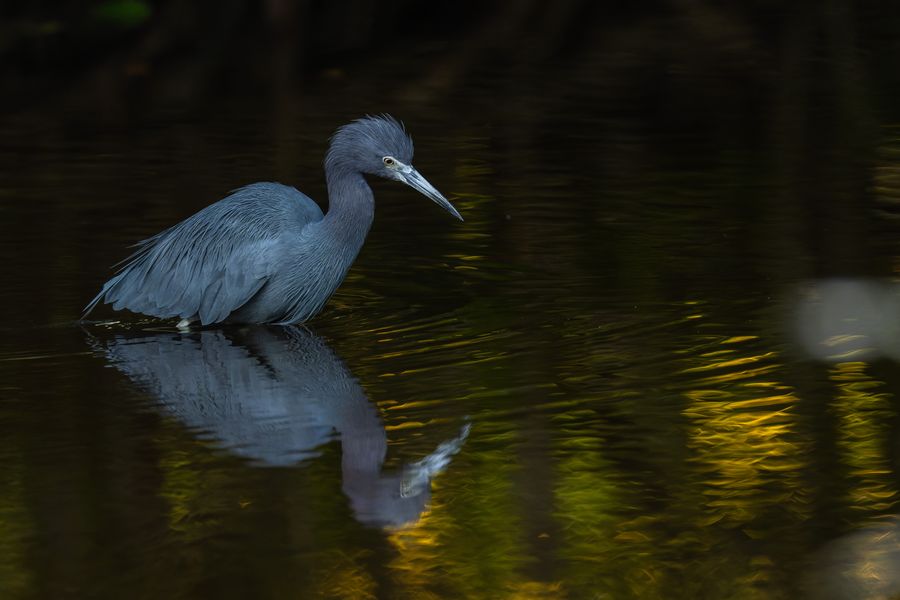
A Little Blue Heron in the last usable light of the day in the Everglades, the water gone the colour of tarnished brass. It is a heron of the freshwater marshes and coastal shallows of the South, feeding right up until the light runs out.
It is the one heron here that changes colour with age: the young are pure white for their first year and moult into this slate blue and maroon over the second, patchy and piebald in between. The white year is thought to let them feed among the Snowy Egrets unchallenged, since egrets tolerate their own kind and drive off anything dark.
Little Blue Heron, immature white morph
Everglades National Park, 6 February 2026
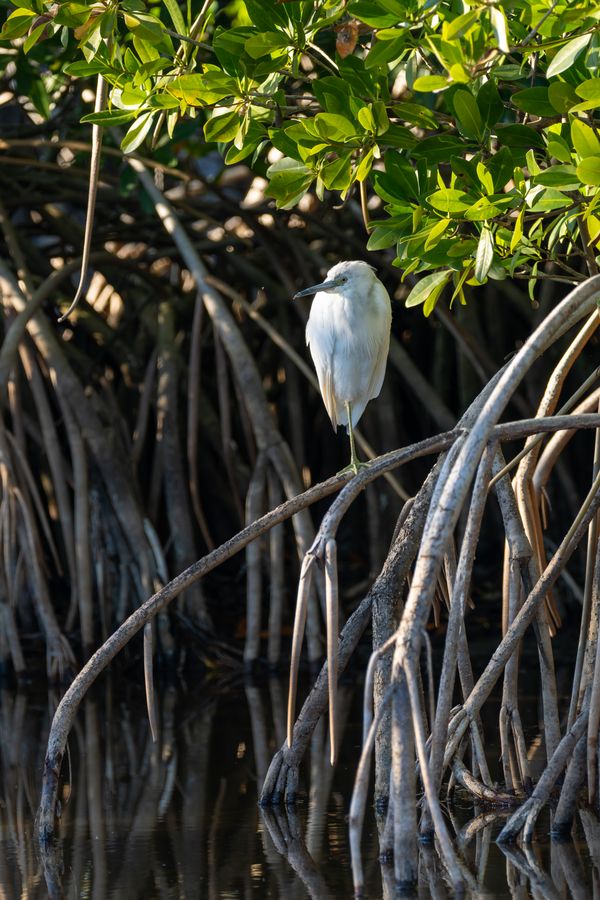
A first-year Little Blue Heron in the Everglades in February, all white, but not a Snowy Egret. Little Blues are herons of the freshwater marshes and coastal flats of the South, and the young ones spend their first year white among the egrets.
The greenish-grey legs and the dull, dusky-tipped bill are wrong for a Snowy, which has black legs, yellow feet and an all-black bill. A first-year Little Blue Heron stays white for its whole first year, which is thought to let it forage alongside Snowy Egrets and other white herons without being driven off as a competitor, before it moults into the slate-blue of the adult it will spend the rest of its life as.
Little Blue Heron, wading
Everglades National Park, 6 February 2026
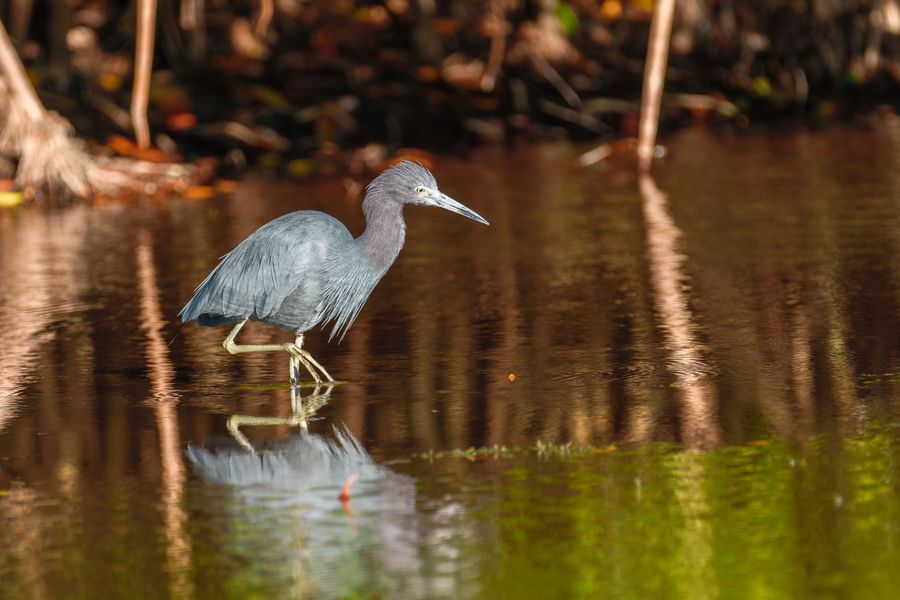
A Little Blue Heron wading the shallows of the Everglades in February with careful, high-stepping strides. It is a heron of the freshwater marshes and coastal flats of the American South, and a slower, more deliberate hunter than the Tricolored sharing the same water.
Little Blue Herons stalk prey rather than dashing at it, a difference visible even in a single wading stride like this one. It is the one heron here that changes colour with age, from white in its first year to this slate blue.
Little Blue Heron in flight
Everglades National Park, 6 February 2026
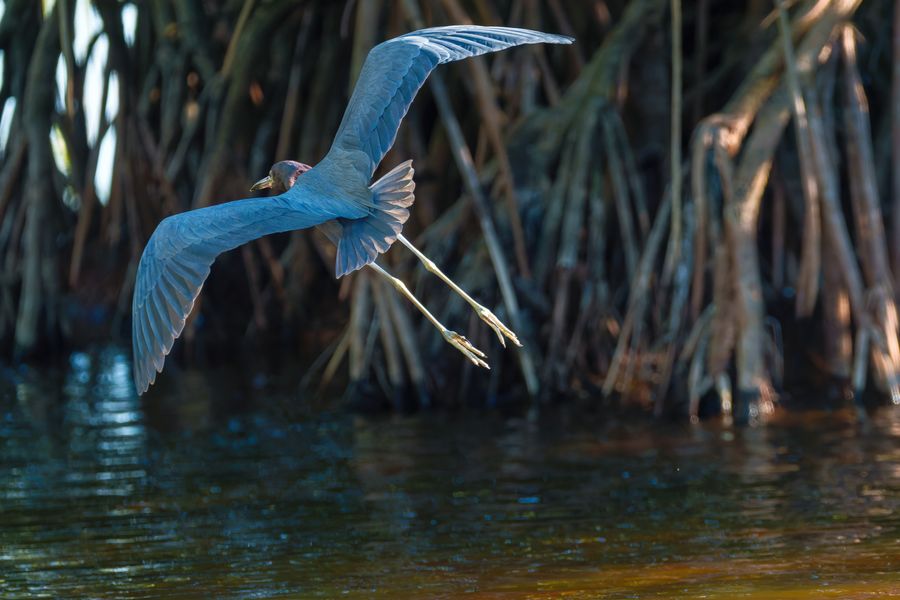
A Little Blue Heron in flight over the Everglades in February, neck folded back into an S and legs trailing. It is a heron of the freshwater marshes and coastal shallows of the American South, and it moves between feeding ponds through the day on exactly this slow, deep wingbeat.
Herons fly with the neck folded rather than extended, unlike a crane or a stork, a distinction usually more useful for identifying a distant silhouette than any plumage detail is. A Little Blue Heron flaps about twice a second, which is slow enough to count.
Birds, insects, plants and other wildlife, mostly from Brooklyn, with some from further afield.
Every photograph comes with notes on what it is.
Selected
Favourite shots. Filter by subject, or .
Places
Everything, by where it was taken.
Species
Larger catalogue of photos organized by species of animal or plant.
Catalogue
Every photograph, newest first. Narrow it by period, place or species; the three work together.
Updates
Coming soon. Sign up at the bottom of the page for updates.