Monarch
Danaus plexippus · Butterflies
Monarch in flight
Brooklyn Botanic Garden, 19 August 2026
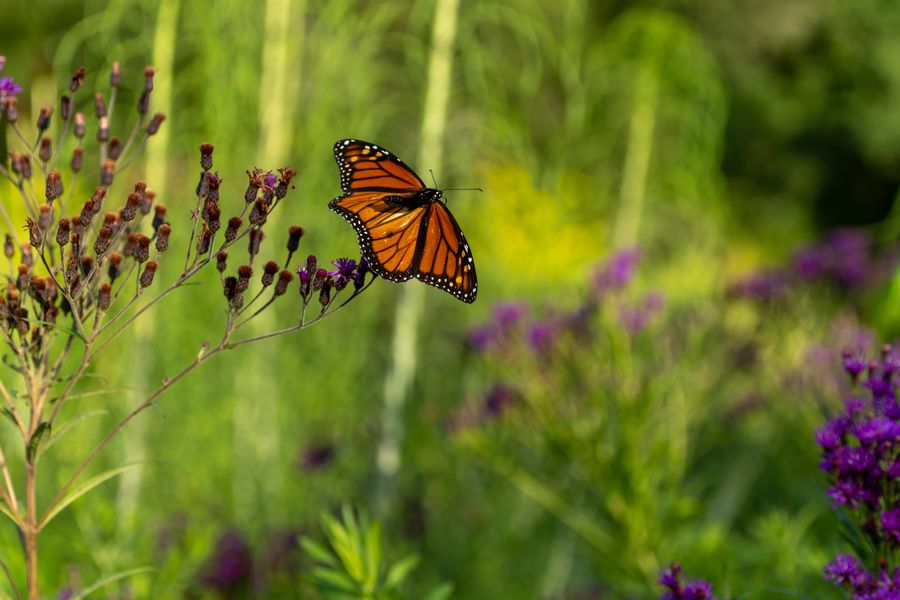
A Monarch airborne over a bed of faded flowerheads in the August border, the wings caught mid-beat. This is the migratory generation, on its way out of Brooklyn toward Mexico.
A Monarch's flight looks lazy, a few flaps then a glide, and it is deceptive: this is one of the few insects that migrates like a bird, and the generation on the wing in late summer will fly to the mountains of central Mexico, two thousand miles or more, on wings that weigh next to nothing.
Monarch, wings spread
Brooklyn Botanic Garden, 19 August 2026
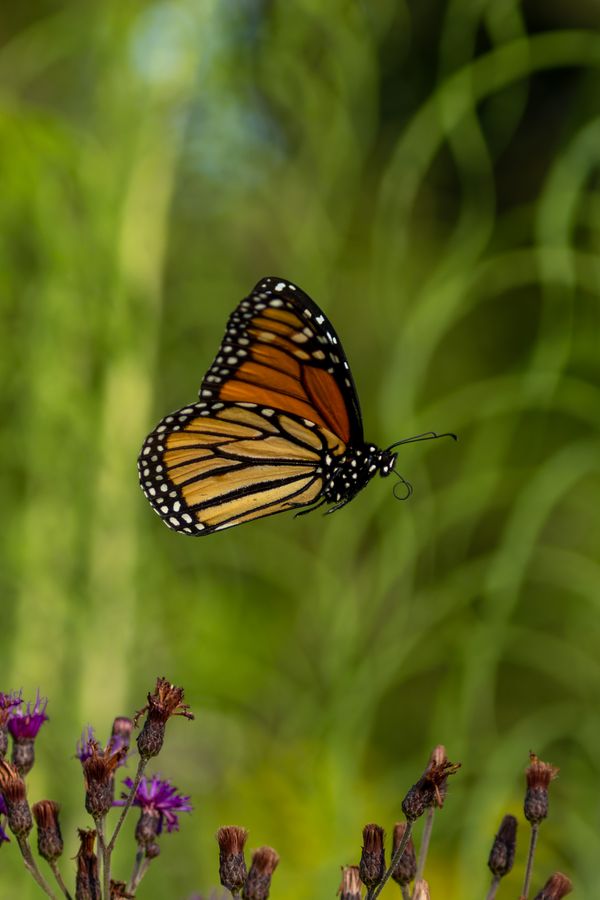
A Monarch perched over a spray of spent ironweed and thistle in the August border at the Botanic Garden, wings held fully open to the last of the day's sun. Monarchs breed across the whole continent on milkweed, and late August in Brooklyn is the beginning of the migration.
The open wings are a habit about warming the flight muscles rather than posing. A Monarch on the wing now is the generation that will fly to the mountains of Mexico, a place it has never been, and live eight months to do it where its parents lived five weeks.
Monarch, approaching ironweed
Brooklyn Botanic Garden, 13 August 2026
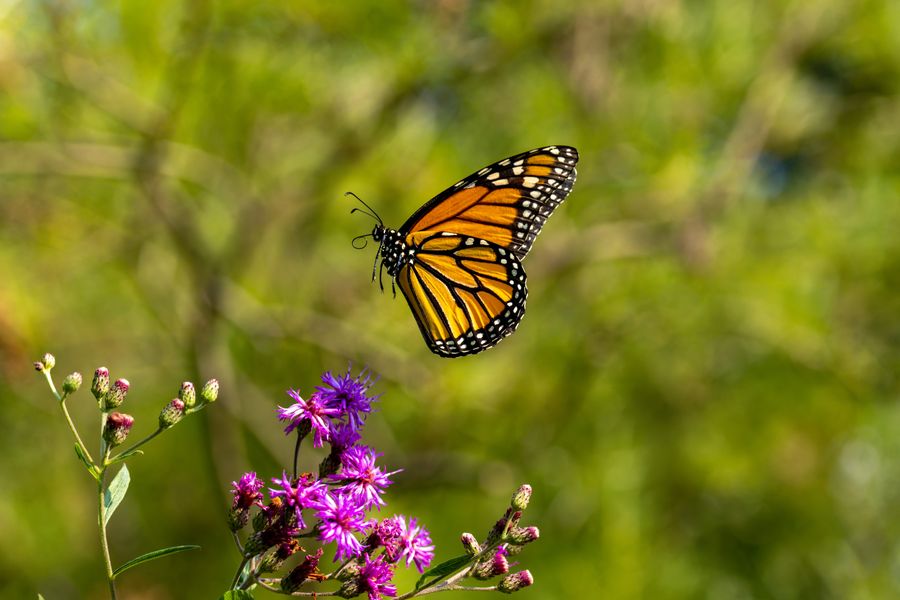
A Monarch coming in to ironweed in the August border, one of the migratory generation provisioning for a journey it has never made. The Monarchs at a Brooklyn garden in mid-August are on the first leg of a flight to central Mexico.
The individuals that fly south each autumn are several generations removed from the ones that flew north in spring, navigating a route none of their ancestors that year has flown before, to a forest none of them has seen.
Monarch on ironweed
Brooklyn Botanic Garden, 13 August 2026
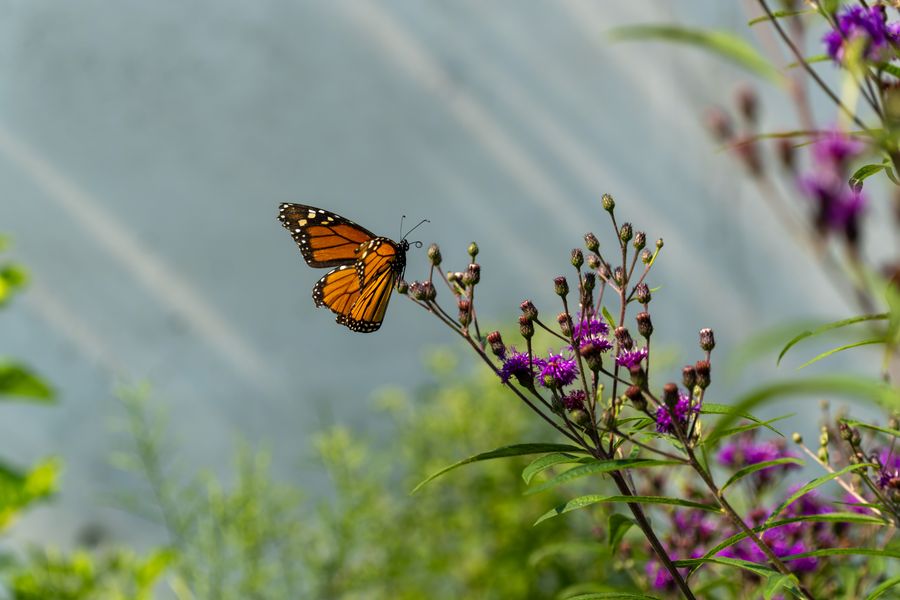
A Monarch on ironweed's small magenta flowerheads in the August border, wings fully spread. Ironweed is a native perennial of wet meadows across the East, named for its tough, rust-coloured stems rather than anything about the bloom, and reliably one of the last big nectar stops before Monarchs begin the long migration south.
Mid-August puts this individual early in that migratory generation, which unlike its parents and grandparents can live eight months or more and will fly to the mountains of central Mexico.
Monarch on mountain mint
Brooklyn Botanic Garden, 12 July 2026
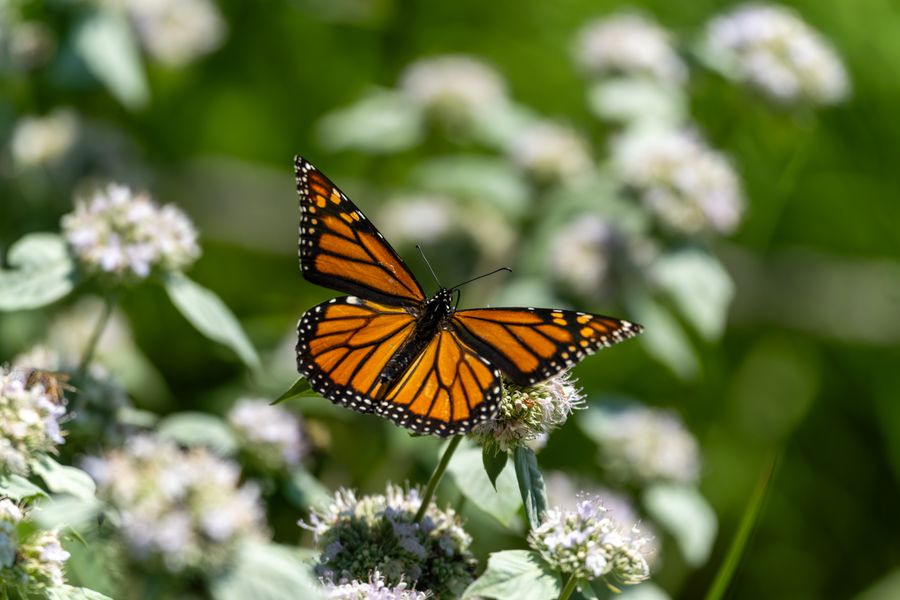
A Monarch on mountain mint in the July border, wings spread flat. Mountain mint is one of the most reliable pollinator plants in any native garden, flowering for weeks and drawing in nearly everything on the wing at once, and in July it is the busiest plant in the garden.
Monarchs raised this far north are already several generations removed from the ones that overwintered in Mexico. This one's own great-grandchildren, or further removed still, will be the generation that makes the return flight south in the autumn.
Monarch on ironweed
Brooklyn Botanic Garden, 31 August 2025
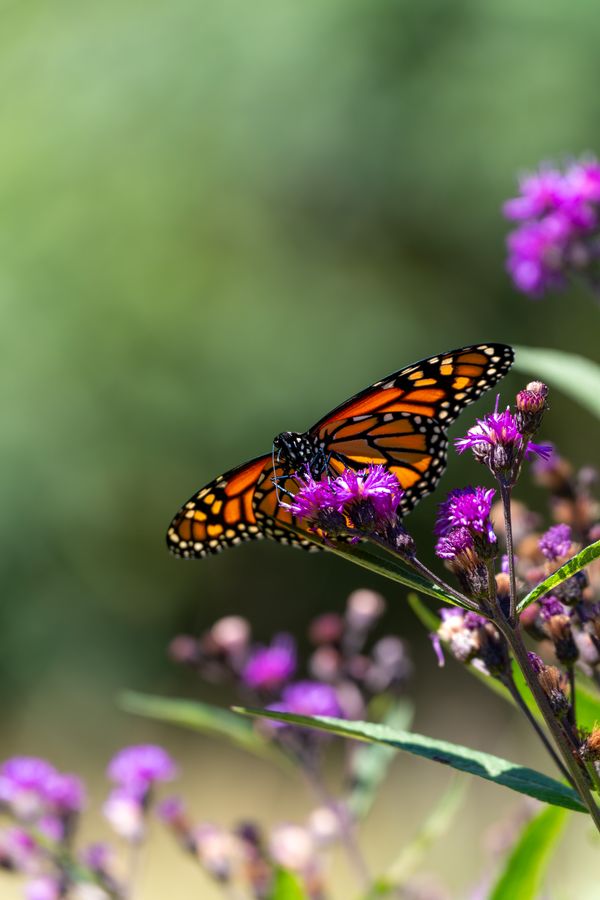
A Monarch with wings fully spread over a cluster of ironweed's small magenta flowerheads at the Botanic Garden on the last day of August, which is about when the migrating generation starts to move through Brooklyn. Monarchs breed across the whole continent; the ones on the wing now are the ones bound for Mexico.
Ironweed is a native perennial of wet meadows, named for its tough, rust-coloured stems rather than anything about the flower, and a late-season nectar stop on the route south.
Monarch on butterfly weed
Brooklyn Botanic Garden, 24 August 2025
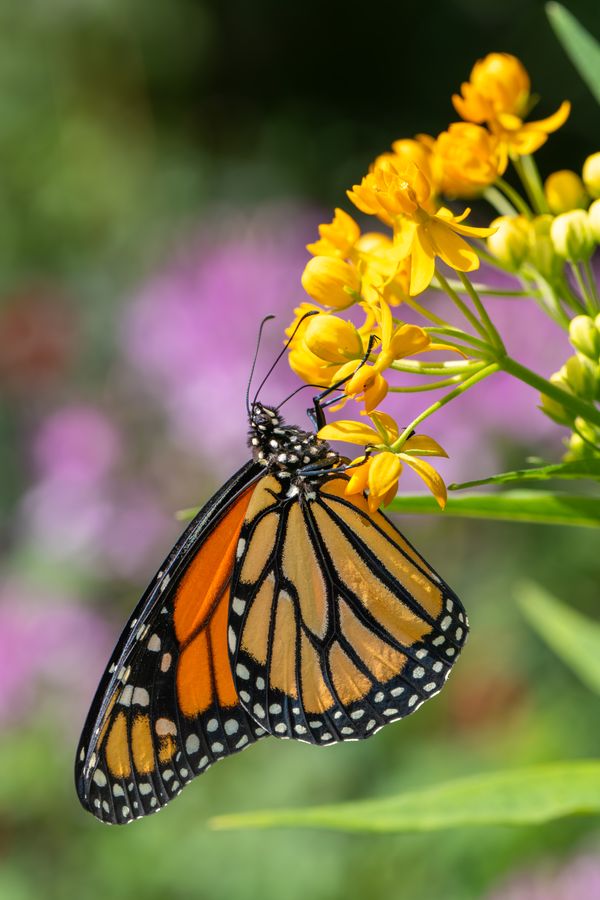
A Monarch working the flat orange umbels of butterfly weed in the August border, a milkweed species without the sticky white sap the genus is best known for. Monarchs breed across the whole of North America on milkweeds, and butterfly weed, a plant of dry prairie and roadside, is one of the ones they take to most readily in a garden.
Still a full host plant for the caterpillars despite the lack of sap, and a garden-friendly one for exactly that reason. The roots were the pleurisy root of old American medicine, chewed for lung complaints, and the plant is toxic enough that the cure must have been worse than most of what it treated.
Monarch on Joe-Pye weed
Upstate New York, 15 August 2025
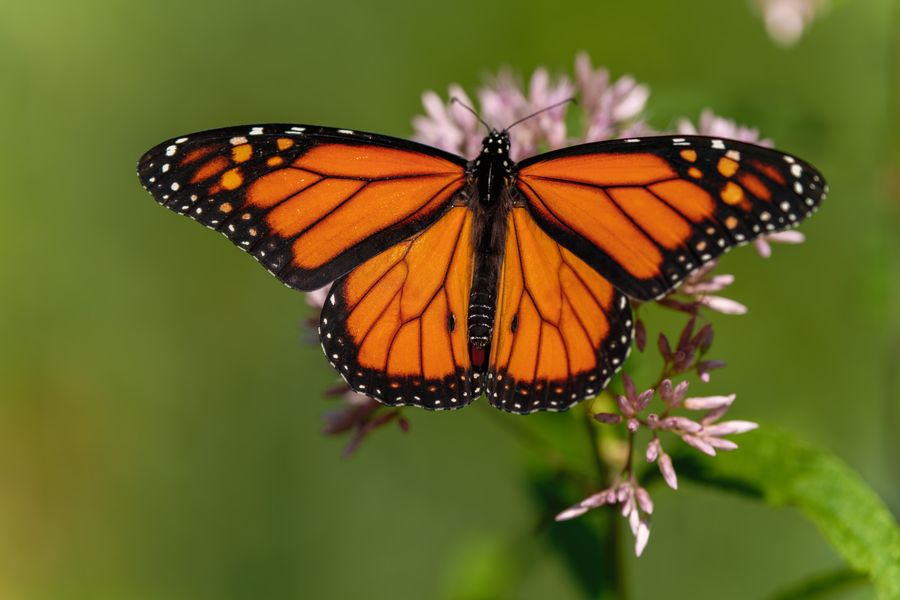
A female Monarch on Joe-Pye weed in an Upstate New York meadow in mid-August, a favourite late-summer nectar source right when Monarchs are starting to stage for the migration south. Monarchs breed across the whole continent wherever milkweed grows, and an Upstate meadow in August is full of them.
No black scent spots on the hindwings, which makes this one a female; males carry a small dark patch on a vein that females lack. Joe Pye was a real person, a Mohican healer in colonial New England said to have used the plant against typhus.
Monarch on coneflower
Brooklyn Botanic Garden, 12 July 2025
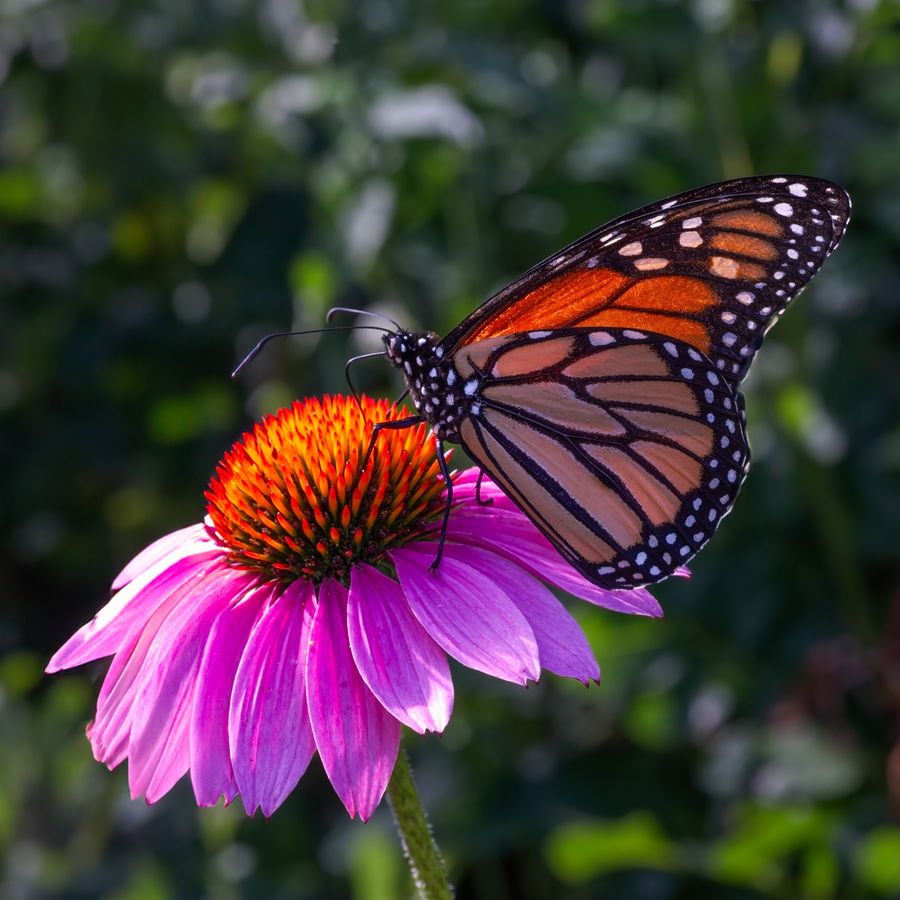
A Monarch on a purple coneflower in the July border, a nectar stop in the middle of summer. Monarchs breed across the whole of North America wherever milkweed grows, and the ones in Brooklyn in July are the summer generation, a few weeks old and living a few weeks more.
This one will breed and die here. The generation born in late summer is the one that flies to Mexico, and it is the coneflowers and milkweeds of gardens like this that feed the chain between.
Birds, insects, plants and other wildlife, mostly from Brooklyn, with some from further afield.
Every photograph comes with notes on what it is.
Selected
Favourite shots. Filter by subject, or .
Places
Everything, by where it was taken.
Species
Larger catalogue of photos organized by species of animal or plant.
Catalogue
Every photograph, newest first. Narrow it by period, place or species; the three work together.
Updates
Coming soon. Sign up at the bottom of the page for updates.