Marsh Harrier
Circus aeruginosus · Raptors
Marsh Harrier, banking
Stodmarsh, 2 May 2026
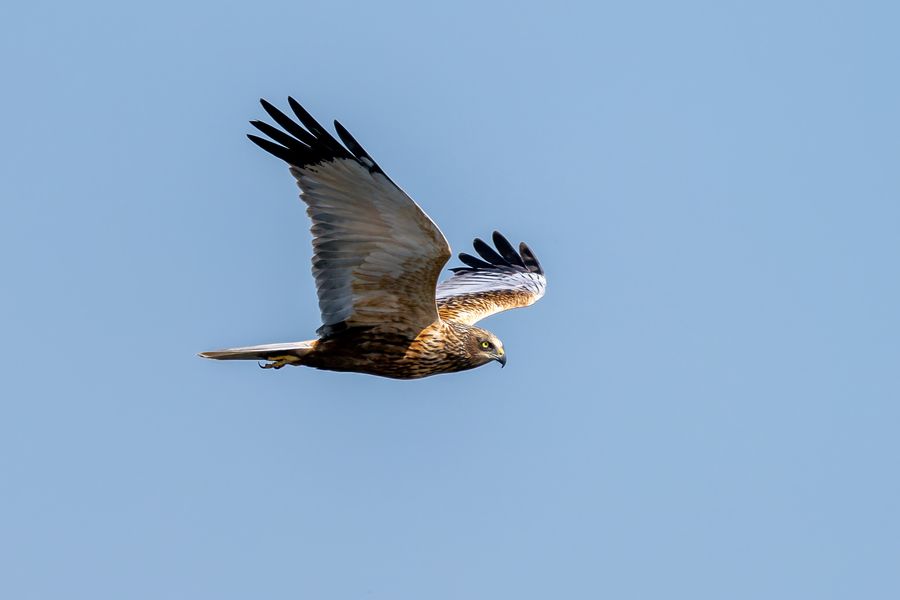
A Marsh Harrier banked into a tight turn over the reeds at Stodmarsh, wings drawn back. Stodmarsh's reedbeds are among the more reliable places in southern England to see this species, after a UK population that fell to a single breeding pair in the early 1970s recovered alongside the reedbed conservation that also brought the bittern back.
The grey panel in the wing and the black wingtips mark a male; a female is chocolate brown throughout, with only a cream crown and shoulders for contrast. The pair share the hunting, and the male passes prey to the female in mid-air, talon to talon.
Marsh Harrier quartering the reeds
Stodmarsh, 2 May 2026
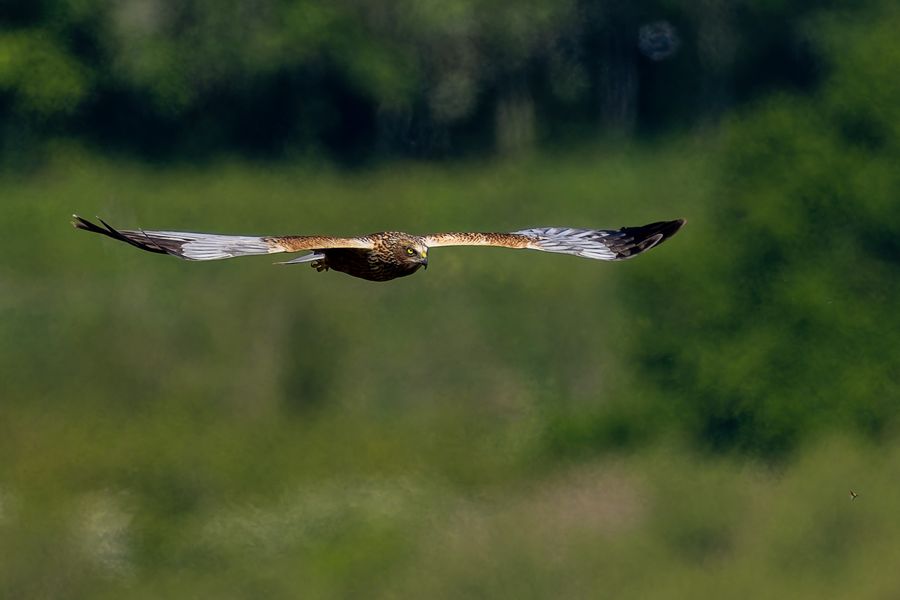
A Marsh Harrier quartering the reeds at Stodmarsh, working a low, methodical beat back and forth over open marsh rather than stooping from height, covering ground until something below breaks cover. Marsh Harriers are birds of big reedbeds, and the Kent marshes hold a good share of the British population.
A cream crown and pale grey wing panels set against otherwise dark plumage point to an adult male; females run uniformly darker brown with just a cream head and throat. The species fell to one breeding pair in Britain in 1971 and there are now several hundred.
Marsh Harrier
Dungeness, 20 December 2025
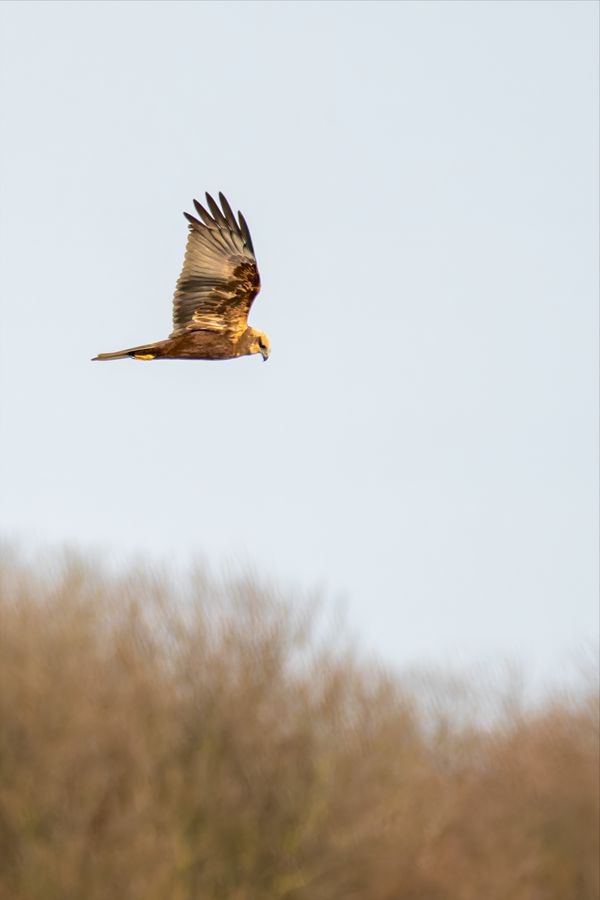
A Marsh Harrier quartering low over the reeds at Dungeness on a shallow V, the hunting flight of the harriers, built to surprise prey hidden in vegetation rather than to stoop from height. Dungeness's reedbeds are exactly the habitat the species depends on.
A cream crown and shoulders against an otherwise dark body. It was a rare bird in Britain within living memory - one breeding pair in 1971 - before a strong recovery, and there are now several hundred pairs.
Marsh Harrier, quartering
Dungeness, 20 December 2025
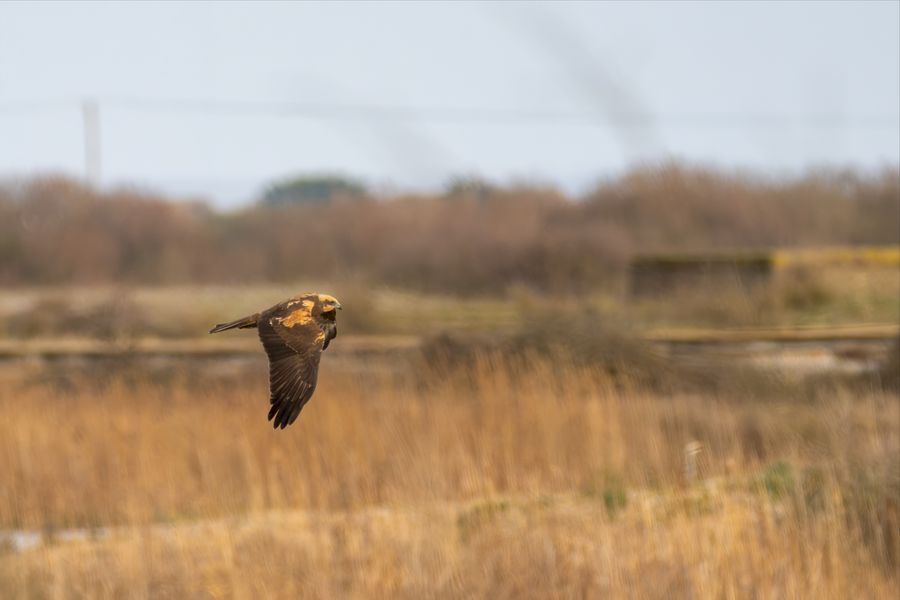
A Marsh Harrier banked low over dry reed at Dungeness in December, the cream crown catching what little winter light there is. Marsh Harriers are birds of big reedbeds across Europe, and the Kent marshes hold a good share of the British population all year.
Harriers hunt by working a beat back and forth over the same stretch of marsh rather than stooping from height, a few feet up, wings held in a shallow V, until something below breaks cover. The face is part of the equipment: harriers have a dish of stiff feathers around the eyes, like an owl's, that funnels the sound of a vole in the reeds to the ears.
Birds, insects, plants and other wildlife, mostly from Brooklyn, with some from further afield.
Every photograph comes with notes on what it is.
Selected
Favourite shots. Filter by subject, or .
Places
Everything, by where it was taken.
Species
Larger catalogue of photos organized by species of animal or plant.
Catalogue
Every photograph, newest first. Narrow it by period, place or species; the three work together.
Updates
Coming soon. Sign up at the bottom of the page for updates.