Piping Plover
Charadrius melodus · Waders & shorebirds
Piping Plover chick, foraging
Arverne Preserve, 20 June 2026
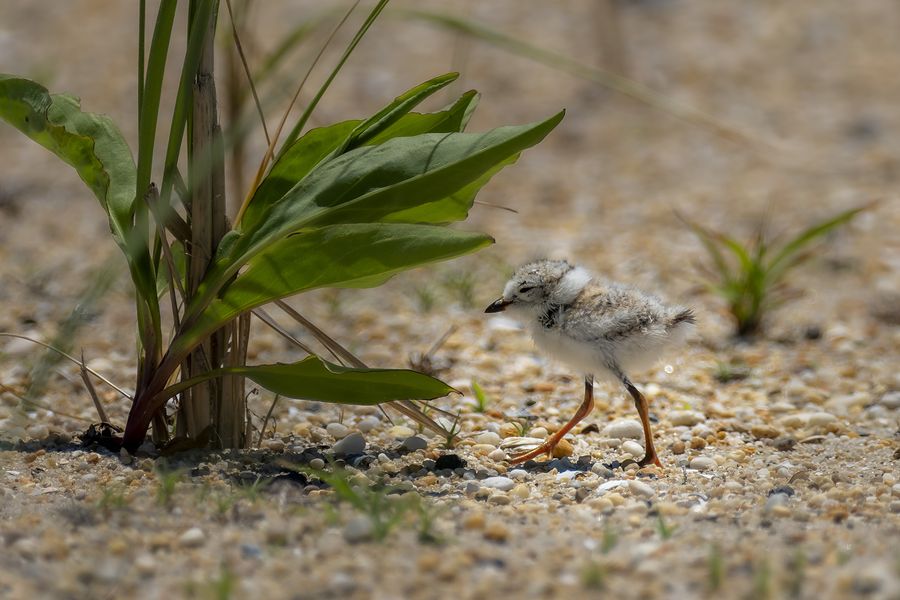
A Piping Plover chick pecking along the tideline debris at the base of the dune plants at Arverne in June. Piping Plovers nest on the open Atlantic beaches from Newfoundland to the Carolinas, and the Rockaway beaches are among the few in the city where they still do.
A chick this age is already finding its own food, small invertebrates picked out of the wrack and wet sand; the parents never feed it, only guard it. The whole Atlantic population is a few thousand pairs, and a chick has roughly one chance in four of reaching the age to fly, which is why the beach here is roped off for the summer.
Piping Plover chick
Arverne Preserve, 20 June 2026
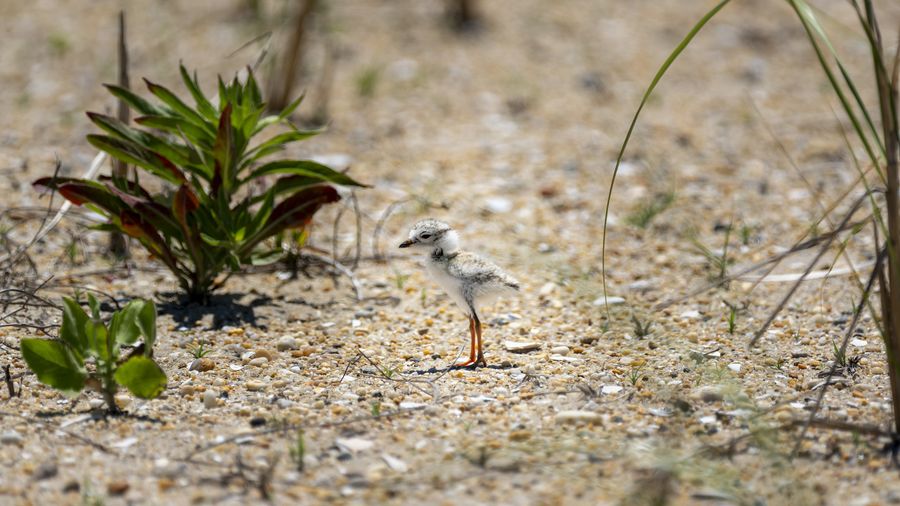
A Piping Plover chick alone on open sand and gravel at Arverne, which is exactly where it is safest and most exposed at once.
The mottled down matches the beach well enough to fool a hawk overhead, but does nothing against a footstep. It is this vulnerability at ground level, more than anything about the adult, that put the species on the endangered list in the first place, and why the beach is roped off from April to August.
Piping Plover, adult and chick
Arverne Preserve, 20 June 2026
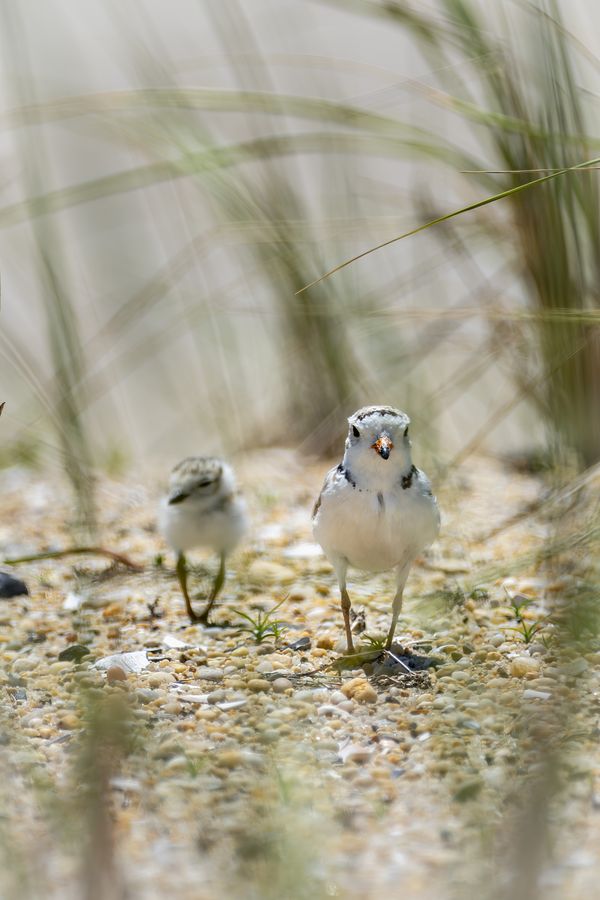
An adult Piping Plover with a chick trailing behind it on the beach at Arverne. The adults stay close to the chicks for the first few weeks without feeding them directly, mostly running interference against gulls, crows and off-leash dogs, the last of which is the more immediate threat on a New York City beach.
The adult's black neck band and black-tipped orange bill are worn only through the breeding season; by autumn both fade toward the plain, pale look of the chick. The name is the call, a soft, piping whistle that carries down the beach.
Piping Plover chicks
Arverne Preserve, 20 June 2026
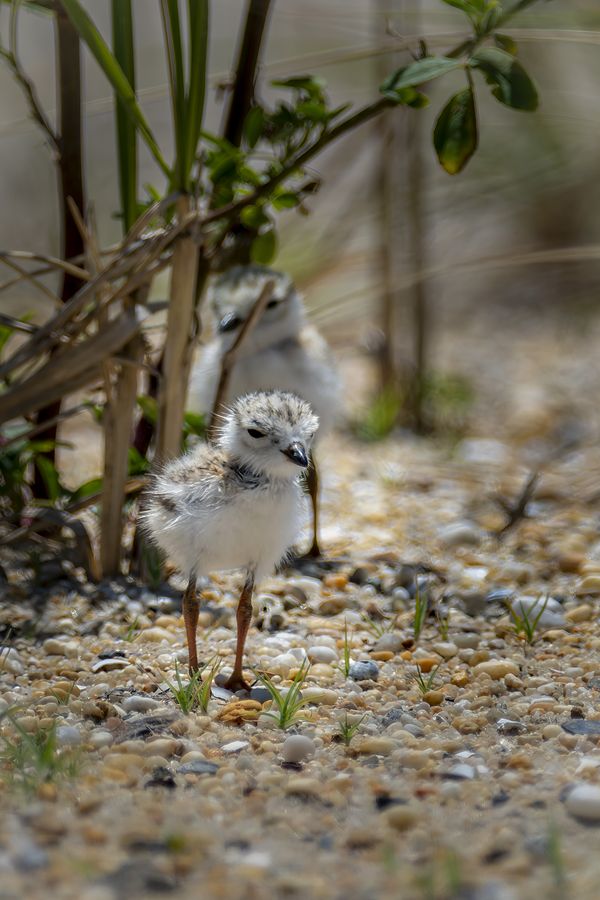
Two Piping Plover chicks on the open sand at Arverne, cotton-ball bodies on outsized legs that can already outrun a person. Piping Plovers nest on the Atlantic beaches from Newfoundland to the Carolinas, on exactly the open sand that people want, and the Rockaway beaches are among the few in the city where they still do.
The chicks leave the nest scrape within hours of hatching and feed themselves from the start. The species is federally threatened, and beaches known to hold nesting pairs are fenced and monitored through the summer for exactly this reason; a pair of chicks this size represents a season's protection working as intended.
Birds, insects, plants and other wildlife, mostly from Brooklyn, with some from further afield.
Every photograph comes with notes on what it is.
Selected
Favourite shots. Filter by subject, or .
Places
Everything, by where it was taken.
Species
Larger catalogue of photos organized by species of animal or plant.
Catalogue
Every photograph, newest first. Narrow it by period, place or species; the three work together.
Updates
Coming soon. Sign up at the bottom of the page for updates.