Green Heron
Butorides virescens · Herons & egrets
Green Heron landing
Prospect Park, 25 May 2026
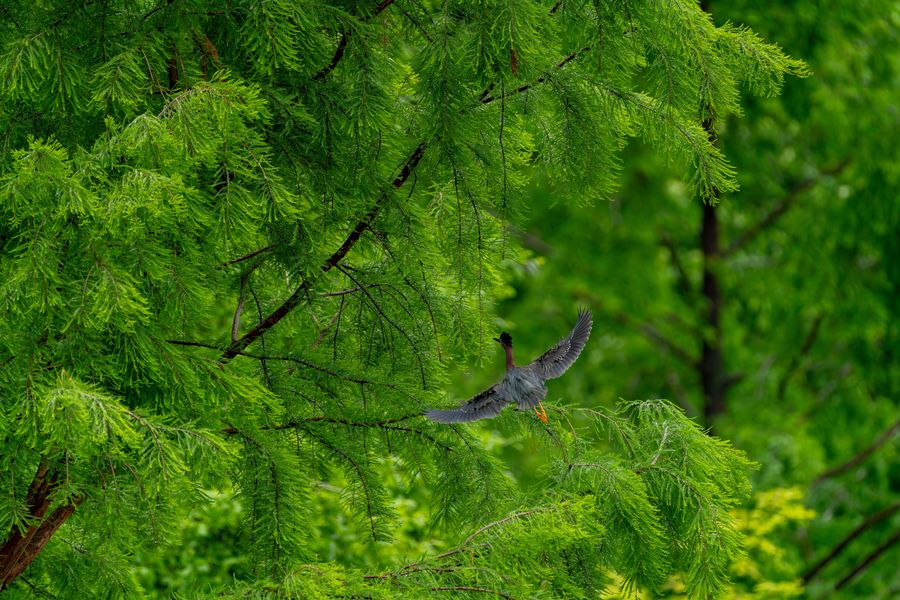
A Green Heron on final approach into a bald cypress at Prospect Park, wings fully spread and orange legs trailing - a much more airborne moment than the hunched, waterline hunting most sightings amount to. Green Herons breed in the park's trees and fish its lake all summer.
The bright orange legs intensify further into a more vivid red-orange during peak breeding condition, then fade back to a duller yellow-green for the rest of the year.
Green Heron hunting
Green-Wood Cemetery, 17 May 2026
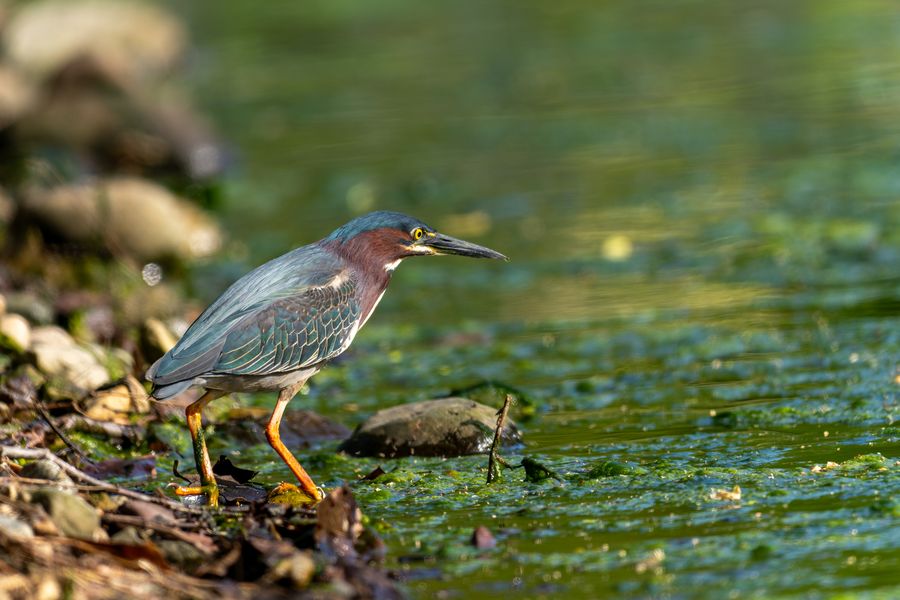
A Green Heron hunting hunched low at the waterline at Green-Wood, which is how most of this bird's fishing is done, rather than in the tall, exposed wading stance of a Great Blue. It is a small heron of ponds and wooded streams across the eastern United States, and it breeds in the city's parks.
Green Herons are one of the few birds confirmed to use bait: individuals have been seen dropping a feather, an insect or a piece of bread onto the water's surface to draw fish within striking range. Small and short-necked by heron standards, and often overlooked for it.
Green Heron
Everglades National Park, 6 February 2026
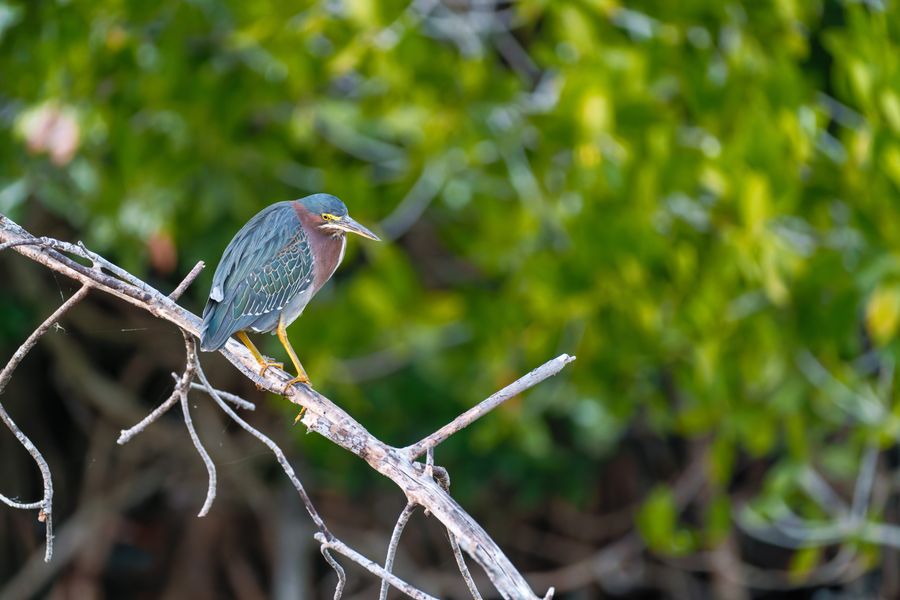
A Green Heron at the water's edge in the Everglades in February, crow-sized and easy to overlook next to the Great Egrets and Great Blue Herons sharing the same water. It is a small heron of wooded ponds and mangrove creeks across the eastern United States, hunting from cover rather than the open.
The dark greenish-black cap and back, chestnut neck, and yellow-orange legs are diagnostic; the bill's two-tone colouring, dark above and yellow below, is typical of a bird not yet in full breeding condition. Green Herons are one of relatively few bird species known to use tools, dropping bait such as insects or bread onto the water's surface to lure fish within striking range.
Green Heron
Everglades National Park, 6 February 2026
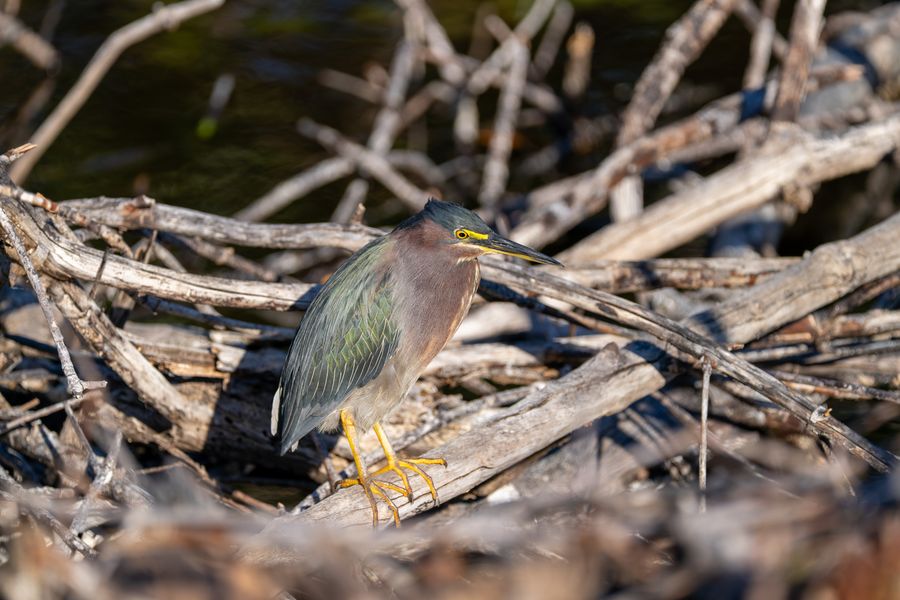
A Green Heron at the water's edge in the Everglades in February, the chestnut neck and glossy dark green back that give the species its name reading nearly black in the shade. It is a small heron of wooded ponds and mangrove creeks across the eastern United States and the tropics, hunting from cover.
One of the few birds known to use bait: Green Herons will drop a feather, an insect or a scrap onto the water and wait for a fish to investigate, a tool-using behaviour rare enough among birds to be studied in its own right.
Green Heron among air plants
Everglades National Park, 6 February 2026
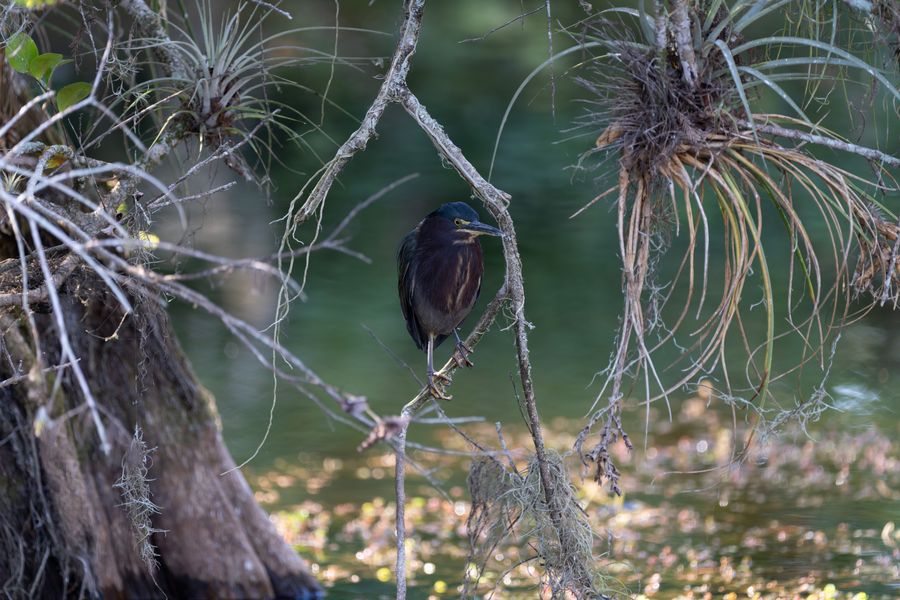
A Green Heron hunched among the air plants on a mangrove branch in the Everglades, the compact silhouette and short legs of a bird that hunts from cover at the water's edge. Green Herons live on wooded ponds and mangrove creeks across the eastern United States and the tropics, and they nest in the mangroves here.
One of a small number of bird species documented using tools: Green Herons will drop a feather, an insect, or a bit of bread onto the water's surface as bait and seize the small fish that come to investigate. The plants around it are epiphytic bromeliads, air plants that root on bark rather than soil and draw what they need from rain and airborne debris, no more parasitic on the branch than a bird's nest would be.
Birds, insects, plants and other wildlife, mostly from Brooklyn, with some from further afield.
Every photograph comes with notes on what it is.
Selected
Favourite shots. Filter by subject, or .
Places
Everything, by where it was taken.
Species
Larger catalogue of photos organized by species of animal or plant.
Catalogue
Every photograph, newest first. Narrow it by period, place or species; the three work together.
Updates
Coming soon. Sign up at the bottom of the page for updates.