Red-tailed Hawk
Buteo jamaicensis · Raptors
Immature Red-tailed Hawk
Green-Wood Cemetery, 29 August 2026
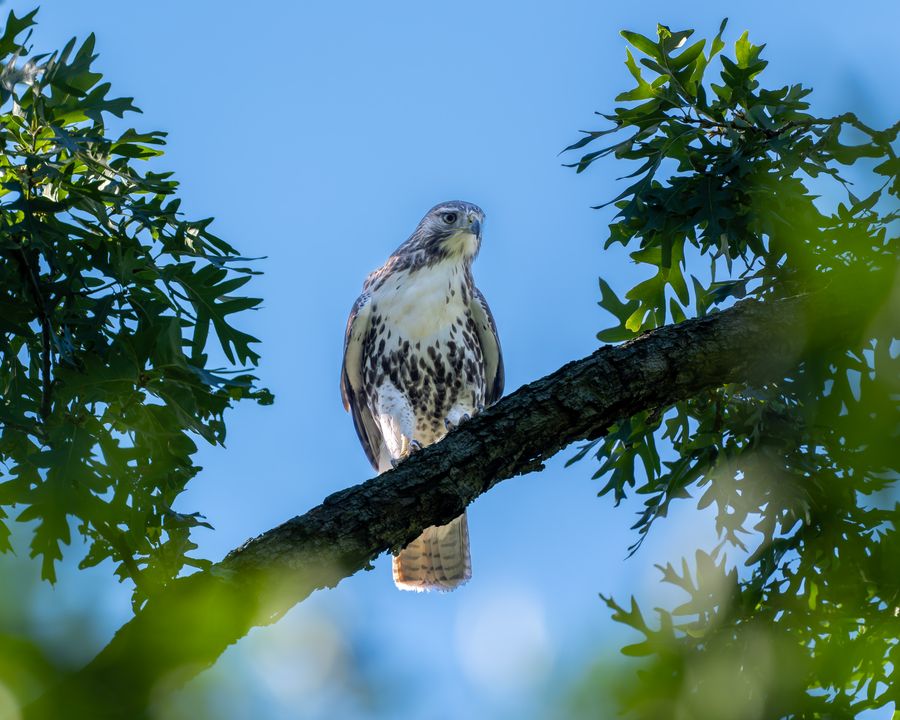
A young Red-tailed Hawk perched low in an oak at Green-Wood at the end of August, with a clear sightline down through the canopy, which is how the species often hunts in a setting like this: watching from a branch rather than soaring, dropping onto squirrels and other prey below. Red-tails breed in the cemetery and the city's parks, and this bird was probably hatched within a mile.
Still in first plumage. The heavy dark spotting across the belly, gathered into a loose band, is a young bird's pattern, and the tail is still grey-brown and finely barred; it will moult into the plain rufous tail the species is named for over its second year. Broad-winged Hawk is the other realistic candidate at this age and season, but the heavier, more concentrated belly band is more typical of a young red-tail.
Red-tailed Hawk, juvenile, at sunset
Torrey Pines State Reserve, 7 March 2026
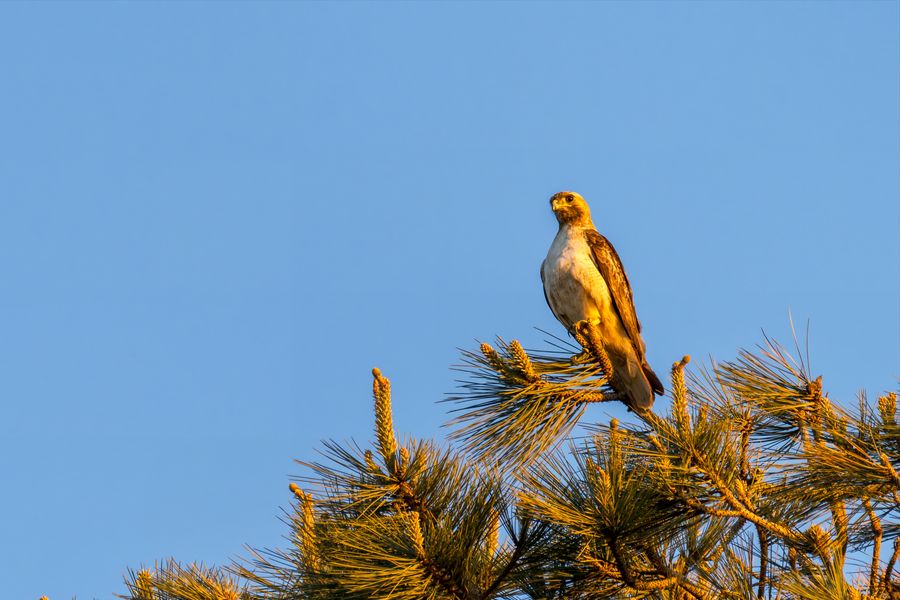
A young Red-tailed Hawk at sunset on the bluff at Torrey Pines, the default large hawk of California and of everywhere else in North America. It hunts the open scrub and the cliff edge here, riding the updraft off the sea.
Pale, mottled head and an evenly dark brown back and tail rather than the rufous tail an adult would show: a juvenile. The band of dark streaks across the belly, against an otherwise pale front, is the mark that carries the identification when the tail can't. Young Red-tails take about two years to reach adult plumage, and spend much of that stretch looking notably paler and plainer than their parents.
Red-tailed Hawk
San Diego, 6 March 2026
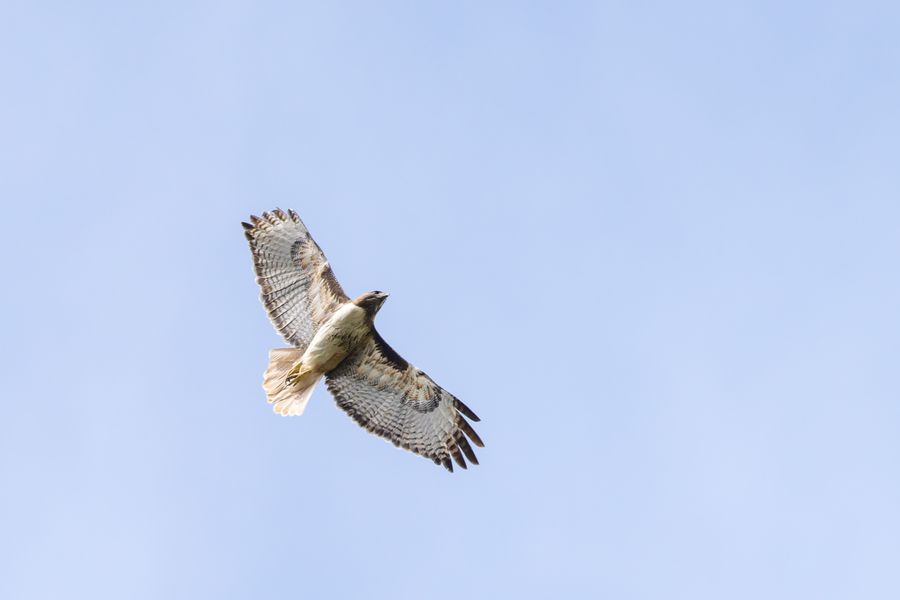
A Red-tailed Hawk riding a thermal over San Diego, the commonest large hawk in North America and at home in every habitat from desert to city, wherever there is open ground to hunt over and a high perch to hunt from.
The rust-red tail that names the species is a feature of adults only, and this bird's plumage and the fan of the tail are consistent with a fully mature bird soaring rather than hunting. It is the hawk behind most of the generic "hawk screech" heard in film and television - actually a Red-tail's call, dubbed over shots of eagles and other raptors whose real calls sound less dramatic.
Red-tailed Hawk, immature
Prospect Park, 1 March 2026
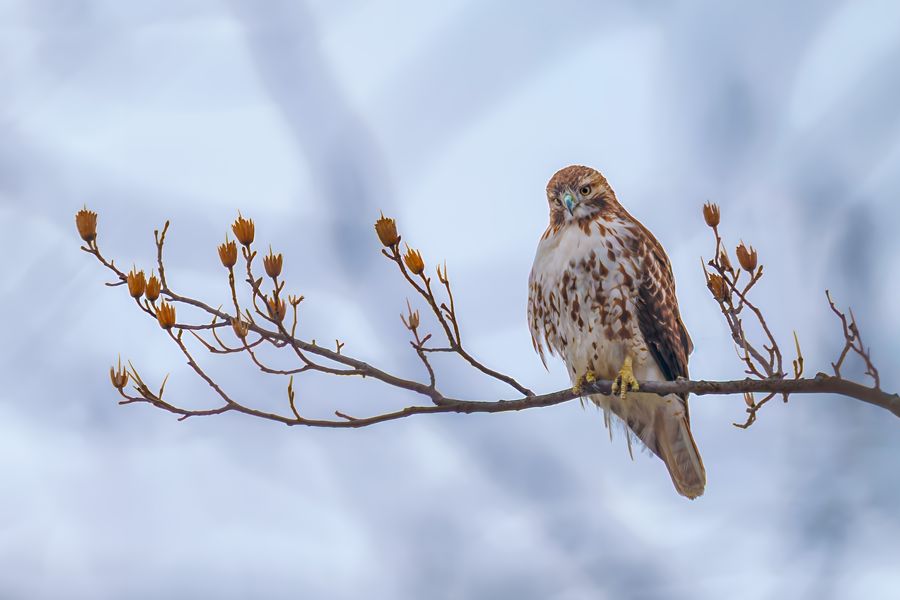
A young Red-tailed Hawk perched in the open in Prospect Park, which is where this species hunts: from a high, exposed vantage over open ground, by sight, rather than by surprise from cover. It is the commonest large hawk in North America and a permanent resident of the city's parks.
The streaked breast and finely barred, plain brown tail mark a bird in its first year. The brick-red tail that names the species doesn't come in until the first full moult, around a year old. The tail isn't showing its band clearly enough to rule out an immature Red-shouldered Hawk with full confidence, though the build and posture favour Red-tailed.
Red-tailed Hawk on a water tower
Central Park, 21 September 2025
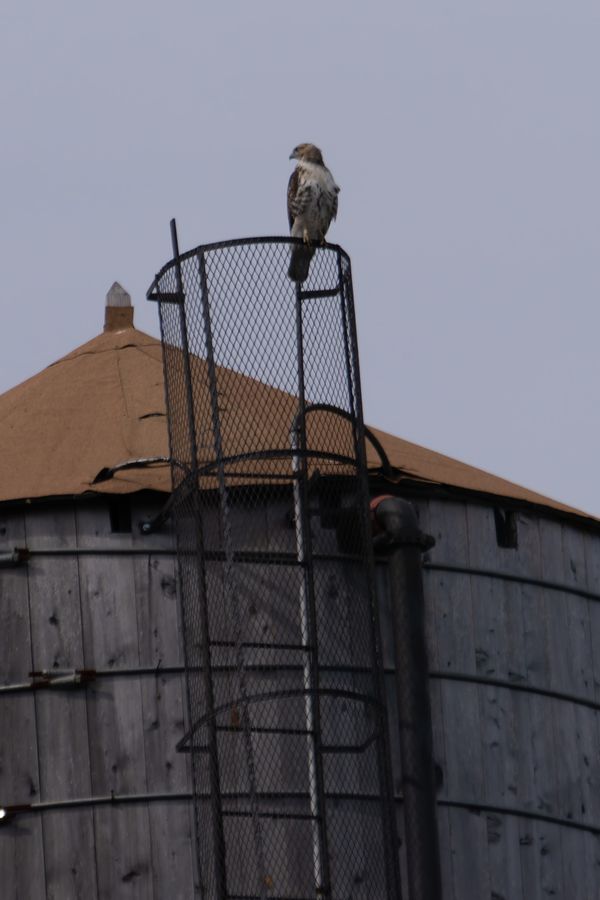
A Red-tailed Hawk on the safety cage of one of Manhattan's wooden water towers, rather than a tree. Red-tails are the commonest large hawk in North America, at home in every habitat from desert to city, and Central Park's resident birds hunt the park's squirrels and pigeons from the rooftops around it.
They have adapted to city rooftops and towers as readily as to open country, and the park's birds are famous enough that several individuals have had their own names and followings. Pale Male, who nested on a Fifth Avenue cornice for three decades, had a book, a film and a picket line when the co-op board removed his nest.
Birds, insects, plants and other wildlife, mostly from Brooklyn, with some from further afield.
Every photograph comes with notes on what it is.
Selected
Favourite shots. Filter by subject, or .
Places
Everything, by where it was taken.
Species
Larger catalogue of photos organized by species of animal or plant.
Catalogue
Every photograph, newest first. Narrow it by period, place or species; the three work together.
Updates
Coming soon. Sign up at the bottom of the page for updates.