Cattle Egret
Bubulcus ibis · Herons & egrets
Cattle Egret, close portrait
Everglades National Park, 6 February 2026
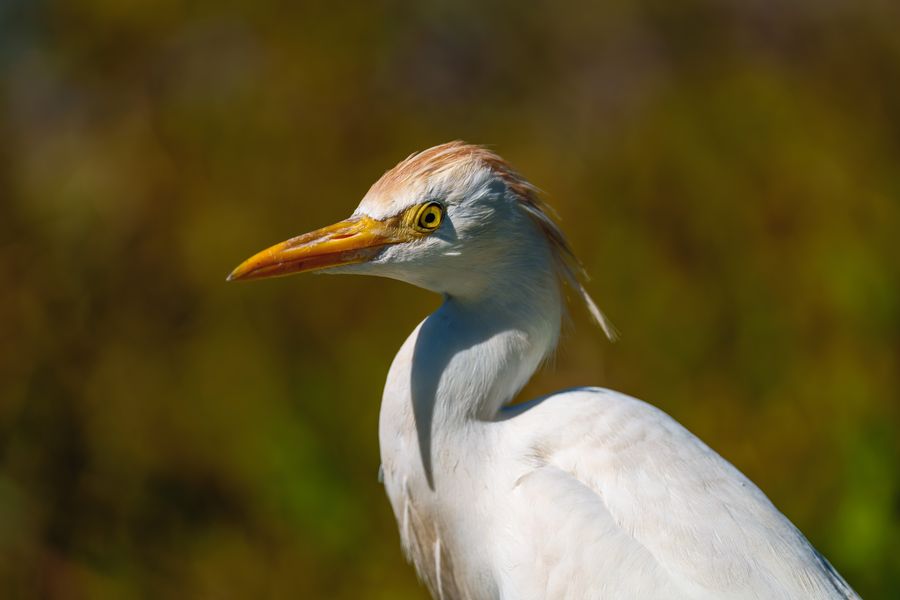
A Cattle Egret close up in the Everglades in February. This is the egret of the cattle-field and the airport verge, the one that stands on the backs of cows, and it lives on dry ground across Florida and most of the warm world, feeding on the insects that grazing animals flush.
The pale yellow eye and orange-yellow bill here are typical rather than an especially advanced sign of breeding condition. On some individuals the bill and legs redden briefly at the height of the season, but the buff crown and back plumage is the more usual and more reliable marker.
Cattle Egret with an anole
Everglades National Park, 6 February 2026
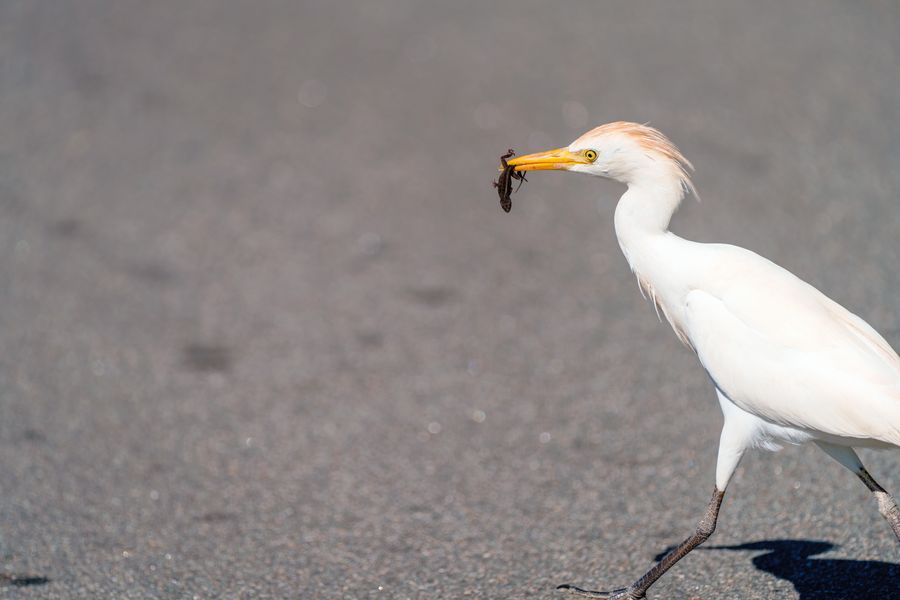
A Cattle Egret with an anole, already limp, about to be swallowed head-first, on dry ground in the Everglades. Cattle Egrets hunt on land rather than in water, across Florida and now most of the warm world, and lizards are a regular part of what they take.
The lizard is probably the brown anole, the introduced species that now outnumbers Florida's native green anole almost everywhere. Cattle Egrets take a broader range of prey than most herons - insects, lizards, frogs, even the odd rodent - reflecting a foraging style built around whatever gets flushed on land rather than the fish-and-patience approach of a heron working still water.
Cattle Egret in breeding plumage
Everglades National Park, 6 February 2026
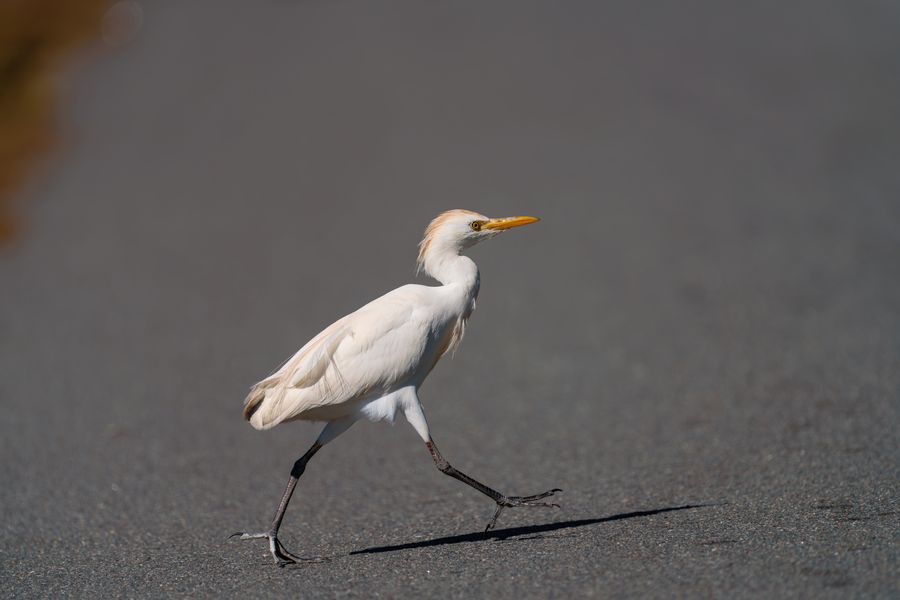
A Cattle Egret on a paved path in the Everglades in February, in breeding plumage, and on dry ground rather than in the marsh, which is the point. Cattle Egrets forage on land, historically alongside grazing animals that stir up insects as they move, and they are now the most widespread heron on earth.
The buff wash across the crown, back and chest is breeding plumage; for the rest of the year they are plain white. The species is an African and Asian native that reached South America unassisted in the late 1800s and spread through the Americas so quickly that its arrival in Florida by the 1950s was still within living memory.
Birds, insects, plants and other wildlife, mostly from Brooklyn, with some from further afield.
Every photograph comes with notes on what it is.
Selected
Favourite shots. Filter by subject, or .
Places
Everything, by where it was taken.
Species
Larger catalogue of photos organized by species of animal or plant.
Catalogue
Every photograph, newest first. Narrow it by period, place or species; the three work together.
Updates
Coming soon. Sign up at the bottom of the page for updates.