Canada Goose
Branta canadensis · Waterfowl
Canada Goose goslings with a parent
Green-Wood Cemetery, 16 May 2026
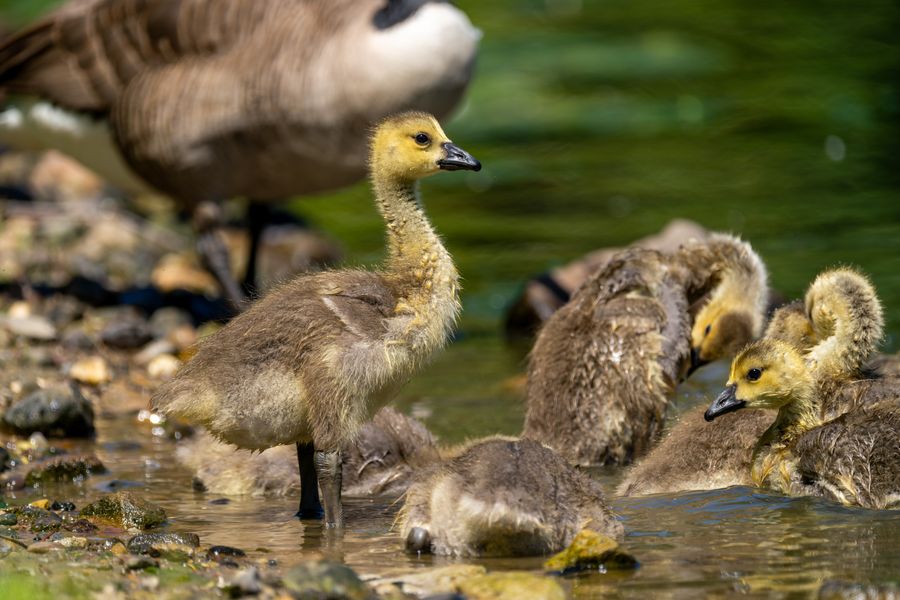
A brood of goslings at the water's edge at Green-Wood with an adult standing guard behind.
Canada Goose families sometimes merge into loose creches once the goslings are mobile, several broods and a handful of adults moving and feeding together. It dilutes the risk to any one gosling from a predator, and this group looks larger than a single clutch would usually produce.
Canada Goose gosling
Green-Wood Cemetery, 16 May 2026
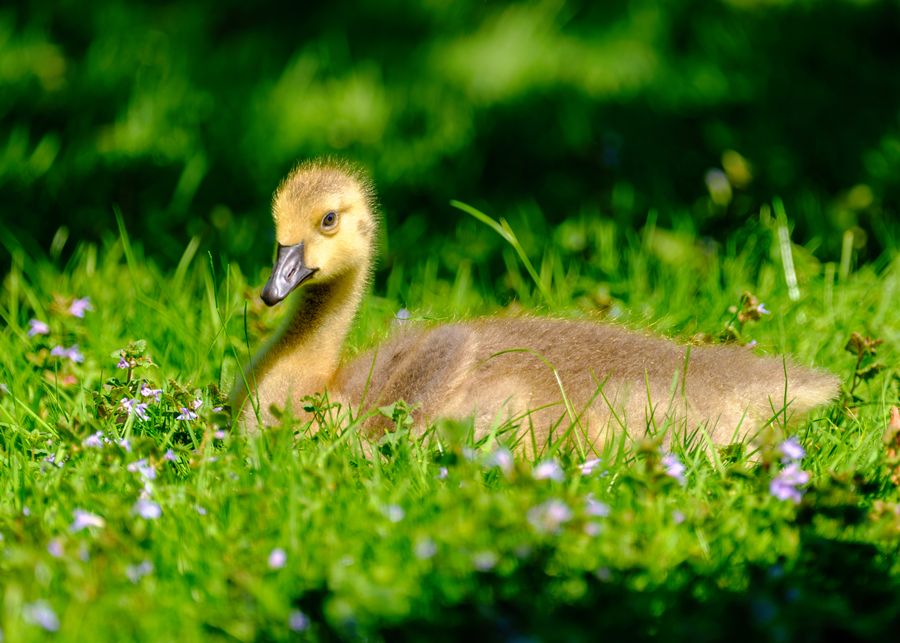
A gosling a few weeks old at most, in first down rather than true feathers, and already entirely capable of walking, swimming and grazing on its own. Geese are precocial, hatching mobile and open-eyed rather than needing to be fed in a nest.
The small purple flowers around it are ground ivy, a low creeping mint that carpets exactly this kind of mown cemetery lawn in May, and which the gosling is eating as it goes.
Canada Goose gosling on the grass
Green-Wood Cemetery, 16 May 2026
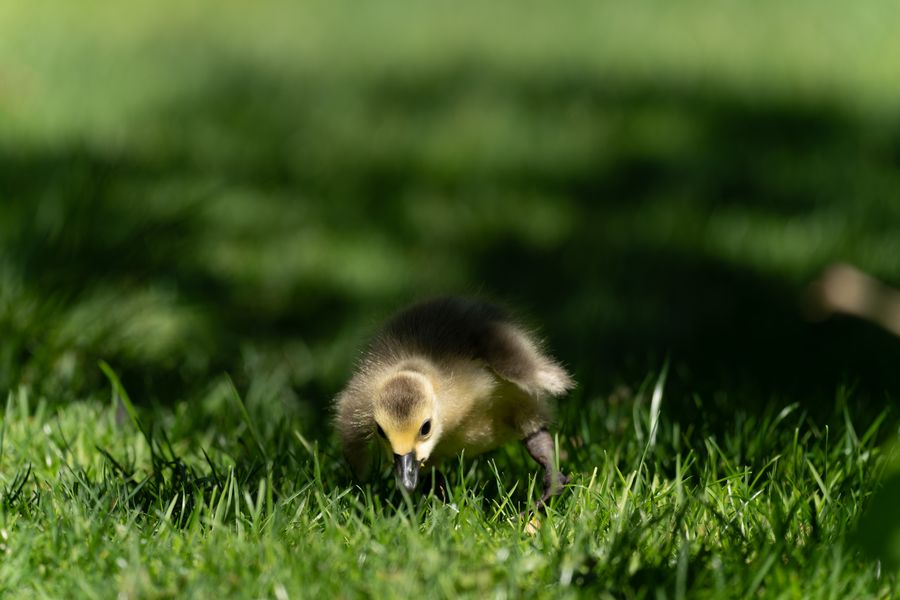
A Canada Goose gosling on the lawn at Green-Wood, still mostly down rather than feather, and growing fast. Canada Geese breed on ponds and lawns across the whole continent now, and a cemetery with water and mown grass is exactly what a pair wants.
A gosling can fledge, growing the flight feathers it needs to fly, in something like two months from hatching, one of the quicker timelines among waterfowl this size. It has to: the family flies north to moult within weeks of the young getting airborne.
Canada Goose, portrait
Green-Wood Cemetery, 16 February 2026
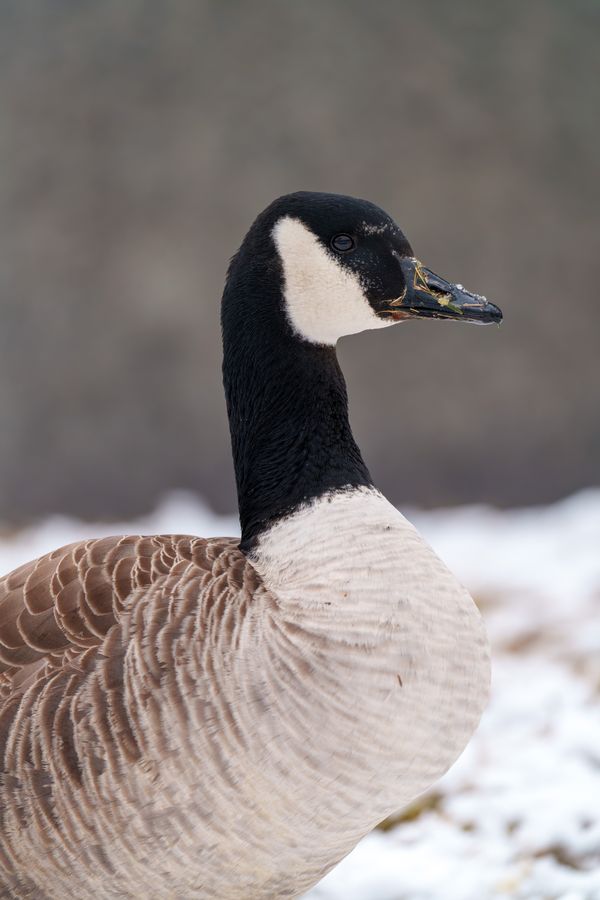
A Canada Goose at Green-Wood in February, a scrap of vegetation still caught on the bill from feeding, a few grains of snow along the edge. Canada Geese breed on ponds and lawns across the whole continent now, and the ones in the city's parks stay all year rather than migrating.
The white cheek strap is close to a fingerprint for the species: no two are marked in quite the same way, though the pattern is too fine to use for telling individuals apart by eye. The bill has serrated edges that work as teeth on grass.
Birds, insects, plants and other wildlife, mostly from Brooklyn, with some from further afield.
Every photograph comes with notes on what it is.
Selected
Favourite shots. Filter by subject, or .
Places
Everything, by where it was taken.
Species
Larger catalogue of photos organized by species of animal or plant.
Catalogue
Every photograph, newest first. Narrow it by period, place or species; the three work together.
Updates
Coming soon. Sign up at the bottom of the page for updates.