Cedar Waxwing
Bombycilla cedrorum · Songbirds
Cedar Waxwing
Jamaica Bay Wildlife Refuge, 3 August 2025
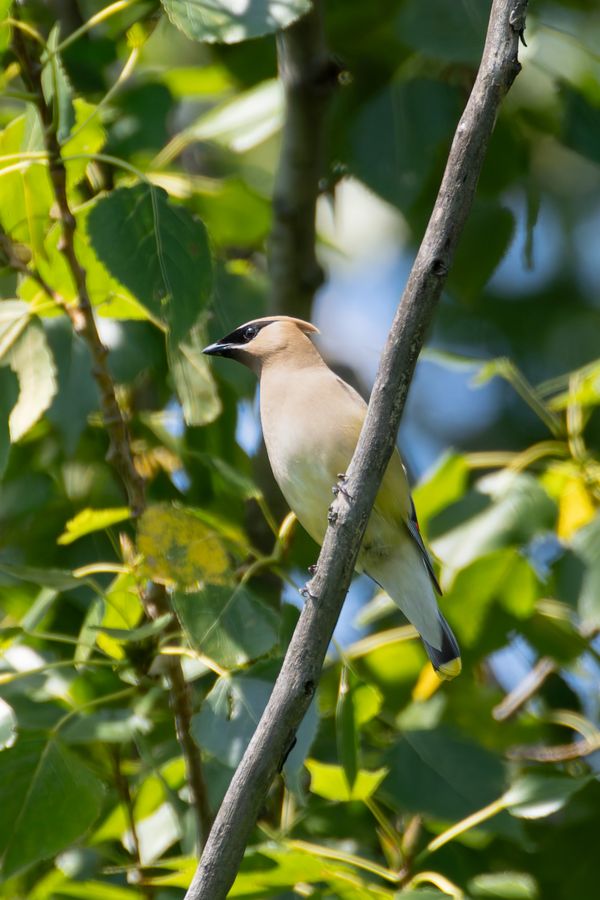
A Cedar Waxwing in a cherry tree at Jamaica Bay, a bird of berry scrub and woodland edge across the continent, and one that moves in flocks wherever the fruit is; a tree in fruit will have a dozen.
The black mask and crest make this one of the easiest songbirds to identify at a glance, and the waxy red tips on the secondary feathers, visible here as a thin dark line along the folded wing, give the whole family its name. The red tips are real wax, a secretion of the feather, and they get bigger with age; a bird with more of them is older and gets the better mate. The yellow band on the tail is turning orange in some populations, from a dye in the berries of an introduced honeysuckle.
Cedar Waxwings and a fledgling
Jamaica Bay Wildlife Refuge, 3 August 2025
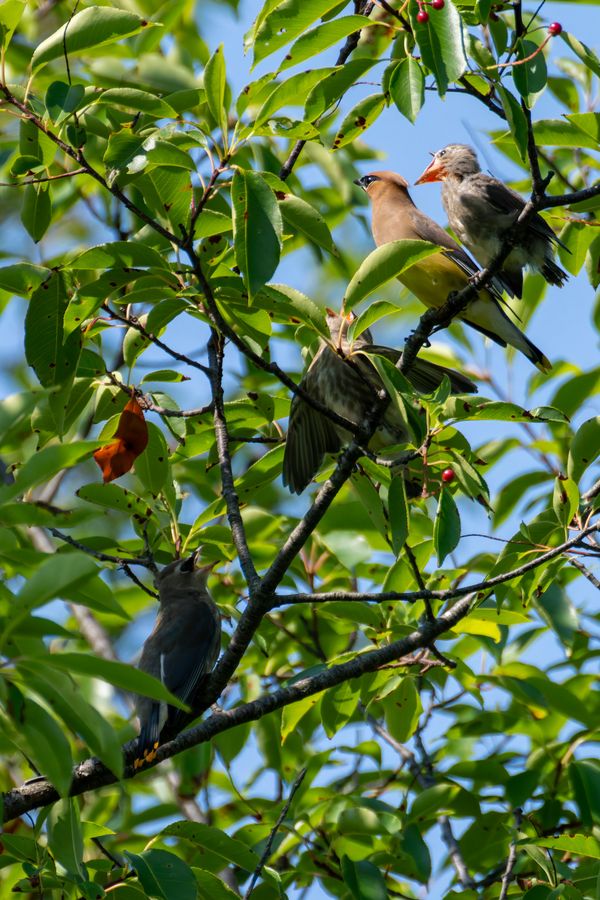
An adult Cedar Waxwing and a streaky, still-begging young bird crowded together in a fruiting cherry at Jamaica Bay in August. Waxwings are birds of woodland edge and berry-bearing scrub across North America, moving in flocks wherever the fruit is, and a cherry tree in fruit is exactly why they nest here.
They time their nesting to the summer fruit crop more closely than almost any other North American songbird. They are so committed to fruit that a flock on fermenting berries in autumn can end up visibly drunk.
Birds, insects, plants and other wildlife, mostly from Brooklyn, with some from further afield.
Every photograph comes with notes on what it is.
Selected
Favourite shots. Filter by subject, or .
Places
Everything, by where it was taken.
Species
Larger catalogue of photos organized by species of animal or plant.
Catalogue
Every photograph, newest first. Narrow it by period, place or species; the three work together.
Updates
Coming soon. Sign up at the bottom of the page for updates.