Ring-necked Duck
Aythya collaris · Waterfowl
Ring-necked Duck, male
San Diego, 6 March 2026
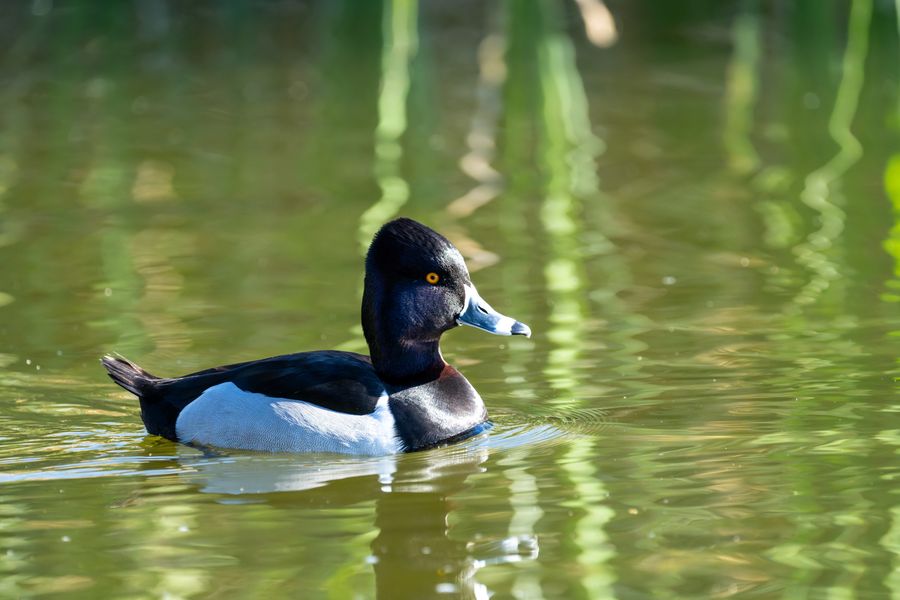
A drake Ring-necked Duck close up, wintering on a San Diego pond after a summer on the lakes of the boreal forest. It is a diving duck that prefers small, quiet water, and a park pond in California suits it well.
The pale grey bill markings show clearly enough to make sense of the species' alternative name in some older field guides, Ring-billed Duck, which was dropped mainly to avoid confusion with the Ring-billed Gull. The purple gloss on the head only shows at certain angles; in flat light the same feathers read as simply black.
Ring-necked Duck, female
San Diego, 6 March 2026
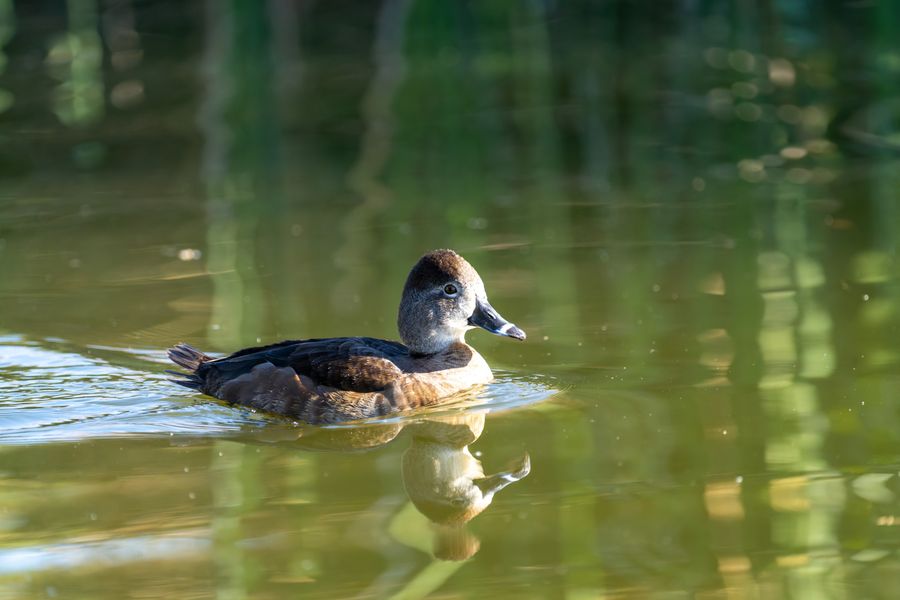
A female Ring-necked Duck in a relaxed, low pose on the water. The peaked head shape carries even at rest and is often the fastest way to pick this species out of a mixed raft of diving ducks before any plumage detail is visible; the white ring near the tip of the bill and the pale eye-ring are the rest. The "ring-necked" of the name is a faint chestnut collar on the male that is almost never visible in the field - the bill ring would have been the better name.
Ring-necked Duck, female
San Diego, 6 March 2026
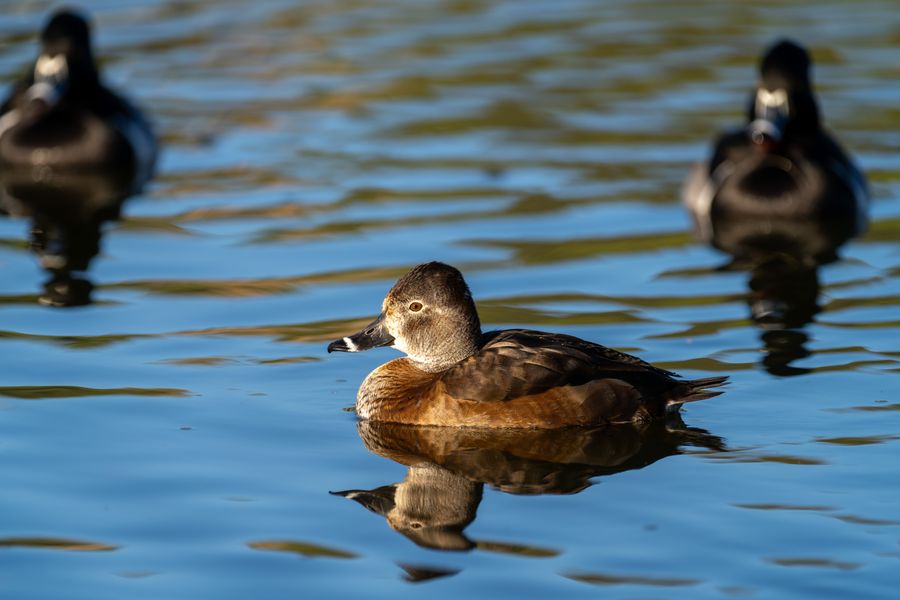
A female Ring-necked Duck in a relaxed, low pose on a San Diego pond in March, wintering in Southern California after a summer on a lake in the boreal north. It is a diving duck of small, sheltered fresh water, and a park pond suits it.
The peaked head shape carries even at rest and is often the fastest way to pick this species out of a mixed raft of diving ducks before any plumage detail is visible; the white ring near the tip of the bill and the pale eye-ring are the rest. The "ring-necked" of the name is a faint chestnut collar on the male that is almost never visible in the field - the bill ring would have been the better name.
Ring-necked Duck, male
San Diego, 6 March 2026
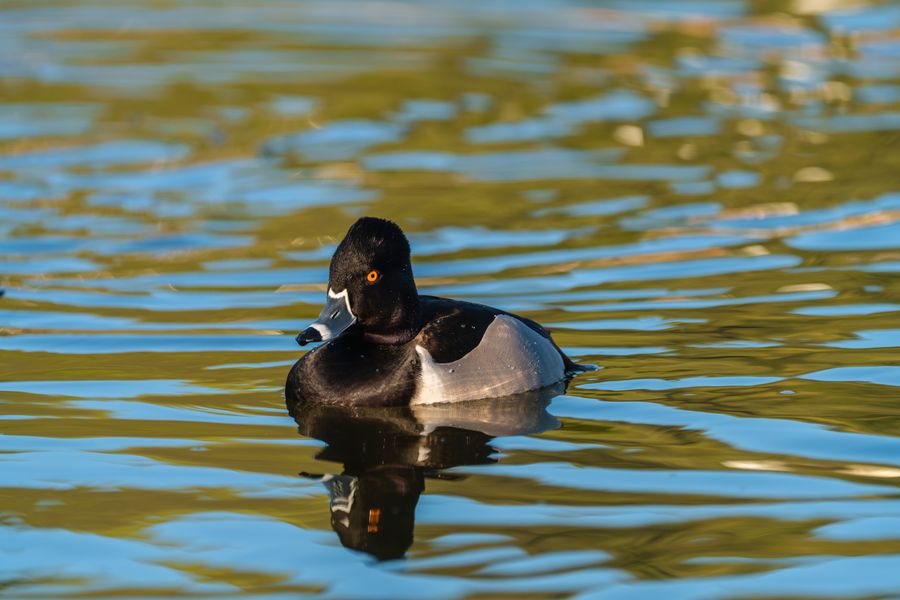
A drake Ring-necked Duck on a San Diego pond in March, a diving duck that breeds on the wooded lakes of Canada and winters on fresh water across the southern United States. It dives for seeds and roots rather than fish, and prefers a small, sheltered pond to open water.
The name is a minor misdirection. The chestnut collar it is named for is nearly impossible to see in the field, faint even at close range and usually washed out in photographs. The much more useful mark is on the bill: a white ring near the tip and a second pale band at the base, against grey rather than the blue-grey of a scaup.
Birds, insects, plants and other wildlife, mostly from Brooklyn, with some from further afield.
Every photograph comes with notes on what it is.
Selected
Favourite shots. Filter by subject, or .
Places
Everything, by where it was taken.
Species
Larger catalogue of photos organized by species of animal or plant.
Catalogue
Every photograph, newest first. Narrow it by period, place or species; the three work together.
Updates
Coming soon. Sign up at the bottom of the page for updates.