Great Blue Heron
Ardea herodias · Herons & egrets
Great Blue Heron, Japanese Pond
Brooklyn Botanic Garden, 17 June 2026
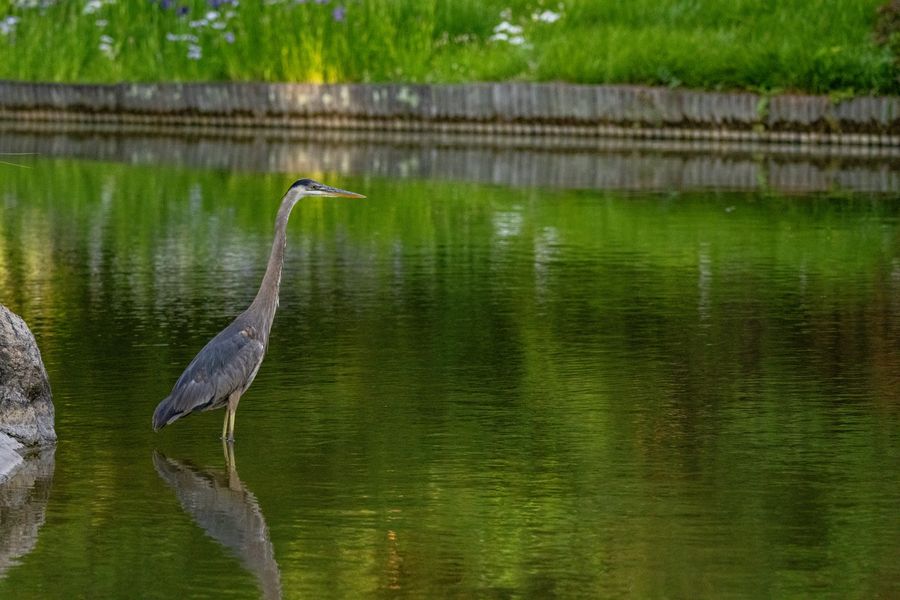
A Great Blue Heron fishing the pool of the Japanese Hill-and-Pond Garden at the Brooklyn Botanic Garden, a small, heavily visited pond that makes the herons that use it unusually tolerant of an audience. This one barely reacted to foot traffic a few feet along the path.
Great Blue Herons hunt by standing motionless for long stretches and striking only when a fish or frog comes within range, patience that looks a lot like a garden ornament until it doesn't. The koi in the pond are, from the heron's point of view, the whole reason for the garden.
Great Blue Heron, taking off in snow
Green-Wood Cemetery, 16 February 2026
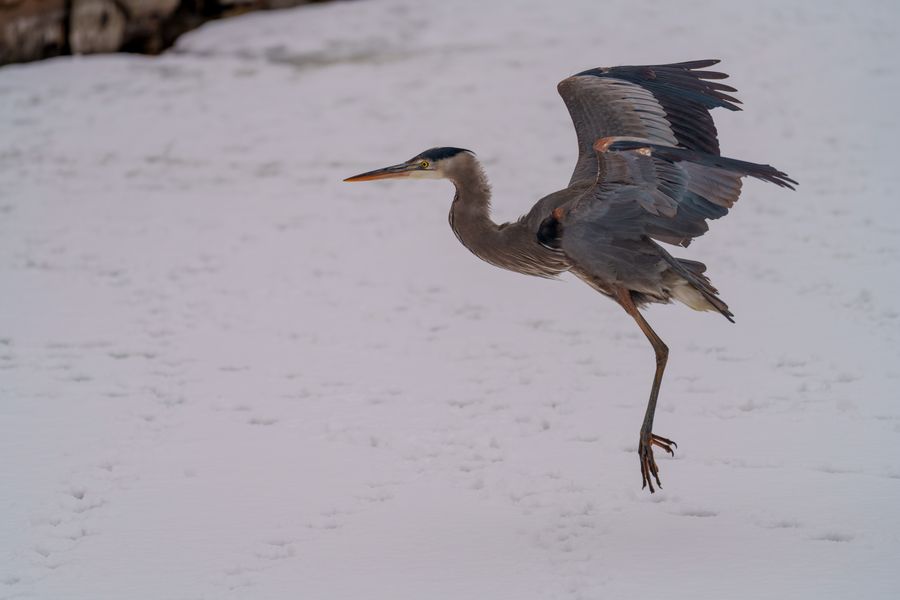
A Great Blue Heron caught a beat into launch at Green-Wood in February, one leg still trailing on the ground and the wings already at full extension. Green-Wood's ponds hold at least one Great Blue Heron through most winters; the species doesn't strictly need to migrate as long as some open water stays unfrozen nearby.
A heavy bird for its wingspan, so getting airborne takes a longer run-up than most water birds need. Once up it flies with the neck folded and the legs trailing, at a stately two beats a second.
Great Blue Heron, stepping through the shallows
Everglades National Park, 6 February 2026
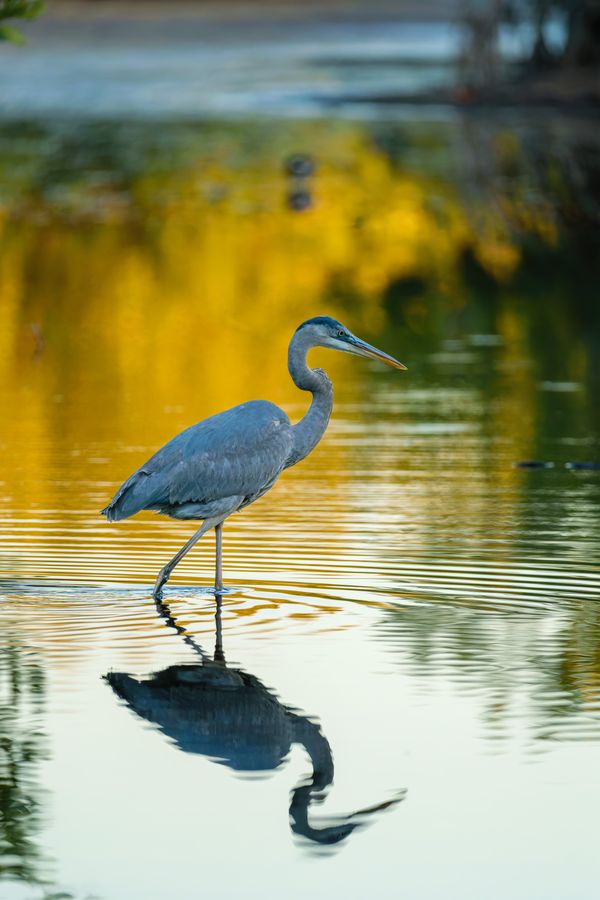
A Great Blue Heron mid-step in the shallows of the Everglades, its reflection breaking up as it goes. It hunts the shallows of every kind of water across the continent, and the way it moves is the same everywhere.
Herons hunt by stealth: one slow step, a pause long enough for the water to settle, then the next, so that whatever is below never sees a shadow move. A hunting heron can take a full minute over a single stride.
Great Blue Heron
Everglades National Park, 6 February 2026
An adult Great Blue Heron standing stock-still in the Everglades in February, the black eye-stripe trailing back into a couple of loose plumes at the nape, both lost again once the breeding season ends. It is the heron of every river, lake and coast in North America, and standing like this is what it mostly does.
Standing motionless is the default hunting posture for the species. A heron spends far more time waiting than actually stalking, letting a fish lose track of it before the strike comes.
Juvenile Great Blue Heron, closer
Everglades National Park, 6 February 2026
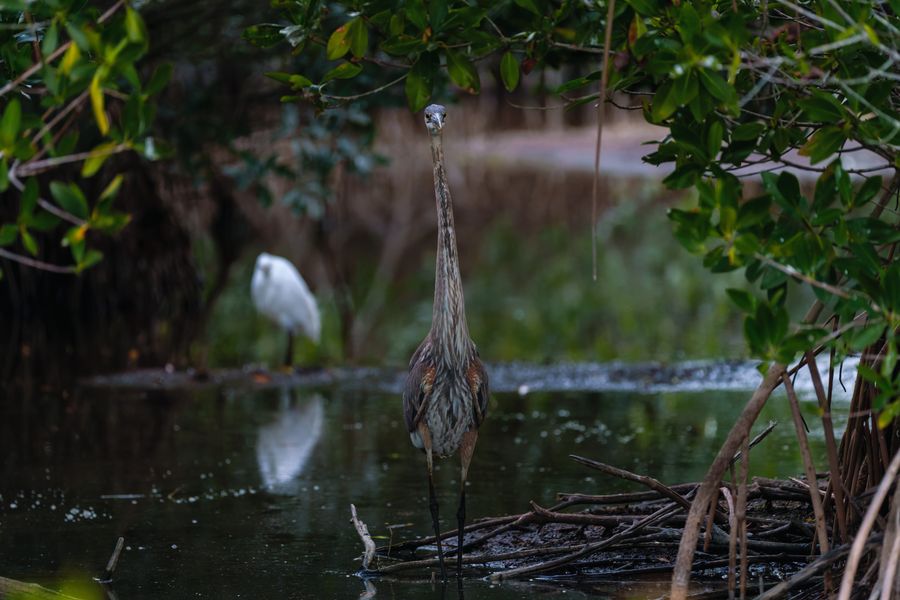
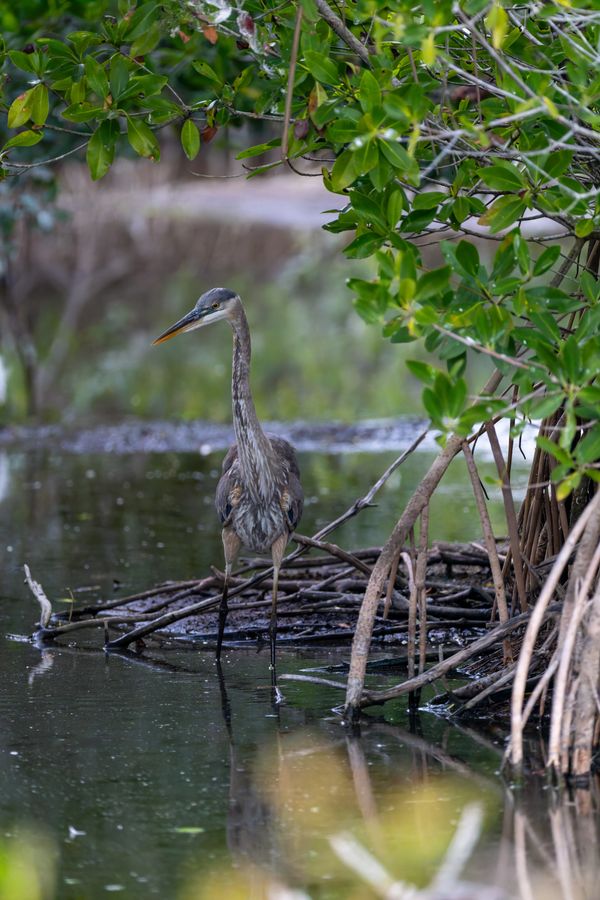
A young Great Blue Heron working in among the mangrove roots in the Everglades, one foot placed at a time. Great Blues hunt every kind of water across the continent, and a bird this size in a channel this narrow moves with real care. A white egret stands out of focus behind it, on the same patch of water.
Close enough to show the plumage that ages it: a dark grey crown without the adult's white centre and black plumes, and brownish wings with rusty edges to the feathers. Full adult plumage is still a couple of years off. The species stands over a metre tall and is the largest heron in North America.
Great Blue Heron in the shade
Everglades National Park, 6 February 2026
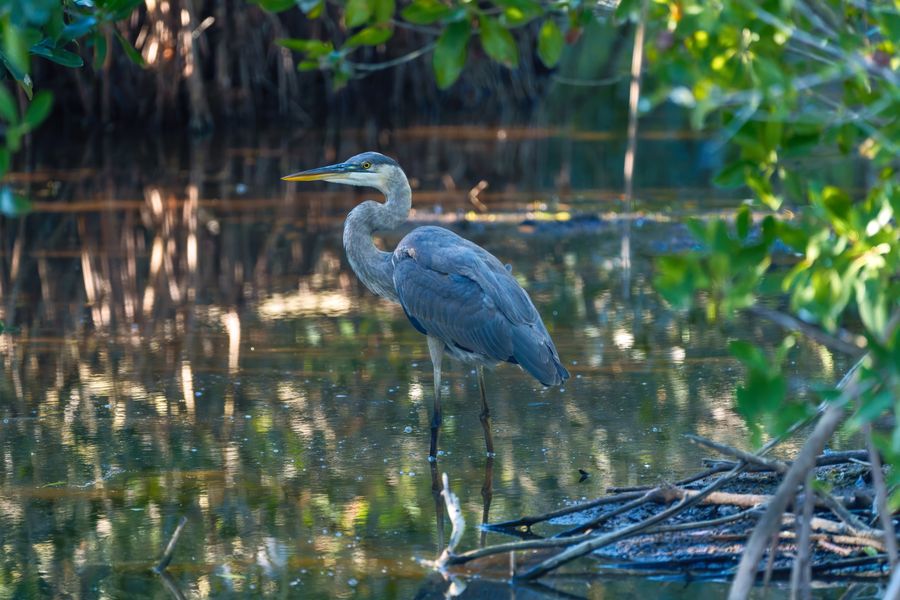
A Great Blue Heron standing in dappled shade at the water's edge in the Everglades, all but invisible until it moves. North America's largest heron lives on every kind of water across the continent, and the mangrove channels of the Everglades are as good a place to watch one hunt as anywhere.
It is built for exactly this kind of ambush. A Great Blue Heron's neck holds a pronounced kink at rest, from a specially modified vertebra that lets it strike forward with far more speed and reach than the folded posture suggests. The strike takes a few hundredths of a second, faster than the eye can follow.
Great Blue Heron on a vine tangle
Everglades National Park, 6 February 2026
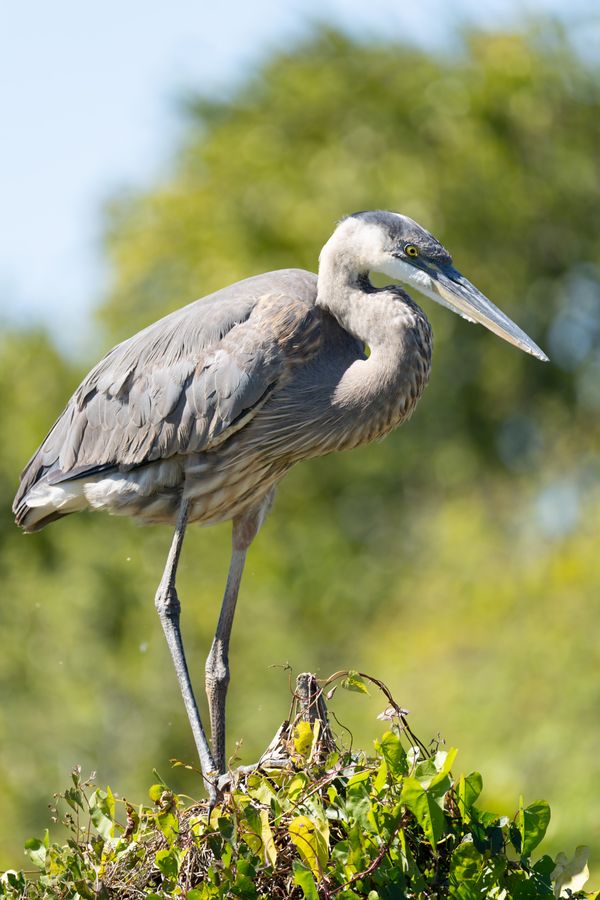
A Great Blue Heron perched on a mound of railroad vine in the Everglades, away from open water for once. Great Blues live on every kind of water across the continent, and in the Everglades they hunt the sloughs and mangrove channels; a raised, stable tangle like this serves as a lookout over a feeding area as well as a snag or a piling would.
Railroad vine is a beach and dune plant whose long runners root at intervals along the ground rather than climbing, and it is one of the first things to hold a Florida dune together.
Great Blue Heron, still water
Upstate New York, 16 August 2025
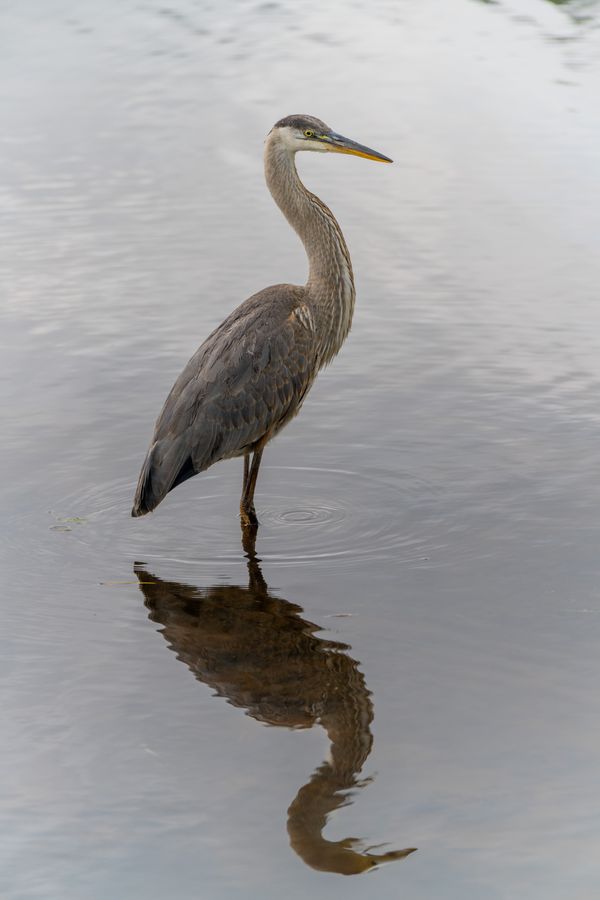
A Great Blue Heron standing still enough on an Upstate New York pond in August to double itself perfectly in water with barely a ripple on it. Great Blues hunt every kind of water across the continent, and a quiet pond in the Catskill foothills in late summer is exactly their sort of place.
The stillness is the method. A heron's eyes are set to look down the bill, and it can hold this for minutes at a time, then strike in a fraction of a second. A bird that moved would cast a shadow and empty the water around it.
Birds, insects, plants and other wildlife, mostly from Brooklyn, with some from further afield.
Every photograph comes with notes on what it is.
Selected
Favourite shots. Filter by subject, or .
Places
Everything, by where it was taken.
Species
Larger catalogue of photos organized by species of animal or plant.
Catalogue
Every photograph, newest first. Narrow it by period, place or species; the three work together.
Updates
Coming soon. Sign up at the bottom of the page for updates.