Anhinga
Anhinga anhinga · Seabirds
Anhinga, immature
Everglades National Park, 6 February 2026
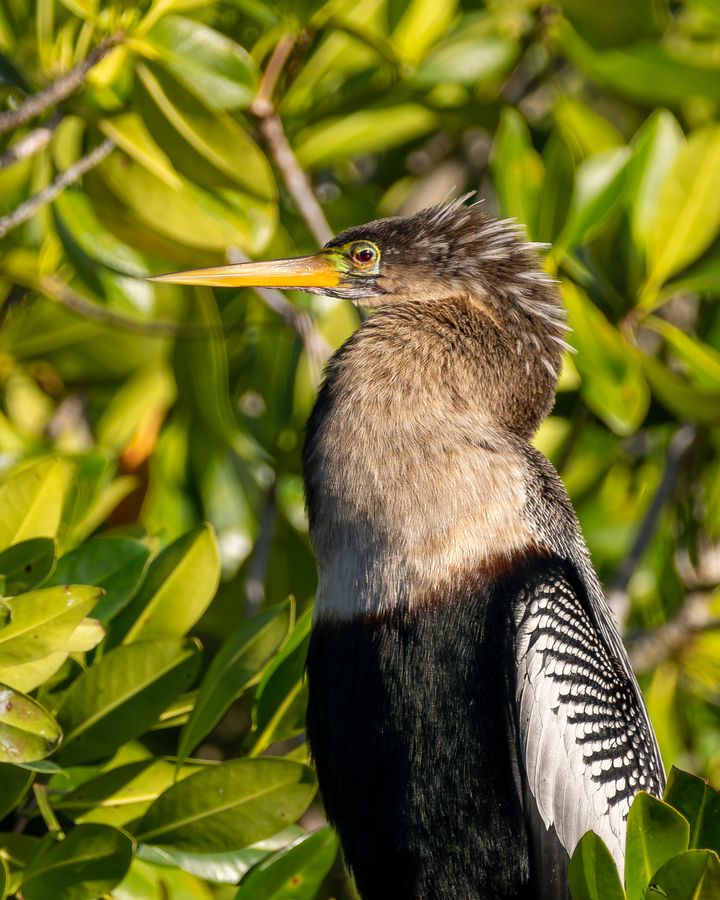
A young Anhinga in the Everglades in February, told by the pale tan head, neck and breast. Anhingas are birds of the warm, slow fresh water of the American South and the tropics, and the Everglades sloughs breed them in numbers; the young stay near the colony for months.
An adult female keeps a similar buff neck, but an adult male's is glossy black, so a juvenile of either sex starts out looking like its mother. The silver barring coming through on the folded wing is the adult's ornamental plumage arriving. Anhingas swim with the body submerged and only the neck showing, which is how they got the name snakebird, and they spear fish rather than grab them.
Anhinga drying its wings
Everglades National Park, 6 February 2026
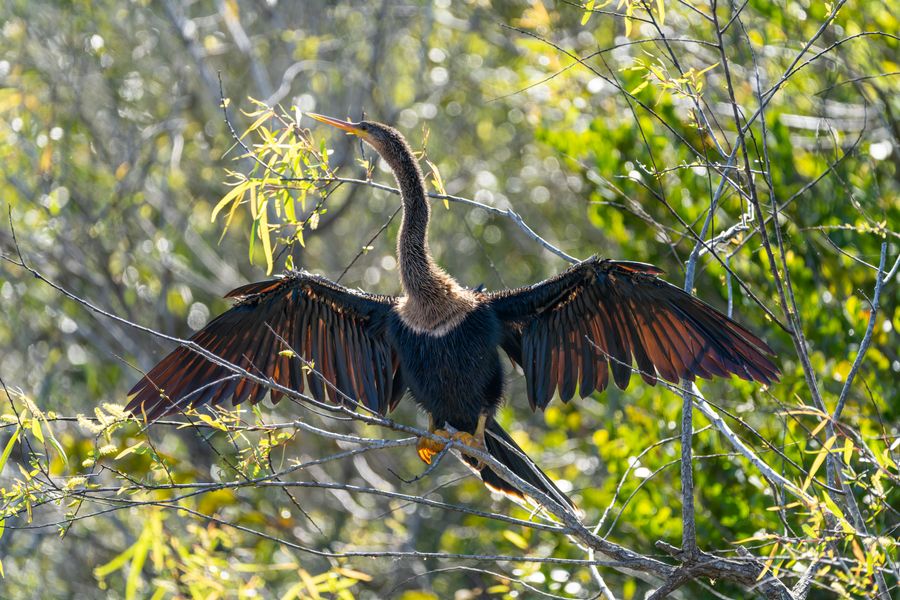
An Anhinga drying its wings in the Everglades in February, which is how it spends a good part of every day. Anhingas are birds of the slow, warm fresh water of the American South and the tropics, and they have to dry out after every swim.
They swim with the body submerged and only the head and neck above the surface - the origin of the old name "snakebird" - which is possible because, unlike almost every other waterbird, their feathers aren't waterproof. Less buoyancy means less effort spent staying underwater while stalking fish, but a soaked bird has to come out and spread its wings to the sun before it can fly properly again. The silvery-white wing coverts, laid down in neat overlapping rows, are ornamental as much as functional, and both sexes grow them.
Anhinga, close portrait
Everglades National Park, 6 February 2026
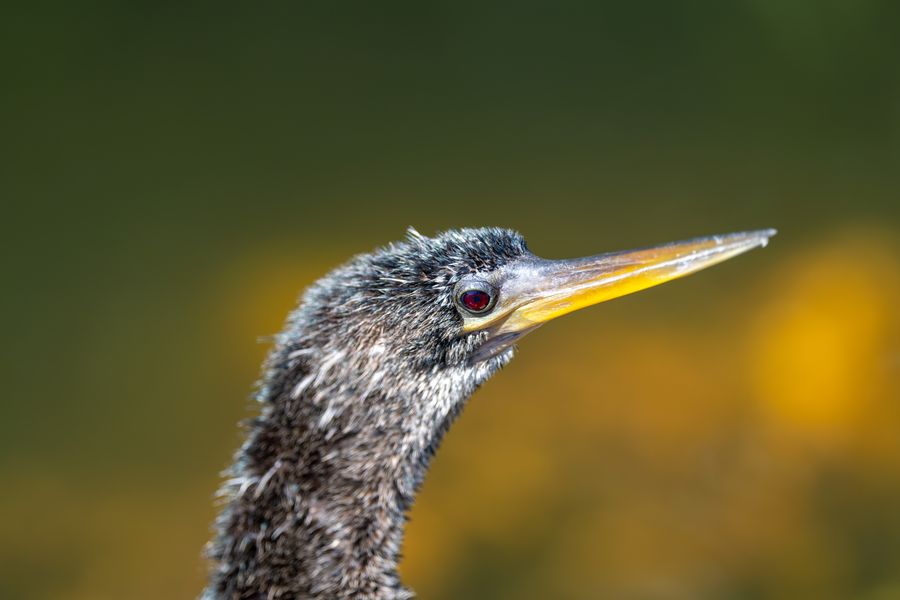
An Anhinga close up in the Everglades in February, head and neck filling the frame. Anhingas are birds of the slow fresh water of the American South and the tropics, swimming submerged in the sloughs and ponds and spearing fish, and the Everglades hold them everywhere there is water.
The finely serrated edge near the tip of the bill is a built-in fish-spear, angled backward so a struggling catch can't easily work itself free once impaled. The pale, streaky feathering on the head and neck marks a female or immature bird; adult males are solid glossy black-green here. Anhingas lack the oil most waterbirds rely on to stay dry, which is why they swim with just the neck above water and spend long stretches perched with wings spread to dry afterwards.
Birds, insects, plants and other wildlife, mostly from Brooklyn, with some from further afield.
Every photograph comes with notes on what it is.
Selected
Favourite shots. Filter by subject, or .
Places
Everything, by where it was taken.
Species
Larger catalogue of photos organized by species of animal or plant.
Catalogue
Every photograph, newest first. Narrow it by period, place or species; the three work together.
Updates
Coming soon. Sign up at the bottom of the page for updates.