Spotted Sandpiper
Actitis macularius · Waders & shorebirds
Spotted Sandpiper, walking
Green-Wood Cemetery, 29 August 2026
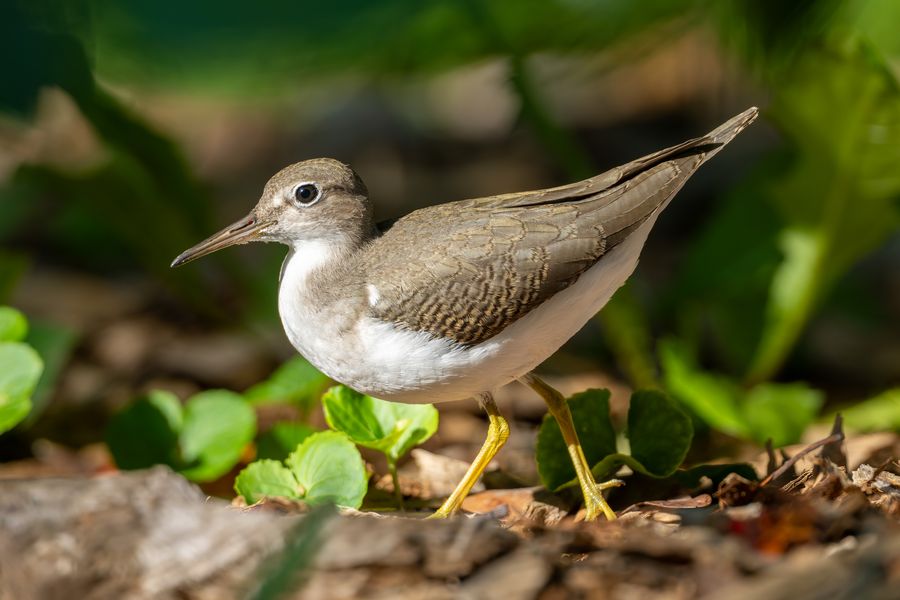
A Spotted Sandpiper on foot at Green-Wood at the end of August, working the edge of a path rather than open water. It is the one sandpiper that breeds on nearly every lake and river in North America, and on migration it takes insects from bare ground and paving as readily as from a shoreline, turning up on lawns and cemetery drives where no other sandpiper would.
Late August plumage, the breeding spots gone from the breast. The constant bobbing of the rear end, which never stops even when the bird is standing still, is the quickest way to pick one out at a distance.
Spotted Sandpiper
Green-Wood Cemetery, 29 August 2026
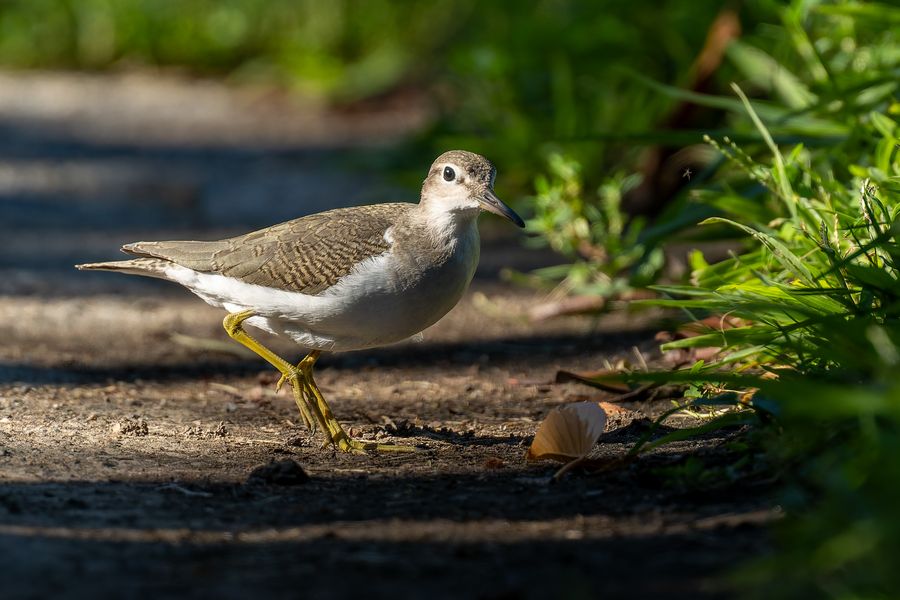
A Spotted Sandpiper at Green-Wood at the end of August, on its way south from a breeding lake somewhere in the north to a winter on a Central American shore. It is the one sandpiper that breeds on nearly every lake and river in North America, and it turns up on cemetery ponds in migration where no other shorebird would.
No spots at all on this bird, which is exactly what non-breeding and juvenile Spotted Sandpipers look like; the bold black spotting on the underside is a breeding-season feature only, and this one has already lost it. The constant tail-bobbing at rest is a better everyday field mark than the plumage it is named for.
Spotted Sandpiper in flight
Prospect Park, 25 May 2026
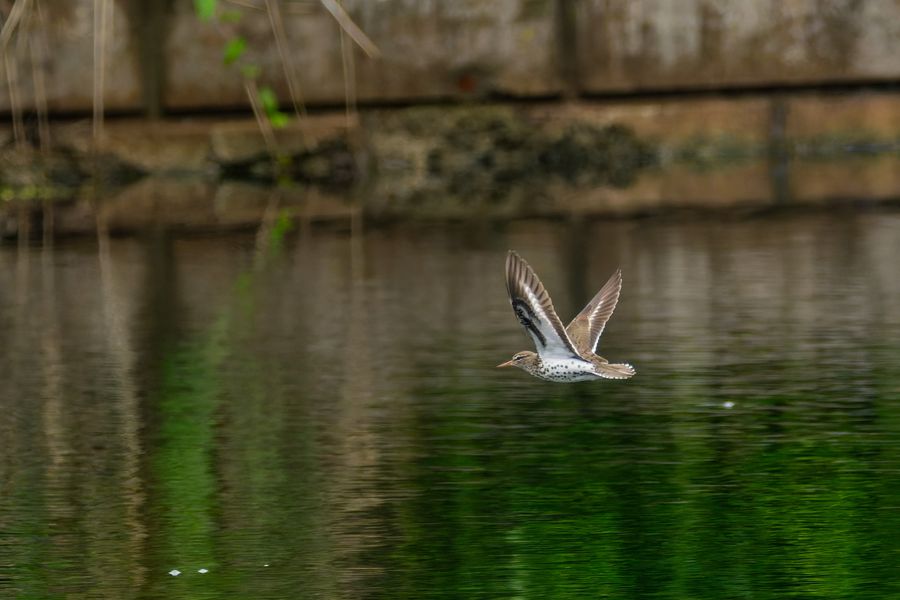
A Spotted Sandpiper in flight over Prospect Park Lake in May, the one sandpiper that breeds on almost every lake and river in North America rather than on the Arctic tundra. It nests on the ground at the water's edge, and a park lake will do.
Stiff, shallow, fluttering wingbeats held below the horizontal are close to diagnostic for this species in flight, quite different from the deep wingbeat of most sandpipers. The bold spotting that names the bird is a breeding-season feature only. Spotted Sandpipers also reverse the usual roles: females arrive first, compete for territory and mates, and may pair with several males in a season, while the males do most of the incubating and chick-rearing.
Birds, insects, plants and other wildlife, mostly from Brooklyn, with some from further afield.
Every photograph comes with notes on what it is.
Selected
Favourite shots. Filter by subject, or .
Places
Everything, by where it was taken.
Species
Larger catalogue of photos organized by species of animal or plant.
Catalogue
Every photograph, newest first. Narrow it by period, place or species; the three work together.
Updates
Coming soon. Sign up at the bottom of the page for updates.