Palm Warbler
Setophaga palmarum · Warblers
Palm Warbler
Green-Wood Cemetery, 25 April 2026
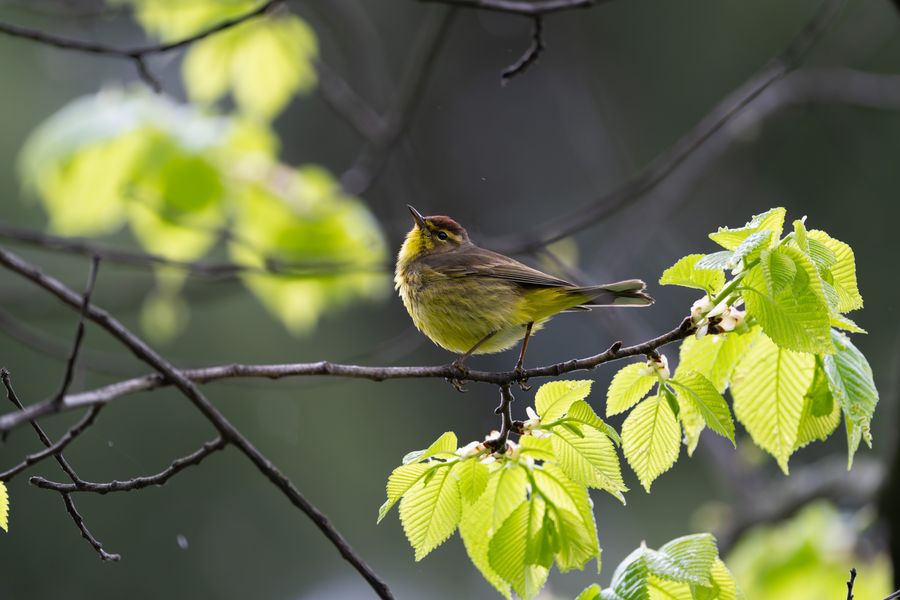
A Palm Warbler low in the shrubs at Green-Wood in April, which is where it forages: on the ground and in low cover, more than any other warbler passing through the same week. It breeds in the bogs of Canada and winters in the south-east, and it is named for the palms of the West Indies, where the first one was collected.
Rusty cap and plain yellow underparts with only faint streaking, a combination that separates it from most of the others. It constantly pumps its tail up and down while foraging, a habit that gives it away before any of its plumage does.
Palm Warbler, rufous cap
Everglades National Park, 6 February 2026
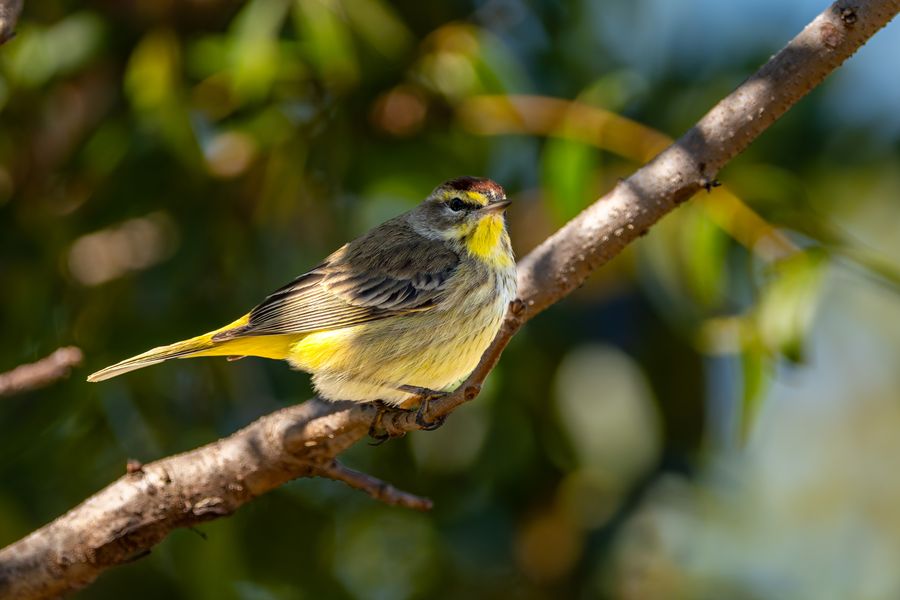
A Palm Warbler in the Everglades in February, in the winter home of the whole species. Palm Warblers breed in the bogs of Canada, where there is not a palm for a thousand miles, and winter in Florida and the Caribbean, feeding on the ground and in low scrub.
The chestnut cap gives the species its most reliable field mark in any plumage, worn dull here rather than sharp as it would be in spring. The near-constant tail-bobbing that identifies a Palm Warbler at a distance doesn't survive into a still frame; only the raised tail itself does. It is named for the palms of Hispaniola, where the first specimen was collected.
Birds, insects, plants and other wildlife, mostly from Brooklyn, with some from further afield.
Every photograph comes with notes on what it is.
Selected
Favourite shots. Filter by subject, or .
Places
Everything, by where it was taken.
Species
Larger catalogue of photos organized by species of animal or plant.
Catalogue
Every photograph, newest first. Narrow it by period, place or species; the three work together.
Updates
Coming soon. Sign up at the bottom of the page for updates.