Yellow-rumped Warbler
Setophaga coronata · Warblers
Yellow-rumped Warbler
Green-Wood Cemetery, 25 April 2026
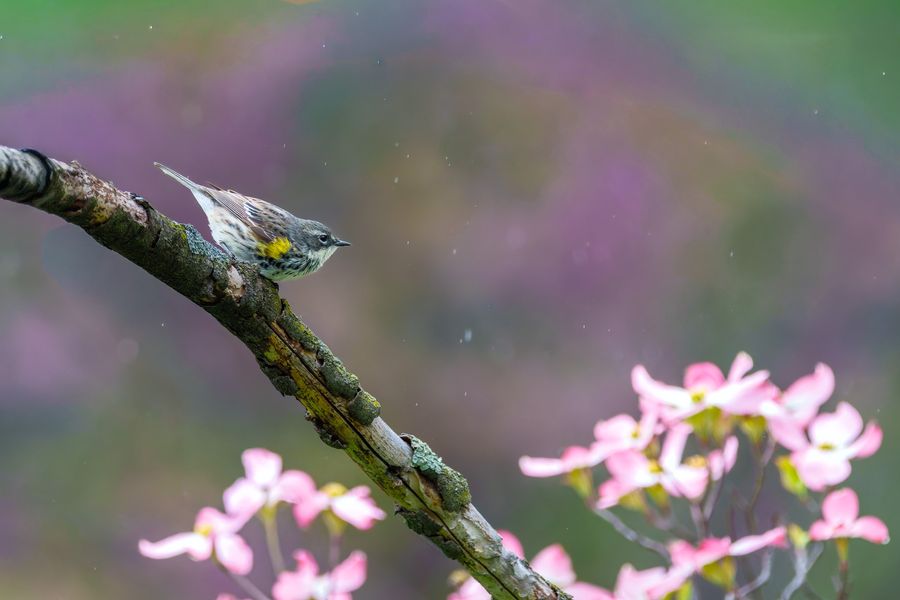
A Yellow-rumped Warbler caught in an April shower at Green-Wood, on its way north through the dogwood blossom to the spruce forests of Canada.
The yellow patch on the flank is one of four - crown, rump and both sides - which is how the bird earned the least printable of its nicknames among American birders. It is the only warbler that can digest the wax in bayberries, and that single trick lets it winter far further north than any of its relatives, which must all follow the insects to the tropics.
Yellow-rumped Warbler, Green-Wood
Green-Wood Cemetery, 25 April 2026
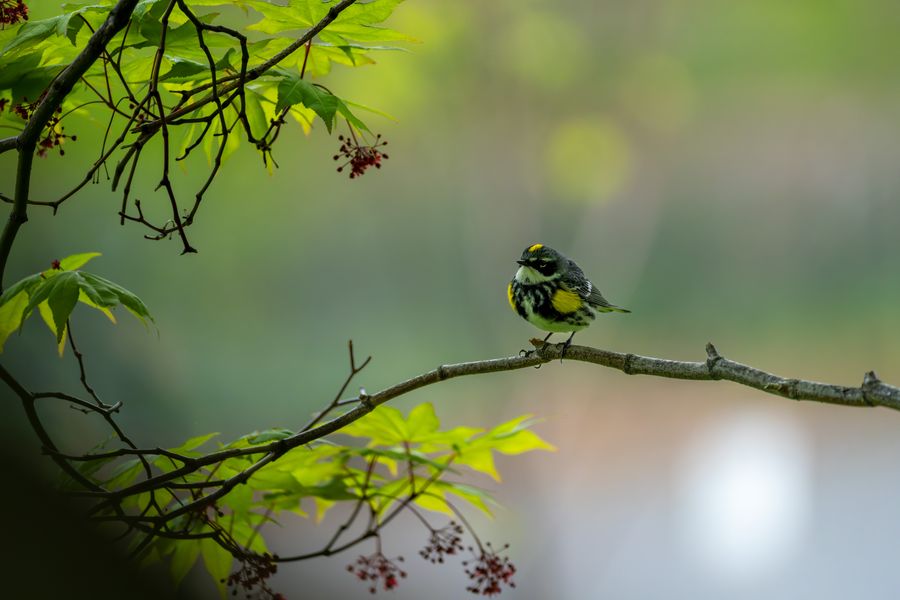
A Yellow-rumped Warbler in Green-Wood Cemetery in late April, mid-migration. This species moves through Brooklyn in some of the largest numbers of any warbler most springs, common enough that birders here have shortened the name to a nickname not printable in full.
The yellow patch on the rump that gives it the name is hidden here, but the yellow at the sides of the breast and the white throat of the eastern Myrtle form are on show. It winters further north than any other warbler, on bayberries.
Yellow-rumped Warbler, in the open
Green-Wood Cemetery, 25 April 2026
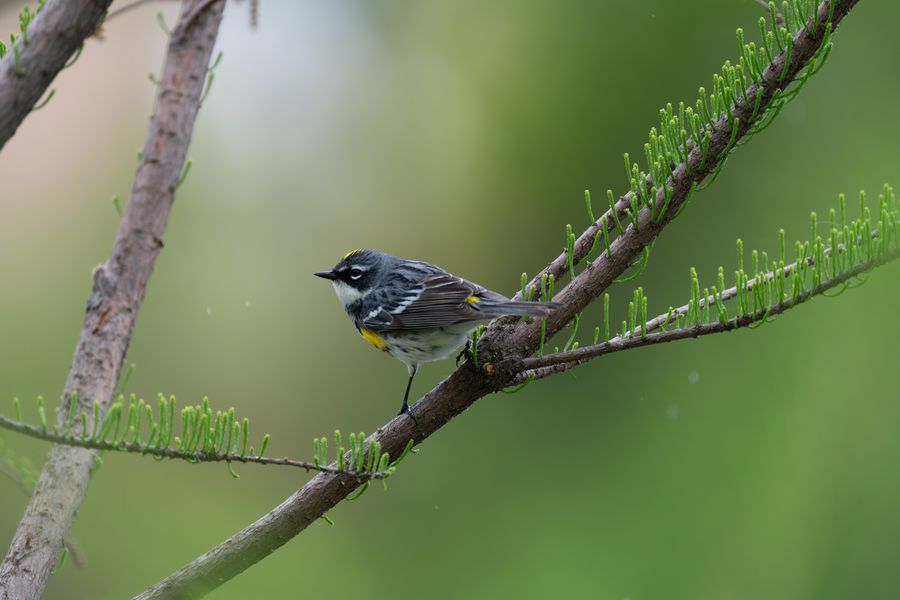
A Yellow-rumped Warbler in the open at Green-Wood in late April, one of the earliest warblers back each spring and one of the last to leave in autumn. It breeds in the conifer forests of Canada and the mountains, and it passes through Brooklyn in bigger numbers than any other warbler.
The scheduling advantage comes from a genuinely unusual trick: this is the only North American warbler able to digest the wax coating bayberries, which lets it winter much further north than its insect-only relatives ever could.
Yellow-rumped Warbler, tail flared
San Diego Botanic Garden, 7 March 2026
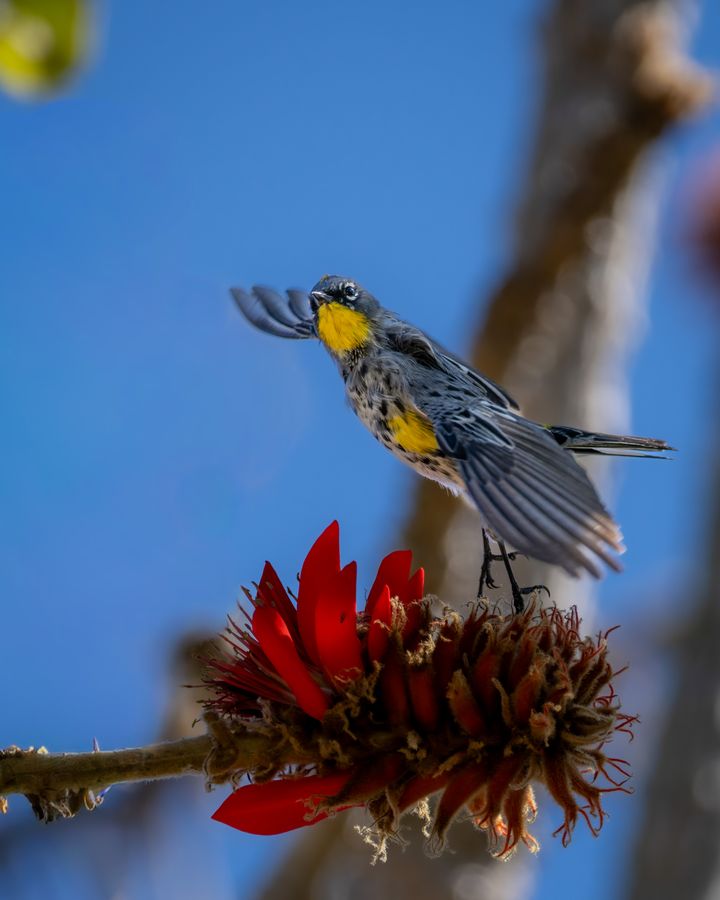
A Yellow-rumped Warbler caught mid-shift between flowers in a San Diego garden in March, tail fanned for balance, the white tail corners flashing. It is the commonest wintering warbler in North America, and a Californian garden in March holds a loose flock of them.
The Audubon's and Myrtle forms disagree on the throat but not on the tail. It is the warbler with the trick: the only one that can digest the wax on bayberries, which lets it winter as far north as New England on fruit while every other warbler must follow the insects south.
Yellow-rumped Warbler on coral tree
San Diego Botanic Garden, 7 March 2026
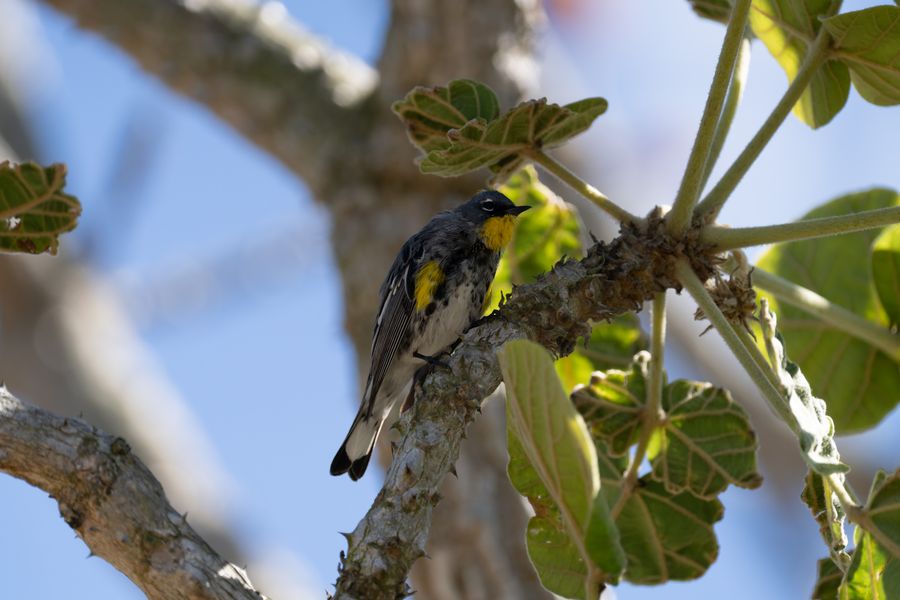
A Yellow-rumped Warbler side-on in a coral tree in a San Diego garden in March, wintering in southern California and taking the nectar the tree offers on bare wood before its leaves come. Yellow-rumps winter across the southern United States, and this species is unusually flexible about what it eats.
Coral trees flower on bare wood in late winter, and most of the warbler's own insect prey is still weeks away. It is the only warbler that can digest the waxy coating of bayberries, which is what lets it winter further north than any of its relatives. The Audubon's form, with a yellow rather than white throat, is the western one.
Yellow-rumped Warbler, Audubon's
San Diego Botanic Garden, 7 March 2026
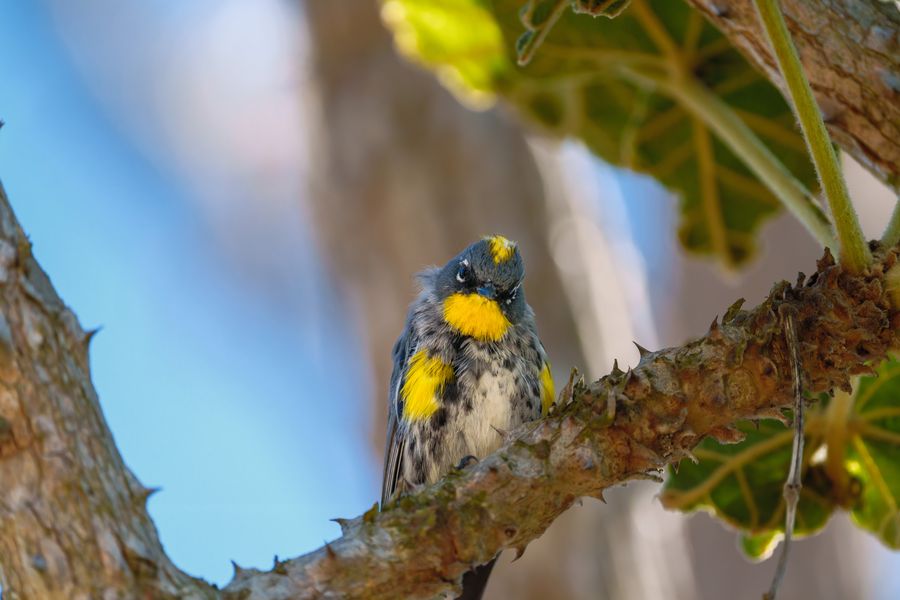
A Yellow-rumped Warbler feeding on a coral tree flower in a San Diego garden in March, taking nectar rather than its usual insects. Yellow-rumps winter across the southern United States, and in California the western Audubon's form is the one to expect.
The yellow throat rather than white is the mark of the Audubon's form, the western counterpart to the white-throated Myrtle Warbler of the rest of the continent. The two were long treated as separate species, lumped into one in 1973, and split again by some authorities since. Yellow-rumps are opportunistic enough to take nectar and even suet when insects are scarce.
Yellow-rumped Warbler, Audubon's
San Diego, 6 March 2026
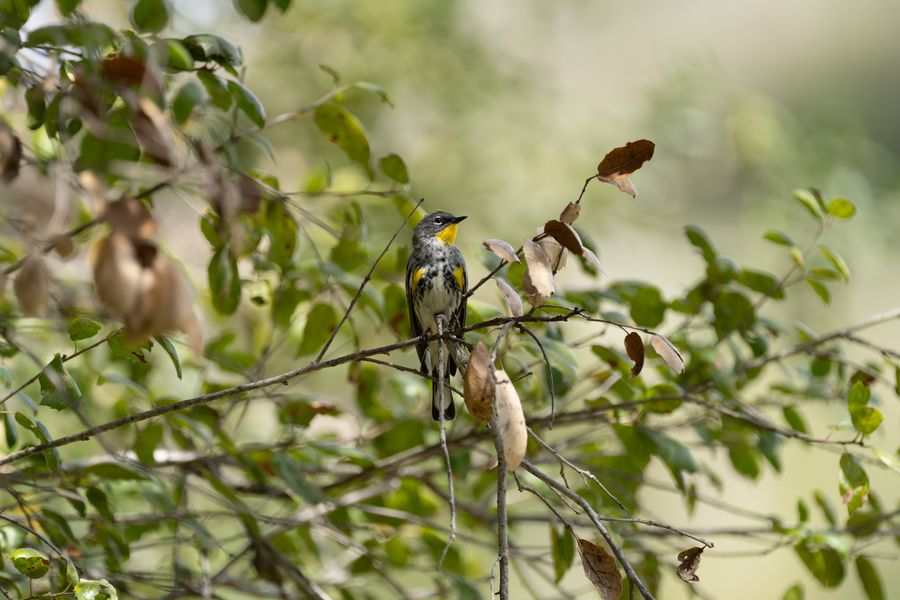
By far the most numerous warbler in North America in winter, in part because it's the only one that doesn't have to leave for the tropics - the bayberry-digesting trick common to both forms means a Yellow-rumped Warbler can simply tough out a temperate winter on fruit while every other warbler species is committed to an insect diet and a much longer flight south.
Yellow-rumped Warbler, Audubon's
San Diego, 6 March 2026
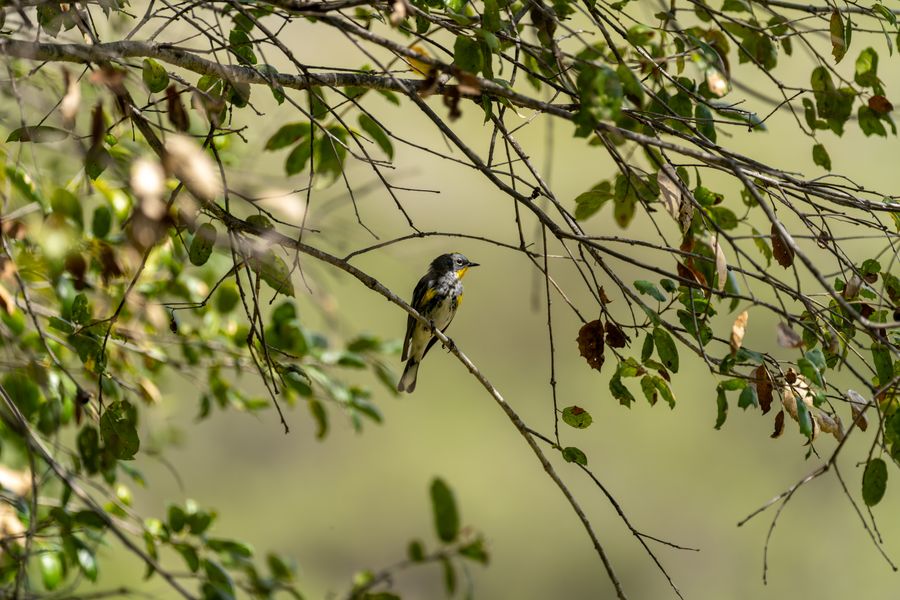
A Yellow-rumped Warbler in a San Diego garden in March, one of a loose winter flock working the trees together. Yellow-rumps winter across the southern United States and down into Central America, and in California the Audubon's form is the one to expect.
By far the most numerous warbler on the continent in winter, in part because it is the only one that doesn't have to leave for the tropics. The bayberry-digesting trick common to both forms means it can tough out a temperate winter on fruit while every other warbler is committed to an insect diet and a much longer flight south.
Yellow-rumped Warbler, Audubon's
San Diego, 6 March 2026
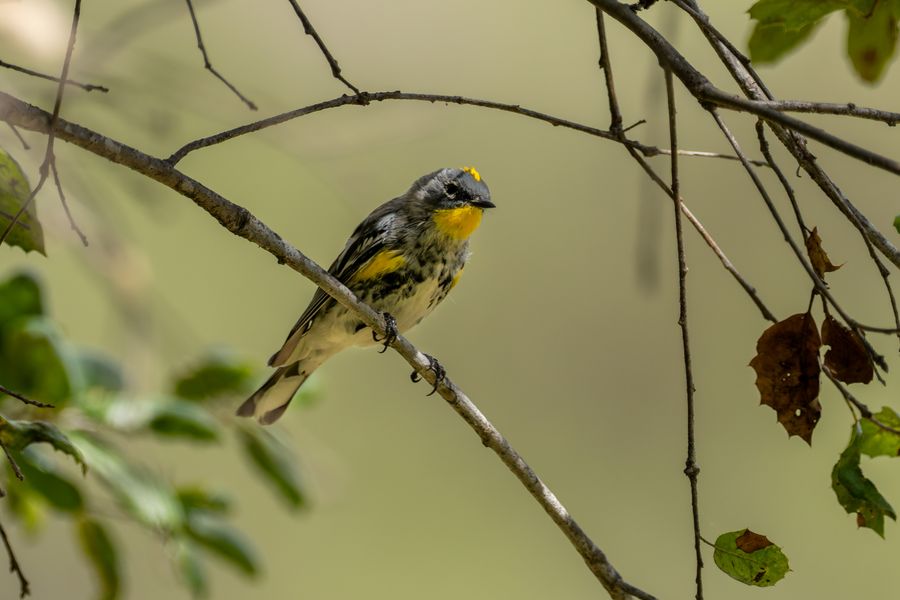
A Yellow-rumped Warbler in a San Diego garden in March, one of a loose winter flock working the trees together. Yellow-rumps winter across the southern United States and down into Central America, and in California the Audubon's form is the one to expect.
By far the most numerous warbler on the continent in winter, in part because it is the only one that doesn't have to leave for the tropics. The bayberry-digesting trick common to both forms means it can tough out a temperate winter on fruit while every other warbler is committed to an insect diet and a much longer flight south.
Birds, insects, plants and other wildlife, mostly from Brooklyn, with some from further afield.
Every photograph comes with notes on what it is.
Selected
Favourite shots. Filter by subject, or .
Places
Everything, by where it was taken.
Species
Larger catalogue of photos organized by species of animal or plant.
Catalogue
Every photograph, newest first. Narrow it by period, place or species; the three work together.
Updates
Coming soon. Sign up at the bottom of the page for updates.