Spicebush Swallowtail
Papilio troilus · Butterflies
Spicebush Swallowtail on ironweed
Brooklyn Botanic Garden, 19 August 2026
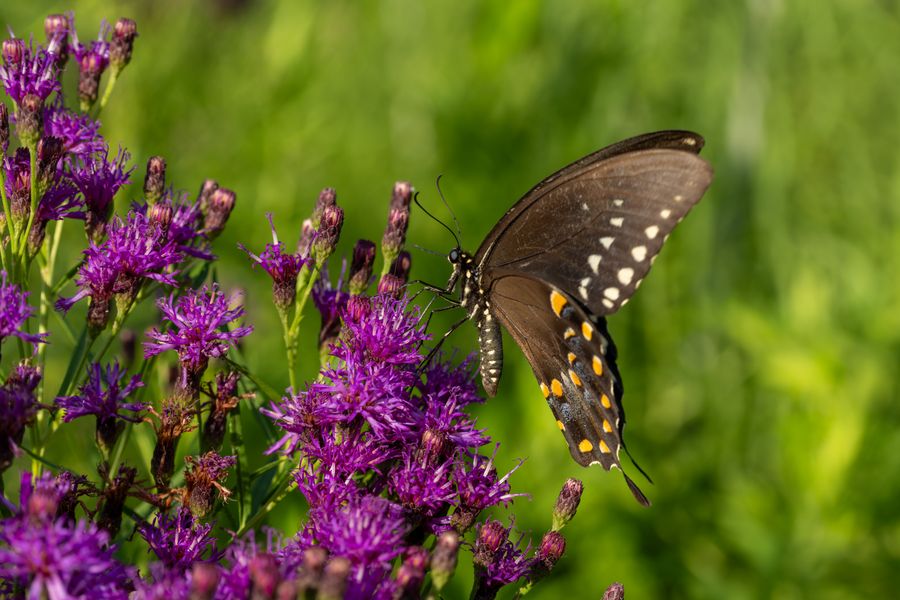
A Spicebush Swallowtail on ironweed in the August border, a butterfly of the eastern woods on one of the last big nectar plants of the summer.
The pale cream spot band and blue-green dusting across the hindwing separate this from the similar black-form female Eastern Tiger Swallowtail, which carries a row of orange rather than blue-green crescents. The caterpillars feed on spicebush and sassafras, disguising themselves early on as bird droppings and later, once too large for that trick, as a small snake, complete with false eyespots on a swollen thorax.
Spicebush Swallowtail, reaching in
Brooklyn Botanic Garden, 19 August 2026
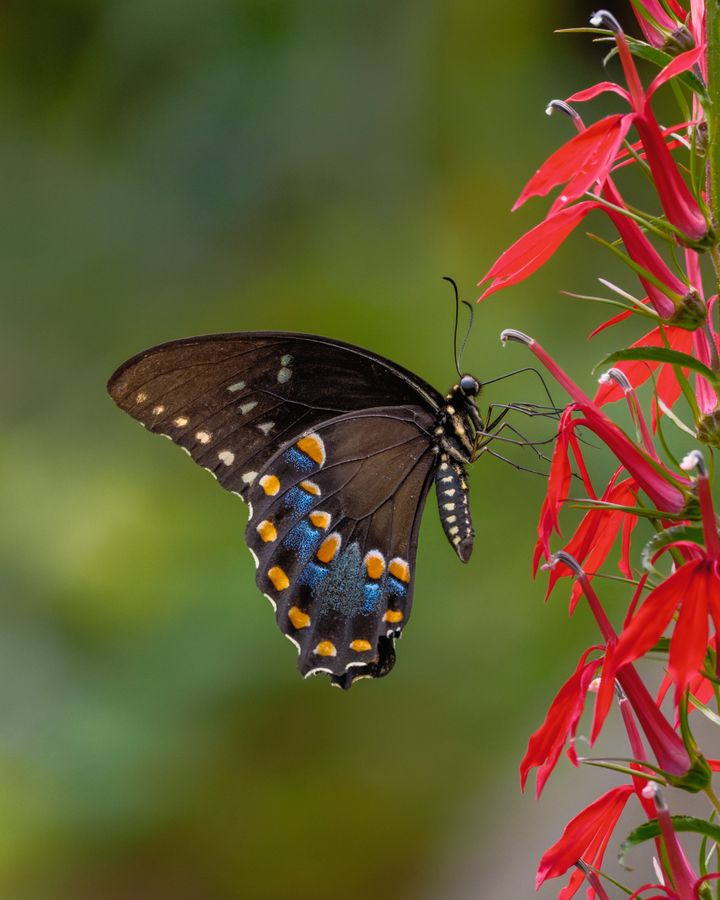
A Spicebush Swallowtail with its legs extended into a cardinal flower in the August border, reaching for the nectar at the base of the tube. A butterfly of the eastern woods wherever spicebush and sassafras grow, and a garden regular through August.
The pale blue wash across the hindwing and the row of pale spots along the edge separate it from the Black Swallowtail, which is otherwise the same shape and colour. Both are common visitors to cardinal flower, which is built for hummingbirds but doesn't turn a butterfly away.
Spicebush Swallowtail, underside
Brooklyn Botanic Garden, 19 August 2026
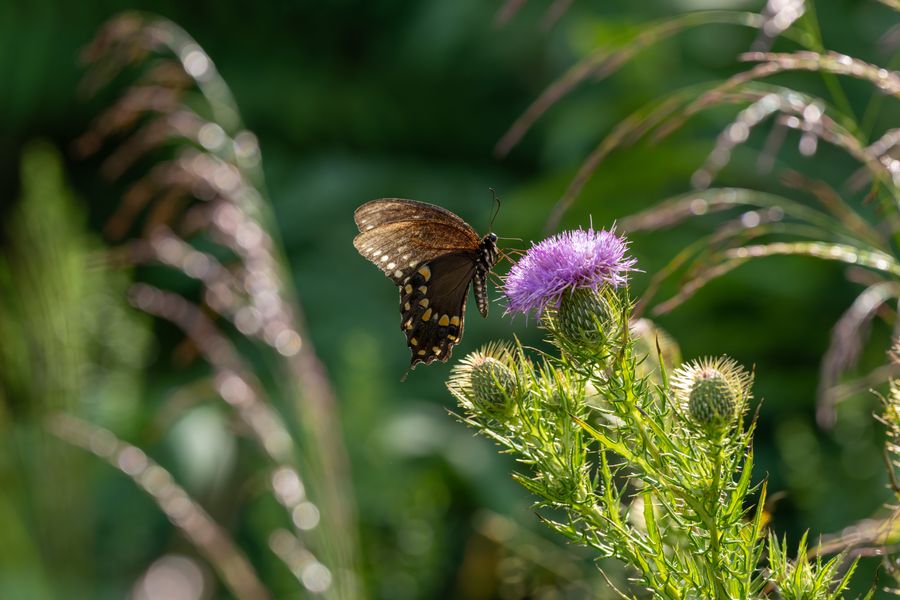
A Spicebush Swallowtail with the wings closed in the August border, showing the underside of the hindwing. It is a butterfly of the eastern woods wherever spicebush and sassafras grow for the caterpillars, and a garden regular through August.
Two rows of pale, orange-tinged spots with a band of blue-grey between them. This is the more reliable mark for the species when the upperside isn't on view, and it separates it from the dark female form of the Eastern Tiger Swallowtail, whose underside has a single row of orange spots and no blue between. The caterpillars are famous for the pair of false eyes that make the later stages look like a small green snake.
Spicebush Swallowtails on thistle
Brooklyn Botanic Garden, 13 August 2026
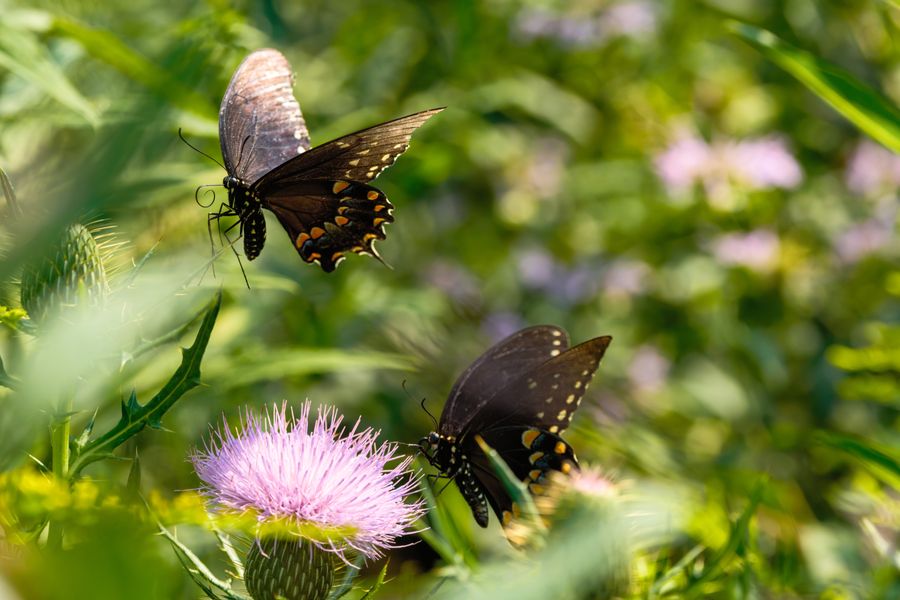
Two Spicebush Swallowtails sharing a single thistle head in the August border, one arriving as the other feeds. A butterfly of the eastern woods, wherever spicebush or sassafras grows for the caterpillars, and a regular in the garden all summer.
The dusty blue-green wash across the hindwing, stronger in some individuals than others, is what separates this species from the very similar Black Swallowtail. Despite the name, adults will nectar at almost anything in bloom; it is only the caterpillars that insist on spicebush and sassafras.
Spicebush Swallowtail caterpillar
Staten Island, 5 July 2026
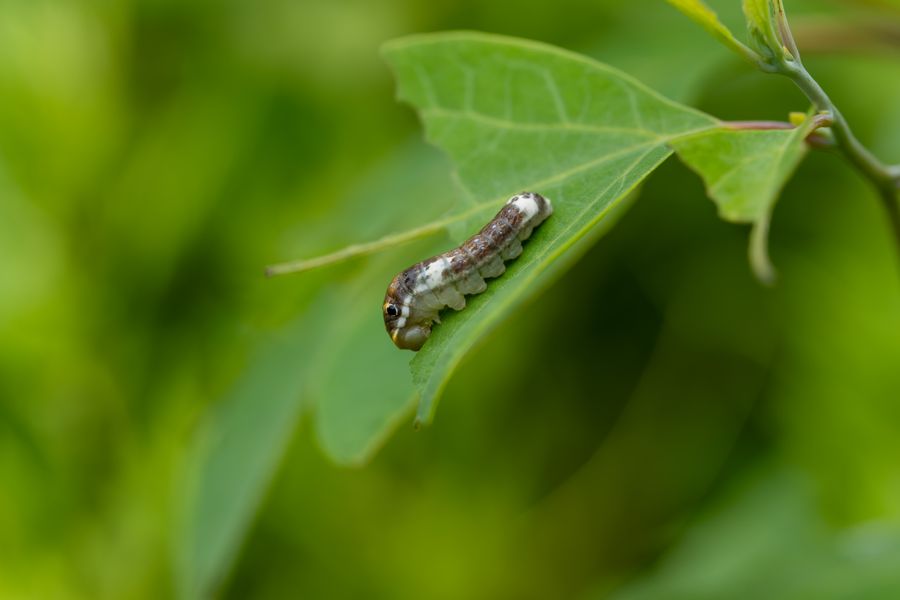
A young Spicebush Swallowtail caterpillar on a sassafras leaf on Staten Island, doing a convincing impression of a bird dropping: glossy dark brown with a white saddle, humped at the shoulders. The camouflage works well enough that something this size is routinely overlooked by the birds that would otherwise eat it. This is a butterfly of the eastern woods, and the caterpillar is only ever found on spicebush and sassafras.
Not the Viceroy it was first written up as. A young Viceroy wears the same bird-dropping colours but is knobbly all over, with a pair of spiky horns behind the head, and this one is smooth. The leaf settles it: the lopsided single lobe is sassafras. A few moults from now it will turn green, fold a leaf around itself with silk, and grow the pair of false eyes that make the later stages look like a small snake.
Birds, insects, plants and other wildlife, mostly from Brooklyn, with some from further afield.
Every photograph comes with notes on what it is.
Selected
Favourite shots. Filter by subject, or .
Places
Everything, by where it was taken.
Species
Larger catalogue of photos organized by species of animal or plant.
Catalogue
Every photograph, newest first. Narrow it by period, place or species; the three work together.
Updates
Coming soon. Sign up at the bottom of the page for updates.