Long-horned bee
Melissodes sp. · Bees & wasps
Long-horned bee approaching liatris
Brooklyn Botanic Garden, 26 July 2026
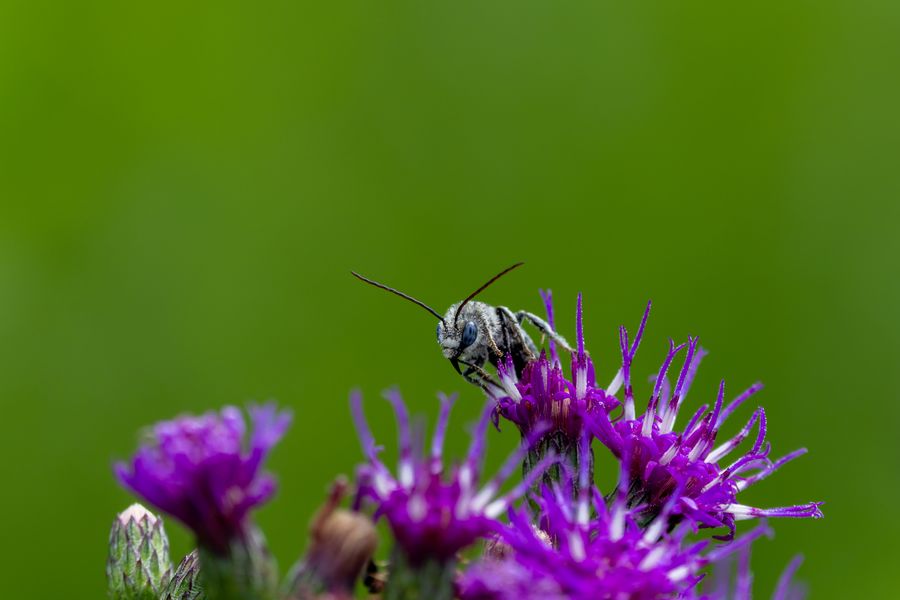
A male long-horned bee coming in to land on liatris in the July border, the antennae that give the group its name held out well ahead of the body. Long-horned bees are solitary bees of the eastern meadows, and liatris, the blazing star of the prairies, is one of the composites they specialise on.
The males provision no nest and carry no need for pollen, so they spend most of the day patrolling a good flower patch for females rather than foraging with any real purpose of their own.
Longhorn bee on blue vervain
Brooklyn Botanic Garden, 12 July 2026
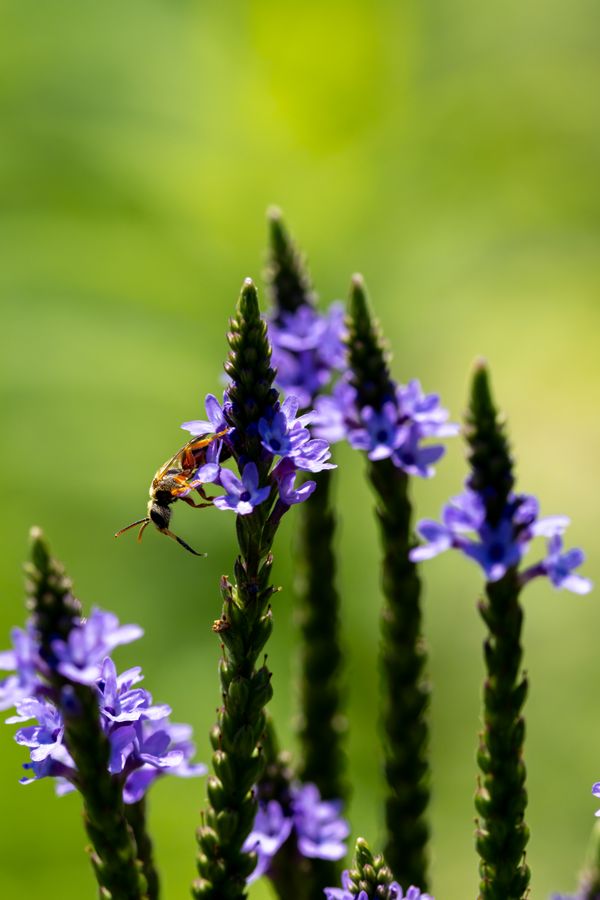
A long-horned bee working its way down a spike of blue vervain in the July border. Long-horned bees are solitary ground-nesters of the eastern meadows, and they specialise on the daisy family and the late-summer flowers of exactly this kind of native border.
Named for the males' notably elongated antennae. Vervain's small flowers open in a slow ring that climbs the spike over several weeks, a few at a time, rather than all at once, which is why a single stalk can keep producing usable flowers for a bee for most of the summer.
Long-horned bee in a mallow
Brooklyn Botanic Garden, 21 July 2024
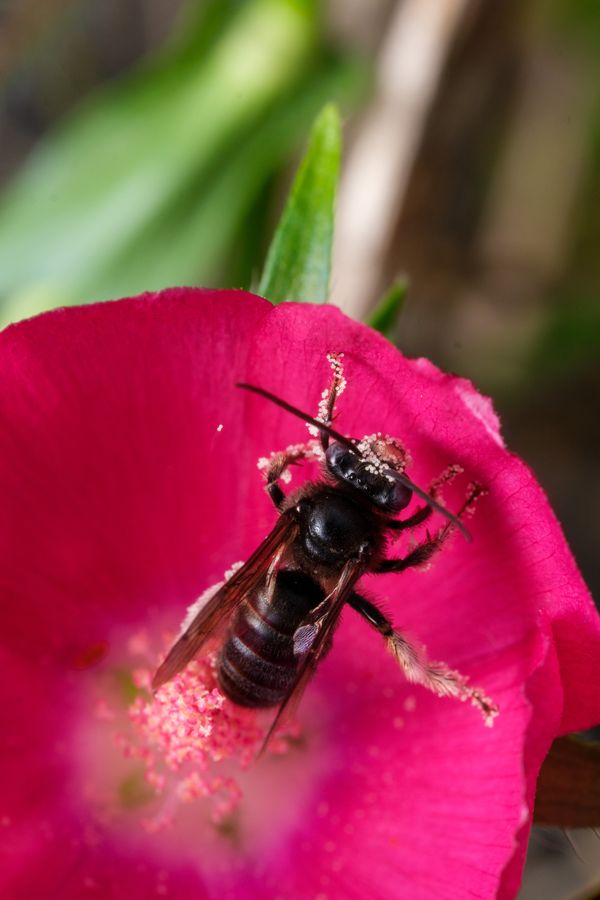
A long-horned bee working a mallow in the July border at the Botanic Garden, dusted with pollen from head to foot. Long-horned bees are solitary ground-nesters of meadows and gardens across the eastern United States, and midsummer in a Brooklyn border is their season.
A bee, not the wasp it was first written up as. The pollen is packed into long hairs on the hind legs, which is a bee's way of carrying it home and something no wasp does, and the body is furred rather than sleek. Black, with pale hairy hind legs and long antennae, it is most likely a Two-spotted Long-horned Bee, though the genus is as far as a photograph safely goes. Mallow pollen is large and sticky, which is why the bee is coated in it.
Birds, insects, plants and other wildlife, mostly from Brooklyn, with some from further afield.
Every photograph comes with notes on what it is.
Selected
Favourite shots. Filter by subject, or .
Places
Everything, by where it was taken.
Species
Larger catalogue of photos organized by species of animal or plant.
Catalogue
Every photograph, newest first. Narrow it by period, place or species; the three work together.
Updates
Coming soon. Sign up at the bottom of the page for updates.