Dark-eyed Junco
Junco hyemalis · Sparrows
Dark-eyed Juncos at a feeder
Green-Wood Cemetery, 16 February 2026
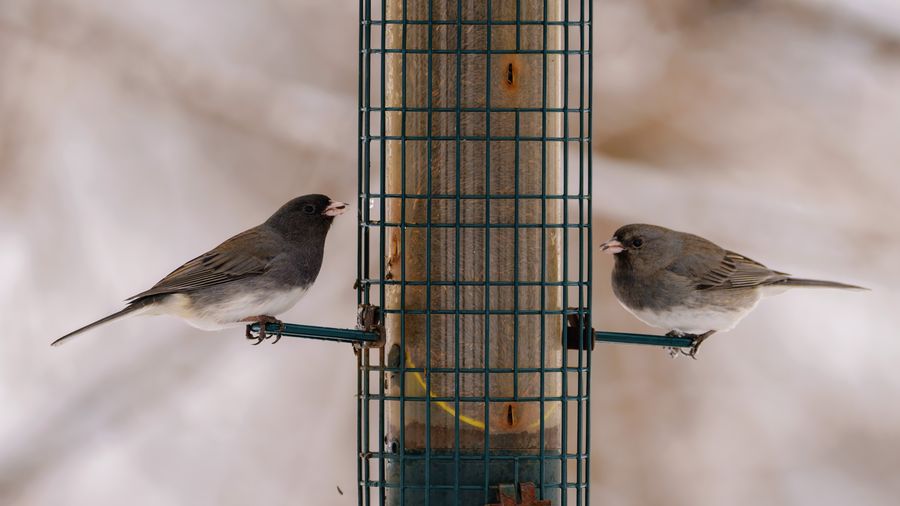
Two juncos facing off at either end of the same perch rather than sharing it, on a winter feeder at Green-Wood. This is a bird of the northern forests down for the season, and a city feeder is a good deal easier than the frozen ground it would otherwise be scratching.
The stand-off is normal junco etiquette. Flocks keep a loose pecking order over winter, and a feeder perch is contested space rather than a free-for-all; the bird that flashes more white in its tail usually wins.
Dark-eyed Junco
Green-Wood Cemetery, 16 February 2026
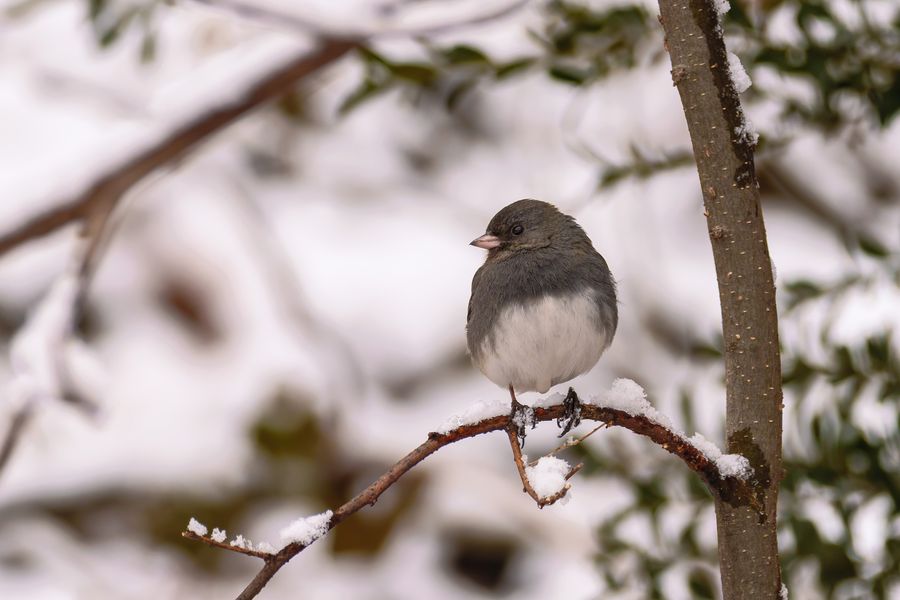
A junco on the ground under the cemetery trees, where it does all its feeding. Juncos breed in the conifer forests of Canada and the northern mountains and move into New York's parks only for the winter, arriving in the same push of cold as the first real snow - which is why the old name is snowbird.
The flocks are strictly ranked. Older males dominate and stay furthest north; the young and the females go further south to avoid them, so a winter flock in Brooklyn is mostly senior birds.
Dark-eyed Junco, launching
Prospect Park, 14 December 2025
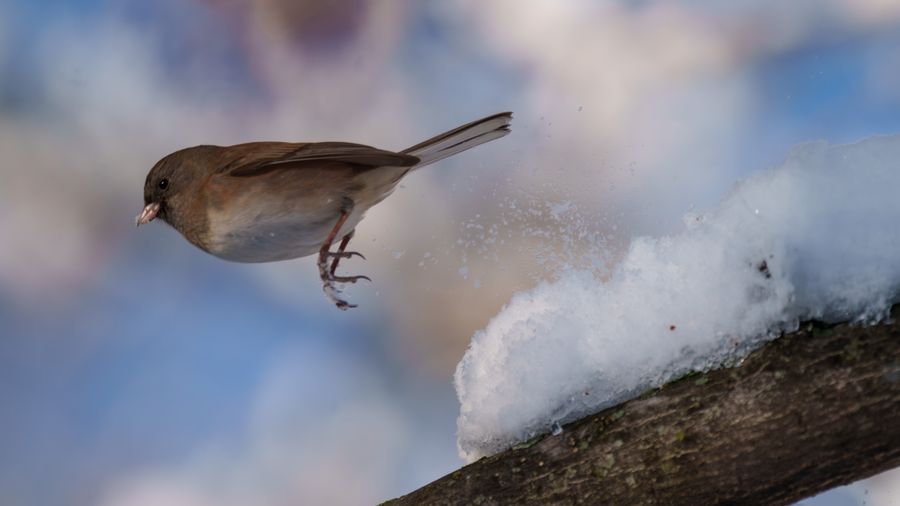
A Dark-eyed Junco in the instant of pushing off a snowy branch in Prospect Park in December, a spray of loose snow thrown up behind it. Juncos breed in the northern forests and winter across the United States, feeding on the ground in flocks, and a New York park in December is well within the southern edge of a range that follows the snowline each year.
The white outer tail feathers, flashed on take-off, are a signal to the flock, and the birds with the most white are the dominant ones.
Birds, insects, plants and other wildlife, mostly from Brooklyn, with some from further afield.
Every photograph comes with notes on what it is.
Selected
Favourite shots. Filter by subject, or .
Places
Everything, by where it was taken.
Species
Larger catalogue of photos organized by species of animal or plant.
Catalogue
Every photograph, newest first. Narrow it by period, place or species; the three work together.
Updates
Coming soon. Sign up at the bottom of the page for updates.