Baltimore Oriole
Icterus galbula · Blackbirds & Orioles
Baltimore Oriole, close
Prospect Park, 23 May 2026
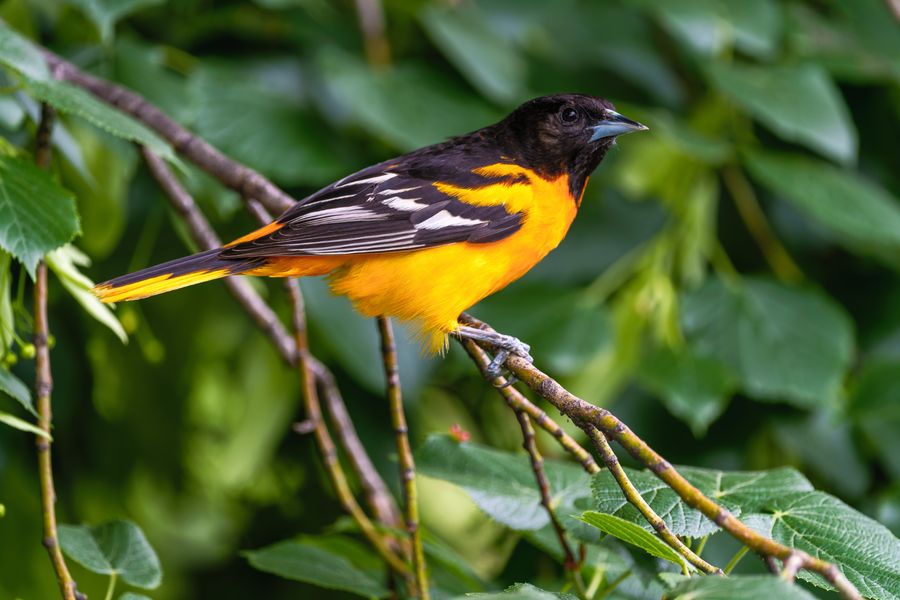
A Baltimore Oriole close up in Prospect Park in May, black hood over deep orange, just back from Central America to breed in the park's tall trees. Orioles are birds of open woodland and shade trees across the East, and they nest at the tips of high outer branches.
Orioles were named by the colonists after the golden oriole of Europe, which they resemble, but the two are not related at all: the American orioles are blackbirds, kin to grackles and meadowlarks, and the resemblance is coincidence. The orange is diet - carotenoids from fruit and insects - and a bird fed on the wrong things in captivity fades to yellow.
Baltimore Oriole in a linden
Prospect Park, 23 May 2026
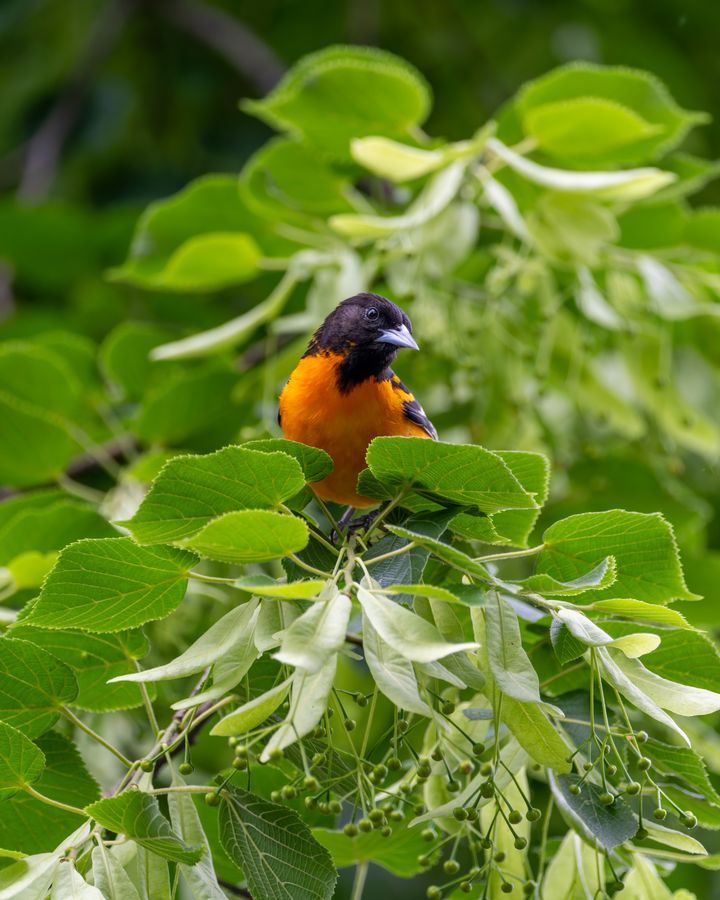
A Baltimore Oriole among the pale, papery bracts of a linden's flower clusters in Prospect Park. The tree's flowering coincides closely with peak oriole migration, and orioles work the blossoms for both nectar and the small insects it attracts. Orioles are birds of shade trees and open woodland across the East, and they nest high in exactly this kind of tree.
The pale bracts aren't petals at all but modified leaves, each one attached to the flower stalk and acting as a wing to carry the seed cluster on the wind once it ripens.
Baltimore Oriole singing
Green-Wood Cemetery, 16 May 2026
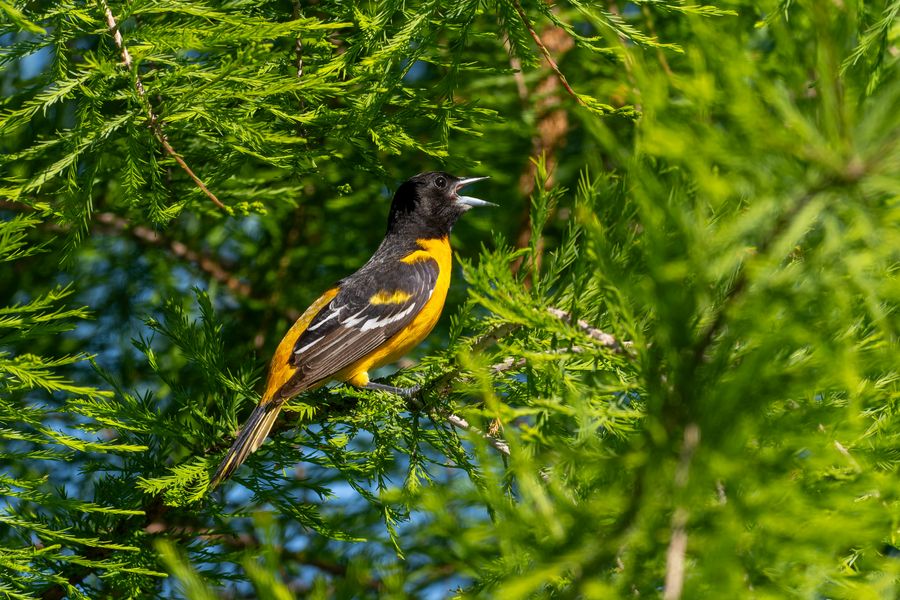
A Baltimore Oriole singing from the canopy at Green-Wood in May, just back from Central America to breed in the tall trees of the city's parks and cemeteries. Orioles are birds of open woodland and shade trees across the East, and they nest at the tips of high outer branches.
The name predates the bird's arrival in Maryland by centuries: it was named for Lord Baltimore, whose coat of arms happened to be black and gold. The song is a loose, flutey series of whistles, distinctive enough to place before the bird is found. The nest is a deep, sock-shaped bag woven from plant fibre, slung where it is hardest for a climbing predator to reach.
Birds, insects, plants and other wildlife, mostly from Brooklyn, with some from further afield.
Every photograph comes with notes on what it is.
Selected
Favourite shots. Filter by subject, or .
Places
Everything, by where it was taken.
Species
Larger catalogue of photos organized by species of animal or plant.
Catalogue
Every photograph, newest first. Narrow it by period, place or species; the three work together.
Updates
Coming soon. Sign up at the bottom of the page for updates.