Barn Swallow
Hirundo rustica · Swallows & Martins
Barn Swallow
Staten Island, 5 July 2026
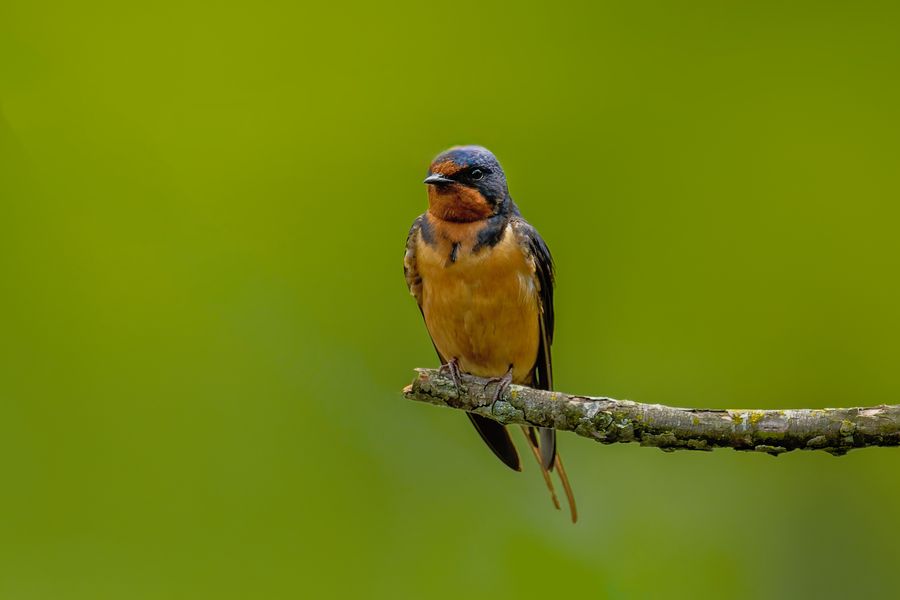
A Barn Swallow on Staten Island in July, the most widespread swallow in the world, breeding across most of the Northern Hemisphere and wintering as far south as Argentina and South Africa.
Chestnut forehead and throat, steel-blue back, a deeply forked tail. It is one of the clearest cases of a wild bird moving in with people: nearly every Barn Swallow nest in North America now is a mud cup glued to a beam, eave or bridge rather than the cliff ledges the species used before humans built anything worth using instead.
Barn Swallow banking
Prospect Park, 23 May 2026
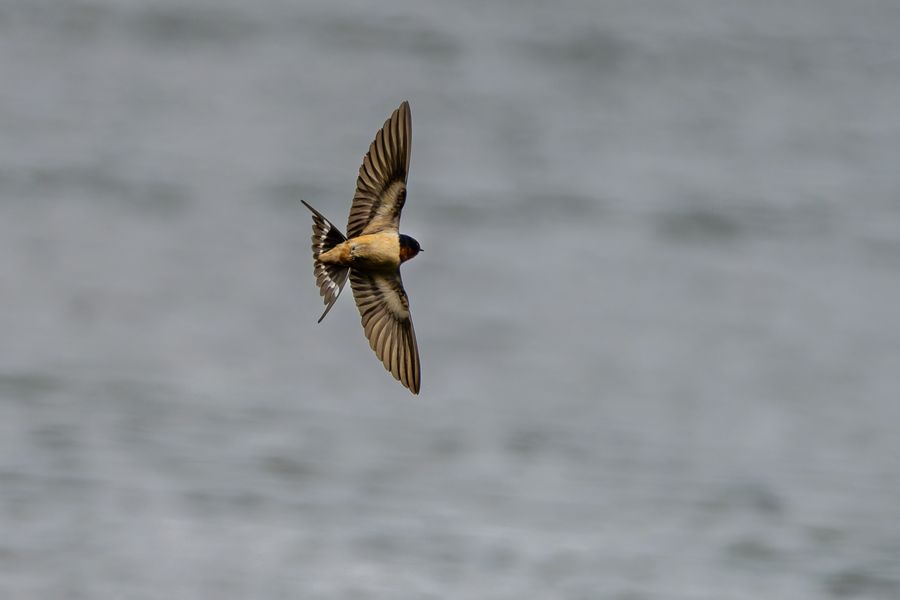
A Barn Swallow banking over Prospect Park Lake in May, wings fully spread mid-turn. Barn Swallows hawk insects over the lake all summer and nest under the boathouse eaves, as they nest under something built by people almost everywhere in the world.
The turn shows the row of white spots across the tail feathers, a mark seen mainly from below and in flight. Barn Swallows drink and even bathe on the wing, dipping to skim the surface without landing. The forked tail is the steering: the longer the outer feathers, the tighter the turn, and the males with the longest ones get the females.
Barn Swallow over the water
Prospect Park, 23 May 2026
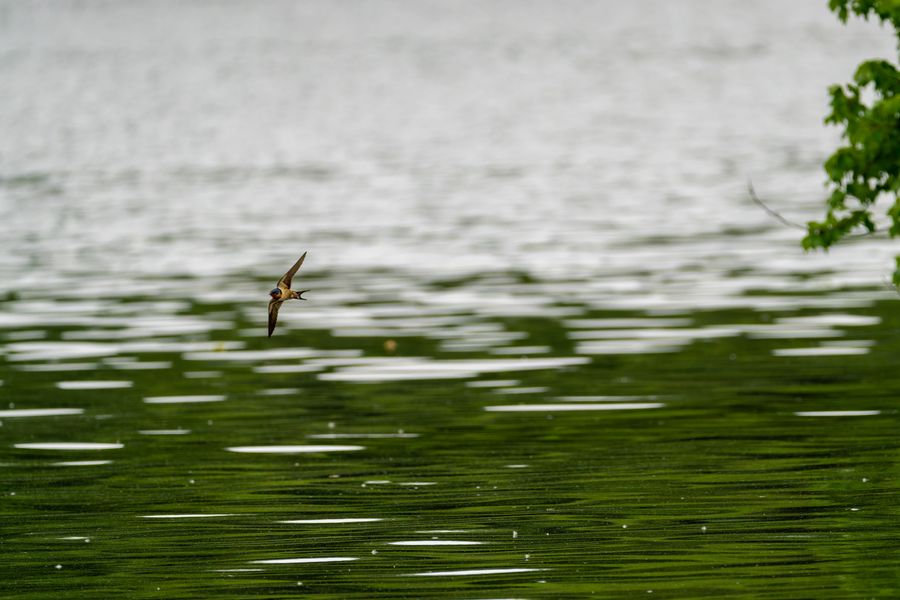
A Barn Swallow hawking insects over Prospect Park Lake in May, one of several swallows and martins working the same water. Barn Swallows are among the most widely distributed landbirds on Earth, breeding across most of the Northern Hemisphere, and almost always in close association with people.
The long, deeply forked tail streamers are the surest way to separate it from the others over the lake. The species builds its cup nest of mud pellets on beams, ledges and bridges rather than in a natural site, and nearly every nest in North America now is on something someone built.
Barn Swallow, wings down
Green-Wood Cemetery, 25 April 2026
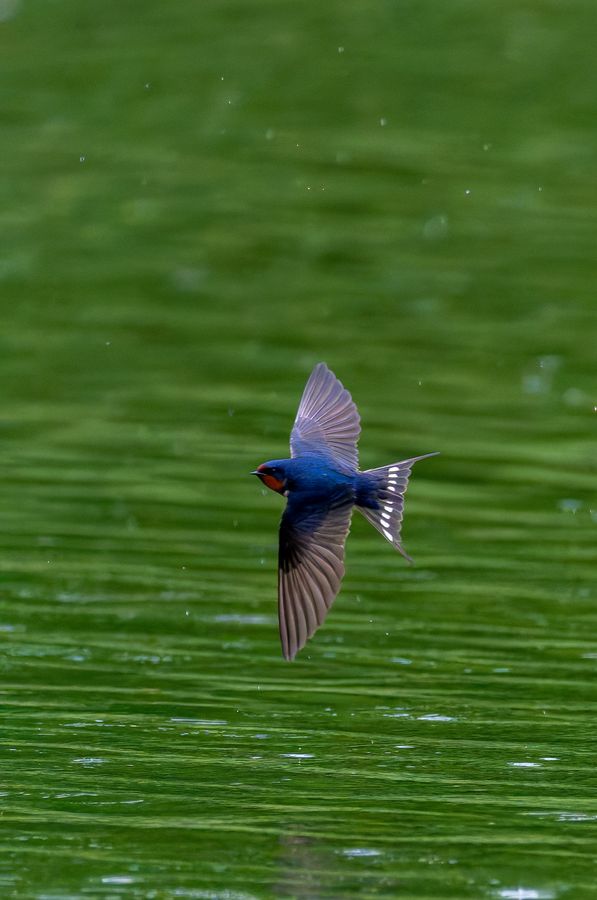
A Barn Swallow in flight over Green-Wood in late April, wings driven fully down through the stroke, just arrived from South America and feeding hard over open ground after the crossing. Barn Swallows breed across the whole Northern Hemisphere, almost always under a man-made roof.
The long streamer tail feathers are longer on males than females and appear to work as a signal of quality to prospective mates as much as anything aerodynamic - females prefer males with longer, more symmetrical streamers, and the males pay for it in manoeuvrability.
Barn Swallow, wings raised
Green-Wood Cemetery, 25 April 2026
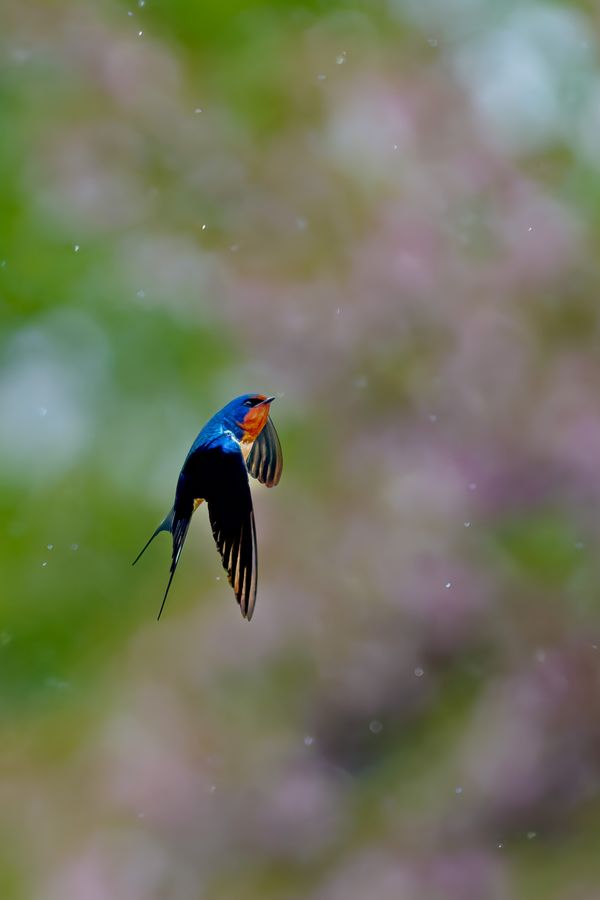
A Barn Swallow over the water with the wings thrown up at the top of a beat, the forked tail spread for the turn. This is the swallow of farmyards and bridges across the world, and the pond at Green-Wood is where the Brooklyn birds hunt in April.
A foraging pass like this one is repeated dozens of times in a session, since the insects a swallow hunts rarely stay in one place long enough for a single pass to be worth much. A swallow eats on the wing, drinks on the wing, and in a good summer flies six hundred miles a day without going anywhere.
Barn Swallow over the water
Green-Wood Cemetery, 25 April 2026
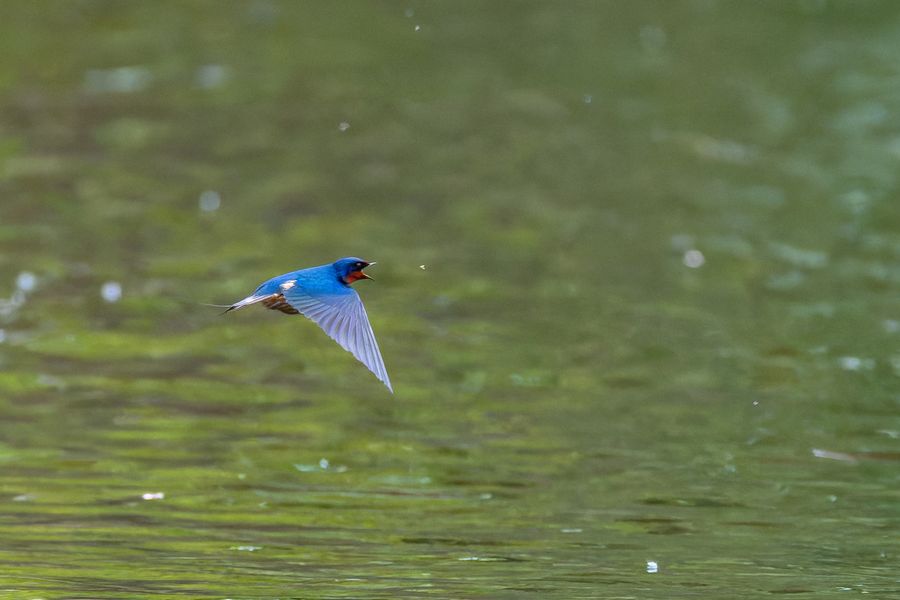
A Barn Swallow low over the pond at Green-Wood in April, just back from South America and feeding hard over the water where the first insects are. Barn Swallows breed across the whole Northern Hemisphere, almost always under a man-made roof, and a cemetery pond with a boathouse is ideal.
Deeply forked tail, rust-red throat and a steel-blue back, caught here with its bill open, likely calling rather than catching anything at this instant. Barn Swallows drink and bathe on the wing as well as feed that way, dipping to the surface in a shallow skim without ever fully landing.
Birds, insects, plants and other wildlife, mostly from Brooklyn, with some from further afield.
Every photograph comes with notes on what it is.
Selected
Favourite shots. Filter by subject, or .
Places
Everything, by where it was taken.
Species
Larger catalogue of photos organized by species of animal or plant.
Catalogue
Every photograph, newest first. Narrow it by period, place or species; the three work together.
Updates
Coming soon. Sign up at the bottom of the page for updates.