Bluet
Enallagma sp. · Dragonflies & damselflies
Bluet
Brooklyn Botanic Garden, 13 August 2026
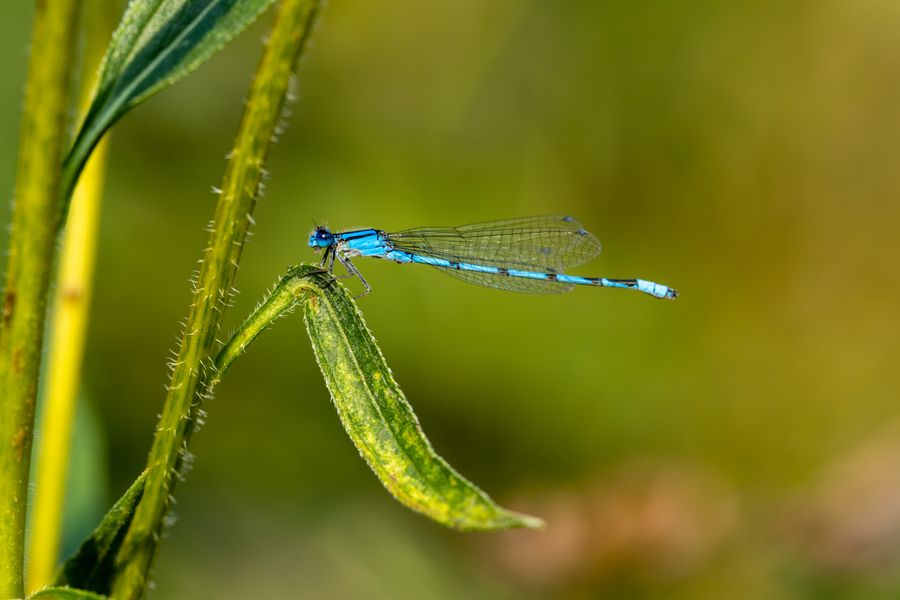
A bluet in the August border at the Botanic Garden, one of the pond damselflies that breed in the garden's water and hunt the borders around it. The bluets are the largest damselfly genus in North America and among the hardest to separate.
Several species share this exact blue-and-black pattern, and a confident call usually needs a clear view of the tip of the abdomen, which isn't on offer here. Damselflies fold their wings along the body at rest, which dragonflies never do, and the eyes sit wide apart on a head like a hammer; a dragonfly's meet in the middle.
Damselfly on a flower bud
Brooklyn Botanic Garden, 17 June 2026
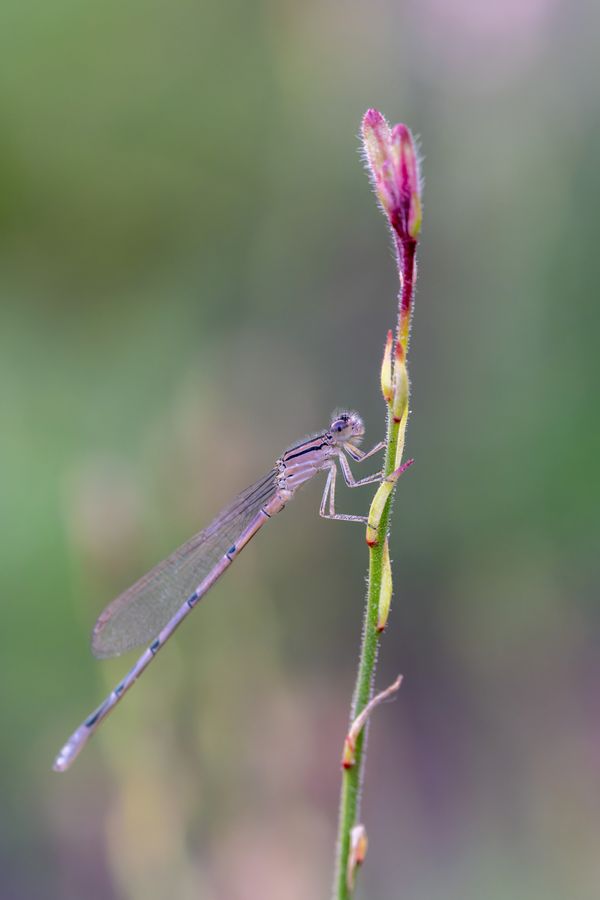
A newly emerged damselfly on a flower bud in the Botanic Garden in June, resting while its colours come in. Pond damselflies breed in the garden's ponds, and a freshly emerged one climbs a stem and waits.
The pale, almost bleached-out colouring is the sign: pond damselflies, the family that includes the bluets, take a day or so after emerging for their adult colours to develop fully, and this one hasn't got there yet. That makes a species-level call from a photograph essentially a guess. Genus is likely Enallagma, the bluets, but the diagnostic marks are exactly the ones colour hasn't finished revealing.
Bluet, resting
Brooklyn Botanic Garden, 24 August 2025
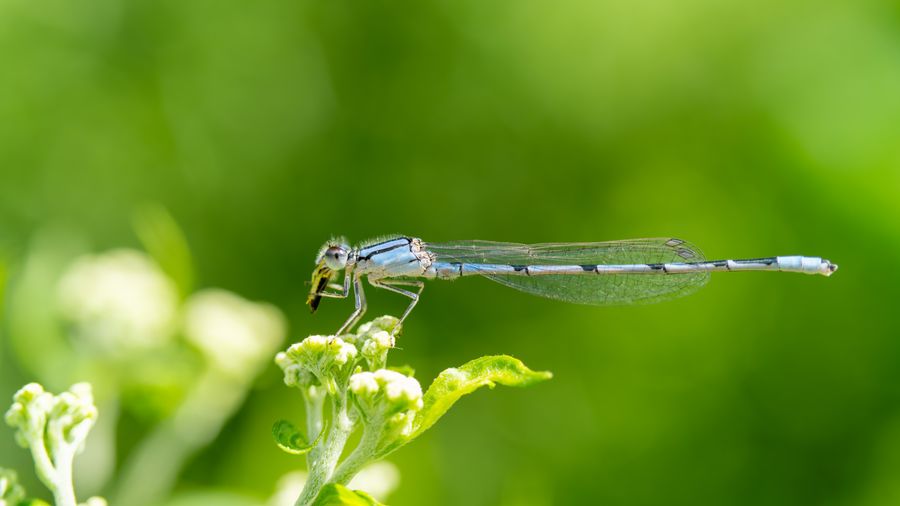
A bluet perched head-on on a seed head in the August border, wings held forward, and with prey: the yellowish scrap held to the mouth is a small insect it has just taken. The bluets are pond damselflies of the whole continent, and a seed head in the sun beside the water is where one sits between hunts.
Damselflies catch on the wing and eat at rest, and a perch like this doubles as a lookout for the next one. Pale powder blue banded with black, and one of the Enallagma bluets - there are several near-identical species in the region, and separating them reliably means looking at the tip of the abdomen under magnification.
Bluet
Brooklyn Botanic Garden, 24 August 2025
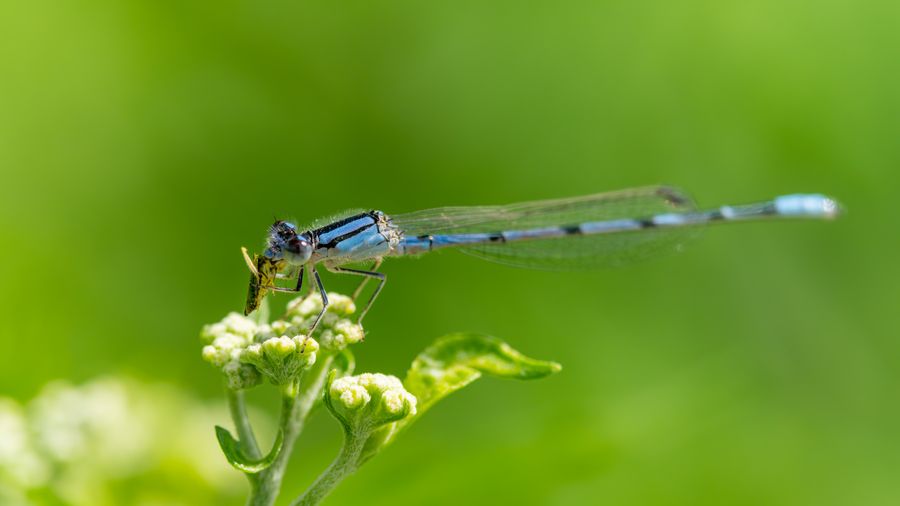
A bluet in the August border with prey still in its jaws. Bluets are damselflies of ponds and slow water across North America, and the Botanic Garden's ponds breed them by the hundred; the borders around them are where they hunt.
Damselflies are active predators even at rest, taking small flying insects out of the air or, as here, off nearby vegetation. The bluets are the largest damselfly genus in North America and among the hardest to separate: several species share this exact blue-and-black pattern, and a confident call usually needs a clear view of the tip of the abdomen.
Bluet
Brooklyn Botanic Garden, 21 July 2024
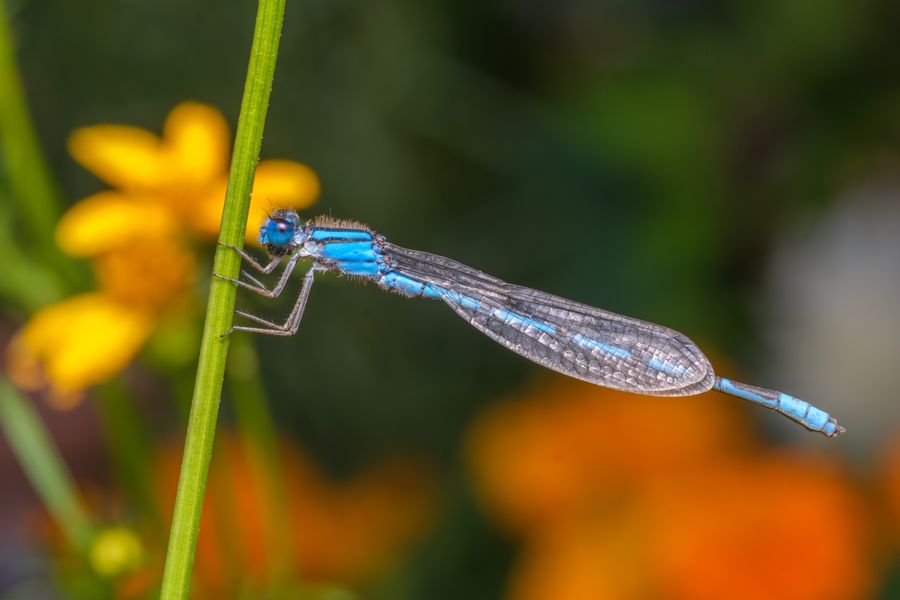
A bluet on a stem in the July border, a damselfly of ponds and slow streams across North America, and the Botanic Garden's ponds breed them in numbers. It is a damselfly rather than a dragonfly: the wings fold back along the body at rest instead of staying spread, and the whole animal reads as noticeably more slender.
The blue bluets are a large genus and hard to separate by species without a clear view of the tip of the abdomen, which this photograph doesn't quite give. The blue itself is a good sign of a male in most of them; the females run green or tan.
Birds, insects, plants and other wildlife, mostly from Brooklyn, with some from further afield.
Every photograph comes with notes on what it is.
Selected
Favourite shots. Filter by subject, or .
Places
Everything, by where it was taken.
Species
Larger catalogue of photos organized by species of animal or plant.
Catalogue
Every photograph, newest first. Narrow it by period, place or species; the three work together.
Updates
Coming soon. Sign up at the bottom of the page for updates.