Bumblebee
Bombus impatiens · Bees & wasps
Bumblebee on Lamb's Ear, from below
Brooklyn Botanic Garden, 17 June 2026
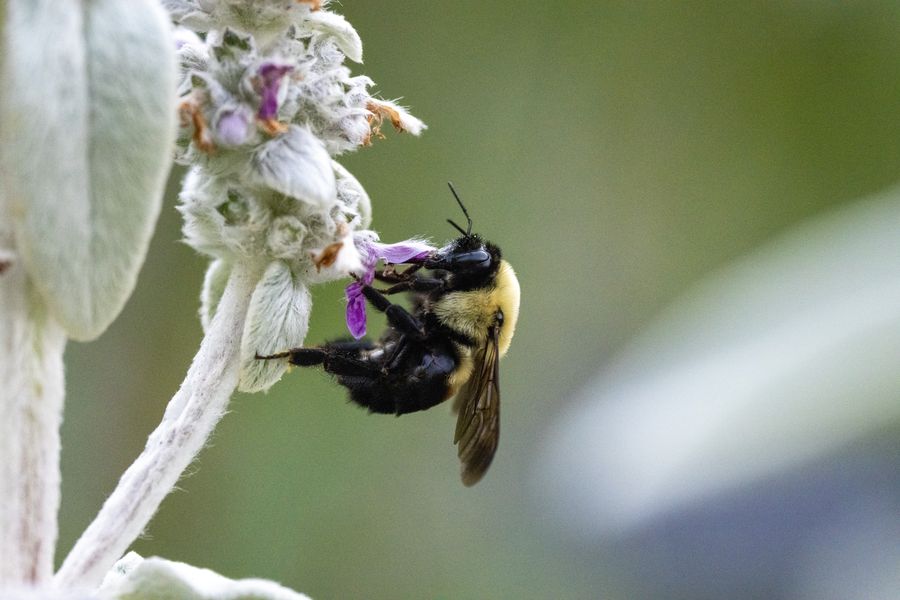
A Common Eastern Bumblebee working a Lamb's Ear spike from underneath in the June border at the Botanic Garden. It is the default bumblebee of the eastern United States, nesting in the ground, and a spike of lamb's ear flowers is worked from the bottom up because that is the order they open.
The plant is the one to watch for a wool carder bee, which shaves the felt off the leaves to line its nest - but this is a bumblebee, after the nectar and nothing else.
Bumblebee on Lamb's Ear
Brooklyn Botanic Garden, 17 June 2026
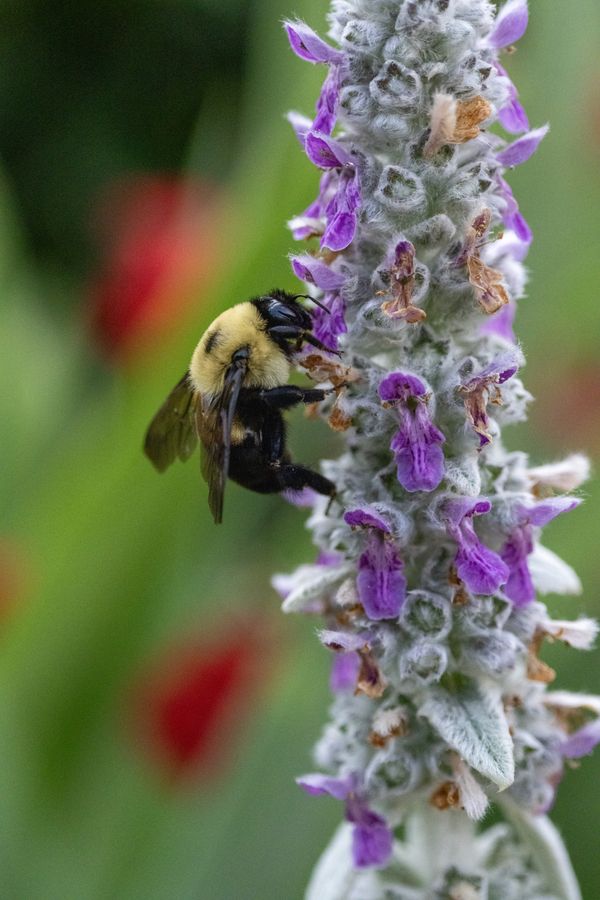
A Common Eastern Bumblebee on a Lamb's Ear spike in the June border at the Botanic Garden, by far the most frequently seen bumblebee in the city. The solid black abdomen and single yellow band across the thorax are enough to call it.
Lamb's Ear's felted, silver-white leaves are a byword for a child-friendly garden texture, but the flower spikes are what matter here. The same fuzz that softens the foliage also lines the throat of each small purple flower, and a bee has to push through it to reach the nectar.
Bumblebee on goldenrod
Brooklyn Botanic Garden, 24 August 2025
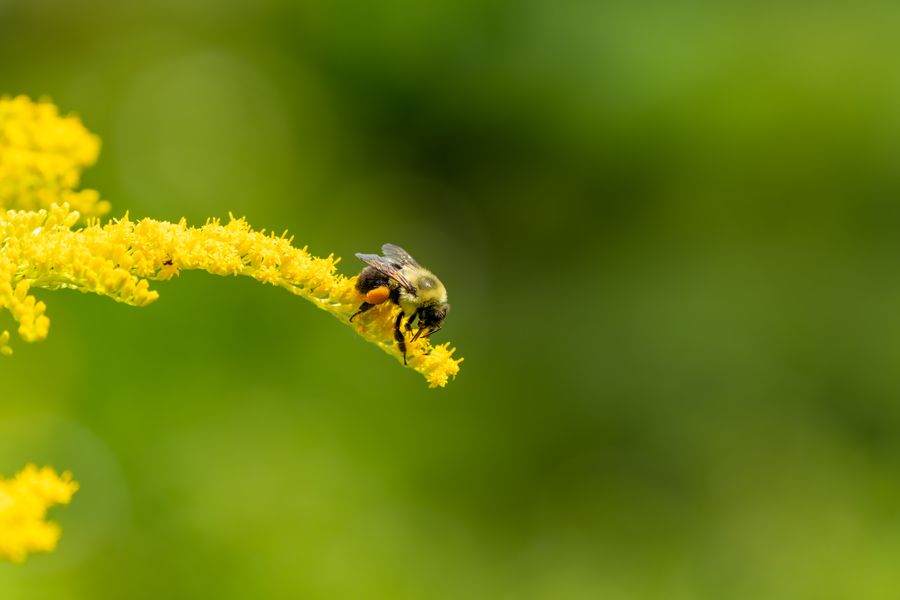
A Common Eastern Bumblebee on goldenrod in the August border, a full orange pollen basket already packed onto the hind leg. Bumblebee colonies nest in the ground across the eastern United States, and late-season goldenrod is one of the last major nectar and pollen sources before the first frost; they time their last brood around exactly this bloom.
The yellow thorax and single yellow band make it the Common Eastern. Goldenrod gets blamed for hay fever it does not cause; its pollen is too heavy to blow, and the culprit is the ragweed flowering beside it.
Bumblebee on Joe-Pye weed
Brooklyn Botanic Garden, 24 August 2025
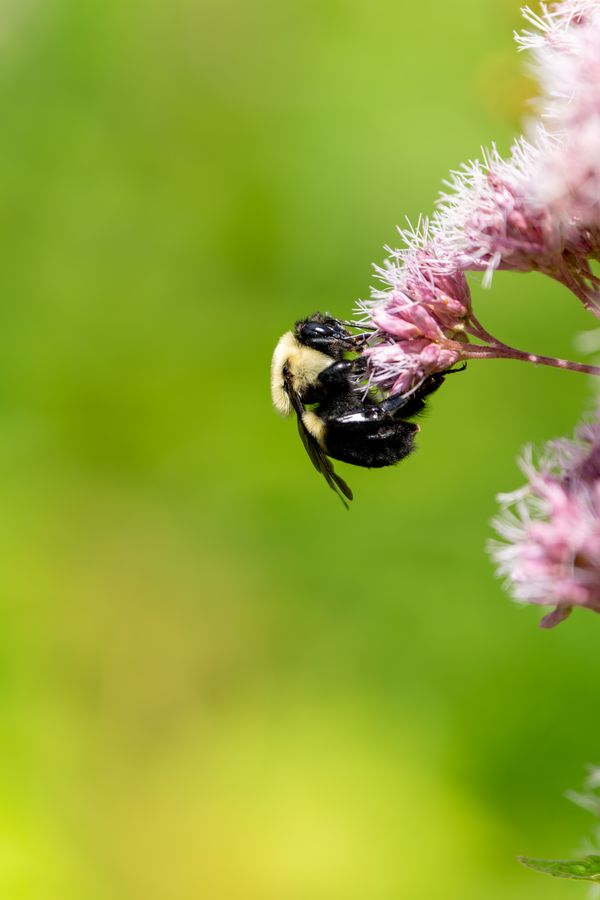
A Common Eastern Bumblebee hanging almost upside down off a Joe-Pye weed cluster in the August border, working it from below. It is the default bumblebee of the city, nesting in the ground across the eastern United States, and Joe-Pye weed in August is one of its last big flowers.
Joe-Pye weed flowers are shallow and open enough that a bumblebee doesn't need to force its way in the way it would with a tubular flower. The yellow thorax and a single yellow band at the top of an otherwise black abdomen are the marks.
Bumblebee
Brooklyn Botanic Garden, 12 July 2025
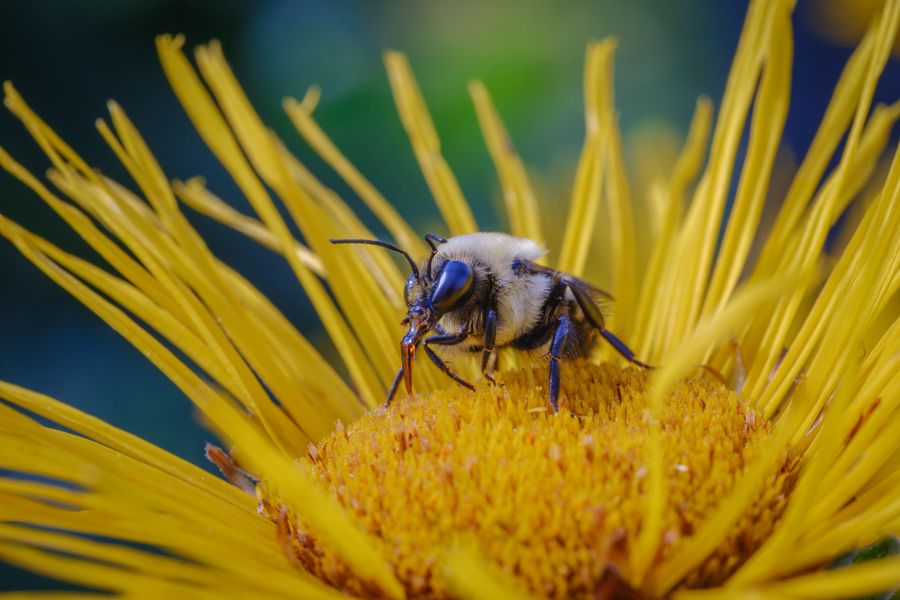
A Common Eastern Bumblebee in the July border at the Botanic Garden, the default bumblebee of most gardens on this side of the country. It nests in the ground across the eastern United States, in old rodent burrows, and forages on almost anything in flower.
A cream-yellow face patch and a single yellow band are usually enough to call it from a black-and-yellow blur without seeing the whole insect. It is also the bumblebee of commerce: reared by the million for pollinating greenhouse tomatoes, which need the buzz a honeybee cannot produce.
Birds, insects, plants and other wildlife, mostly from Brooklyn, with some from further afield.
Every photograph comes with notes on what it is.
Selected
Favourite shots. Filter by subject, or .
Places
Everything, by where it was taken.
Species
Larger catalogue of photos organized by species of animal or plant.
Catalogue
Every photograph, newest first. Narrow it by period, place or species; the three work together.
Updates
Coming soon. Sign up at the bottom of the page for updates.