Honeybee
Apis mellifera · Bees & wasps
Honeybee approaching liriope
Brooklyn Botanic Garden, 19 August 2026
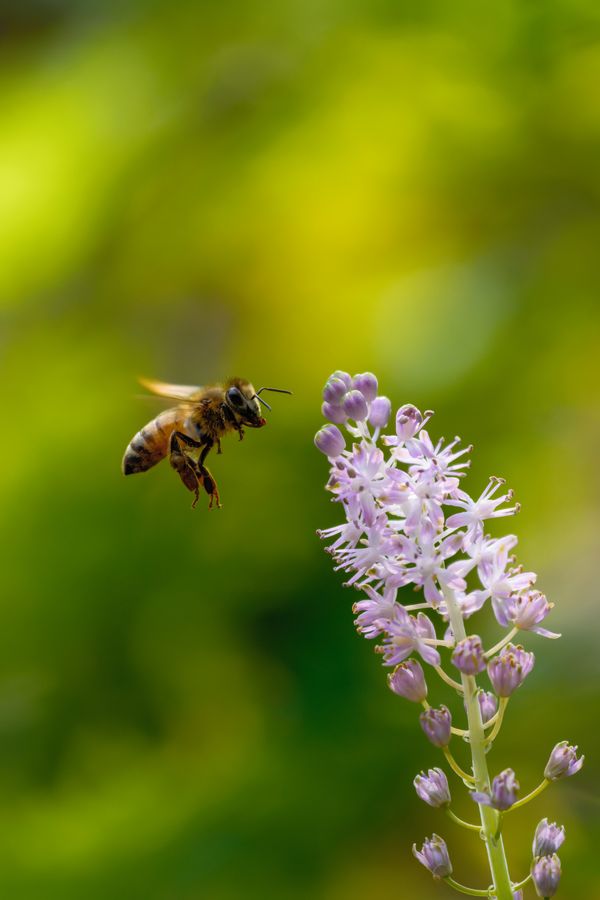
A honeybee coming in to a spike of liriope in the August border, a grass-like groundcover from East Asia whose small purple flowers open in tight succession up the stem through late summer.
Not a native plant, but a reliable late-season nectar source once many border perennials have finished, which is why it is planted under trees across the whole of the eastern United States. In Japan the roots are a cough medicine.
Honeybee on Russian sage
Brooklyn Botanic Garden, 13 August 2026
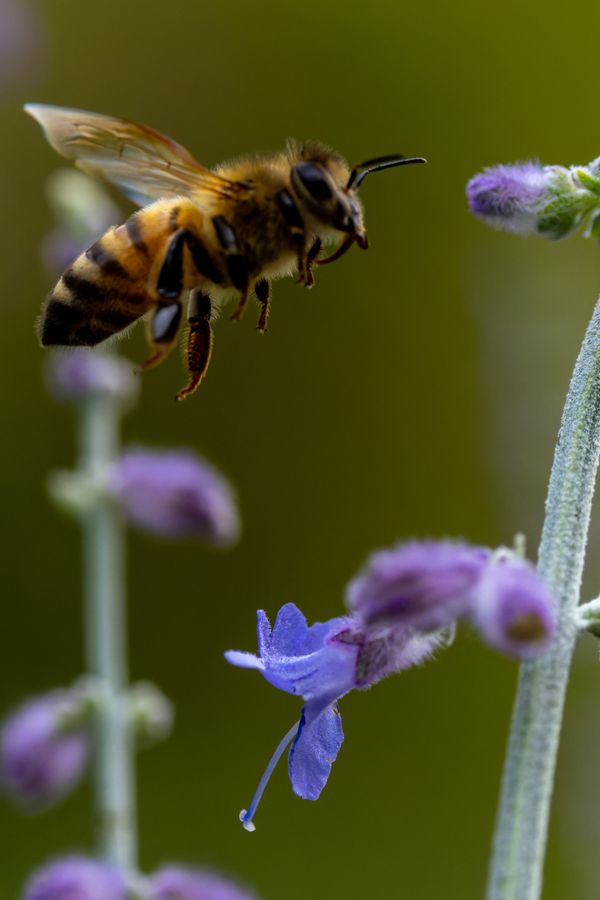
A honeybee coming in to land on Russian sage in the August border, which despite the name is neither Russian nor a true sage: it is Central Asian in origin and belongs to the mint family a few branches over from Salvia.
The wiry silver stems and small violet-blue flowers make it a favourite for late-summer pollinator plantings, flowering hardest exactly when many other things have finished. A bee working it in August is working one of the last reliable plants of the season.
Honey bee in flight, strawflower
Brooklyn Botanic Garden, 26 July 2026
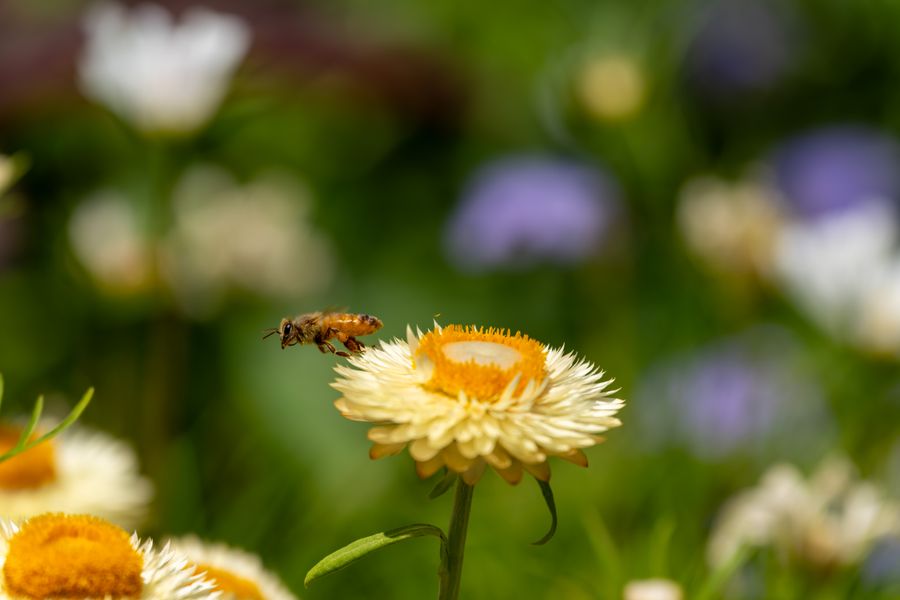
A honeybee coming in to land on a strawflower in the July border, legs already reaching for the flowerhead. Honeybees forage from hives across the city, on the rooftops and in the parks, and a botanic garden's borders are the best foraging in Brooklyn.
Landing on a strawflower takes more precision than most garden flowers allow: the stiff, papery bracts give no grip and are not petals at all, so a bee has to put down almost exactly on the soft central disc, which is where the real flowers are. The bracts are what make strawflowers last so well when dried - they are already dry on the living plant.
Honey bee on allium
Brooklyn Botanic Garden, 26 July 2026
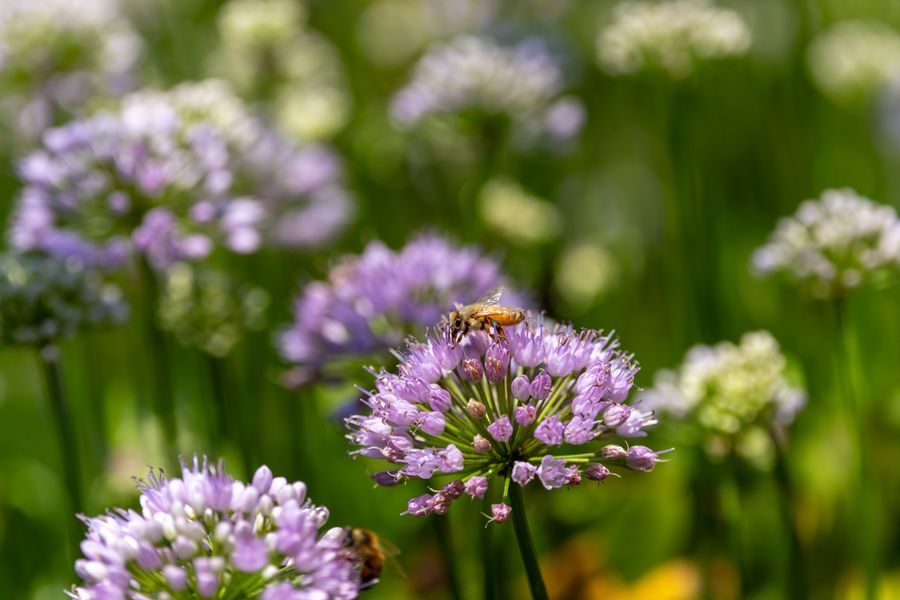
A honeybee working an ornamental allium's globe of tiny star-shaped flowers in the July border, two more bees out of focus lower in the frame on the same bed, on the same rota.
Each floret opens and offers nectar on its own schedule, so the whole sphere stays productive for weeks rather than blooming and fading at once. Alliums are onion and garlic's ornamental cousins, and the pungent smell that keeps deer and rabbits off the foliage does nothing to put off a bee.
Honeybee approaching cornflower
Brooklyn Botanic Garden, 26 July 2026
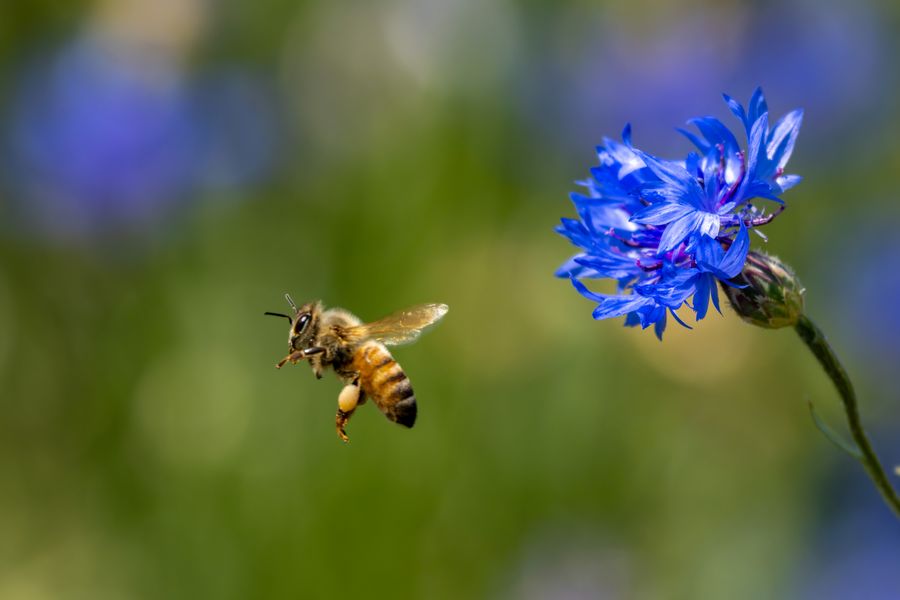
A honeybee, pollen basket already loaded, coming in on a cornflower in the July border.
Cornflower is a European native long grown as a garden annual, and no relation to corn beyond the old habit of calling any grain field "corn" and naming its most persistent weeds after it. It was once so common in English wheat that it blunted the reapers' sickles, and is now nearly extinct in the wild there.
Honeybee, pollen baskets full, nearing Rose Mallow
Brooklyn Botanic Garden, 26 July 2026
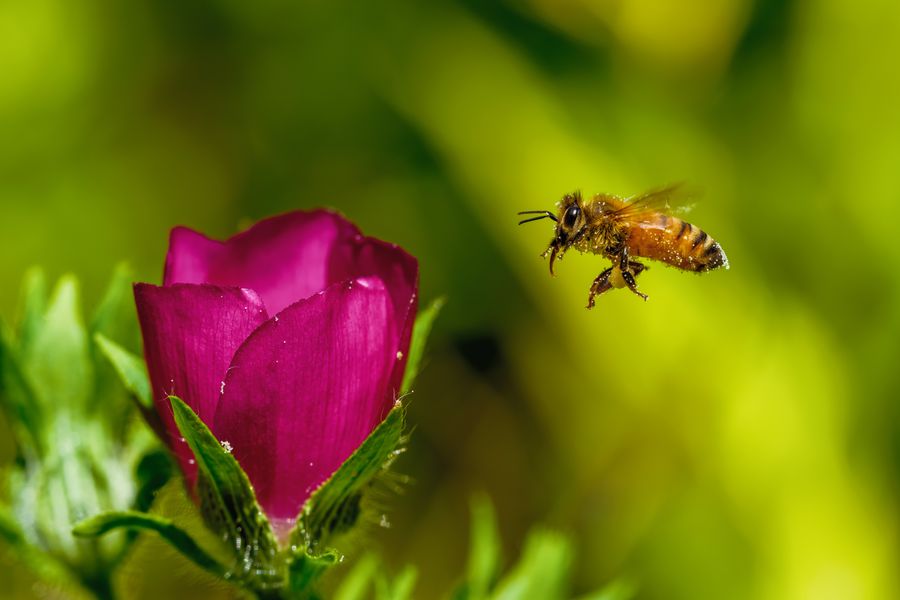
A honeybee coming in to land on a Rose Mallow in the July border, both hind legs already carrying visible pollen loads from earlier flowers. Rose Mallow is a native hibiscus of the eastern marshes, bred here into a deep crimson.
Each flower lasts only a single day, opening in the morning and closing for good by evening, so a bee working a stand of them is really working through a fresh set of flowers every visit. The pollen is enormous by bee standards, and a bee coated in it looks dusted with flour.
Honeybee on bottlebrush buckeye
Brooklyn Botanic Garden, 12 July 2026
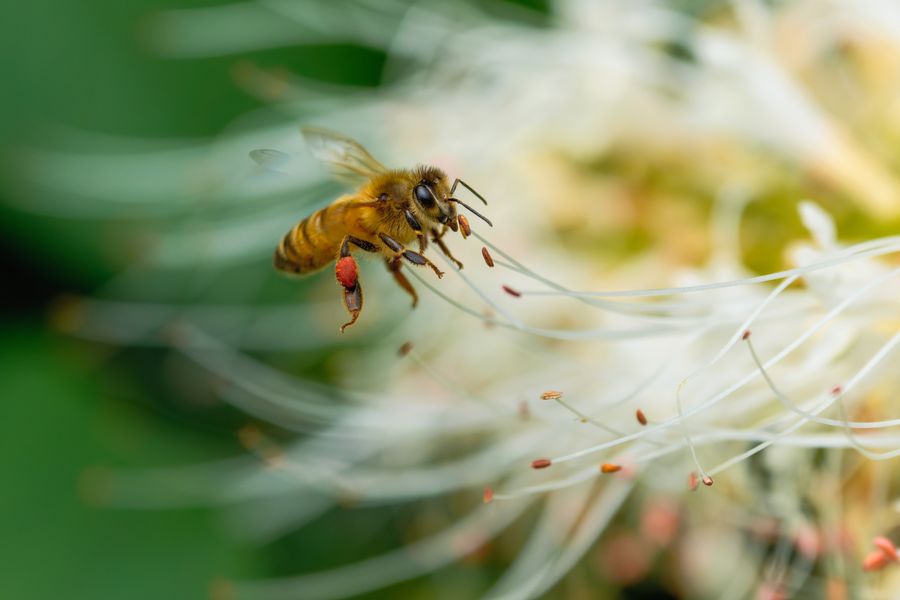
A honeybee working the long white stamens of bottlebrush buckeye in the July border, a native shrub of the south-eastern woods that flowers later in summer than most of its relatives and does it with upright candle-like spikes rather than the buckeye family's usual clusters.
The bee is already carrying a full red pollen load on one hind leg, packed down hard into the leg's own built-in basket. Buckeye pollen is red, which is how you can tell where a bee has been.
Honeybee on catmint
Brooklyn Botanic Garden, 17 June 2026
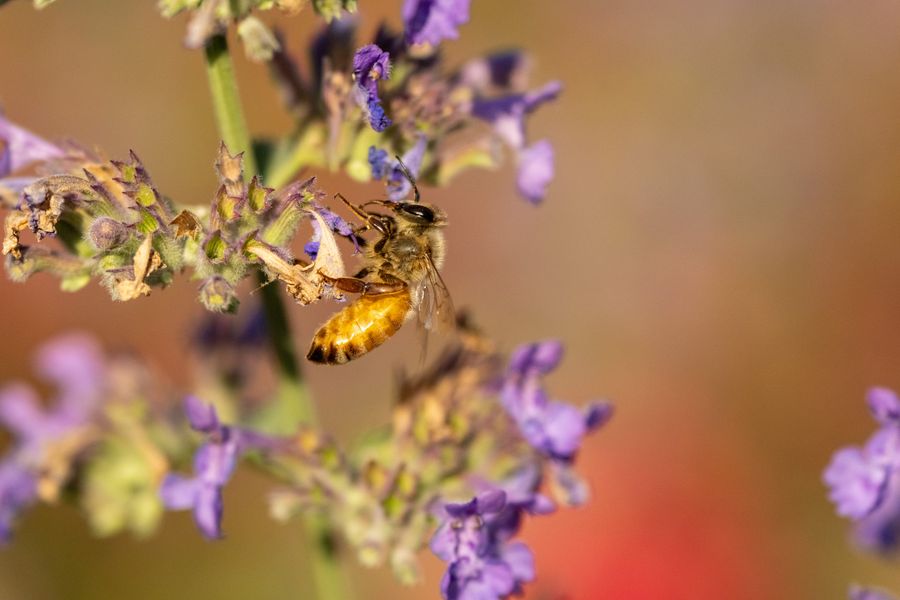
A honeybee on catmint in the June border, one of dozens working the same plant. Nepeta is one of the most reliably bee-covered plants in any garden that grows it, and a stand in flower is audible from the path.
The banded, golden-brown abdomen and slender build separate a honeybee from the stockier bumblebees on the same borders. Catmint flowers in long, loose whorls up the stem rather than one tight spike, which lets several bees work a single plant without getting in each other's way. The cats are after the leaves, not the flowers; the bees are the other way round.
Birds, insects, plants and other wildlife, mostly from Brooklyn, with some from further afield.
Every photograph comes with notes on what it is.
Selected
Favourite shots. Filter by subject, or .
Places
Everything, by where it was taken.
Species
Larger catalogue of photos organized by species of animal or plant.
Catalogue
Every photograph, newest first. Narrow it by period, place or species; the three work together.
Updates
Coming soon. Sign up at the bottom of the page for updates.