Named for the wrong thing
Birds that got their names from homesick colonists
The first Europeans in America named what they saw after the birds they missed, and a good many of the names stuck to birds that are not related at all.
Juvenile American Robin
Brooklyn Botanic Garden, 17 June 2026
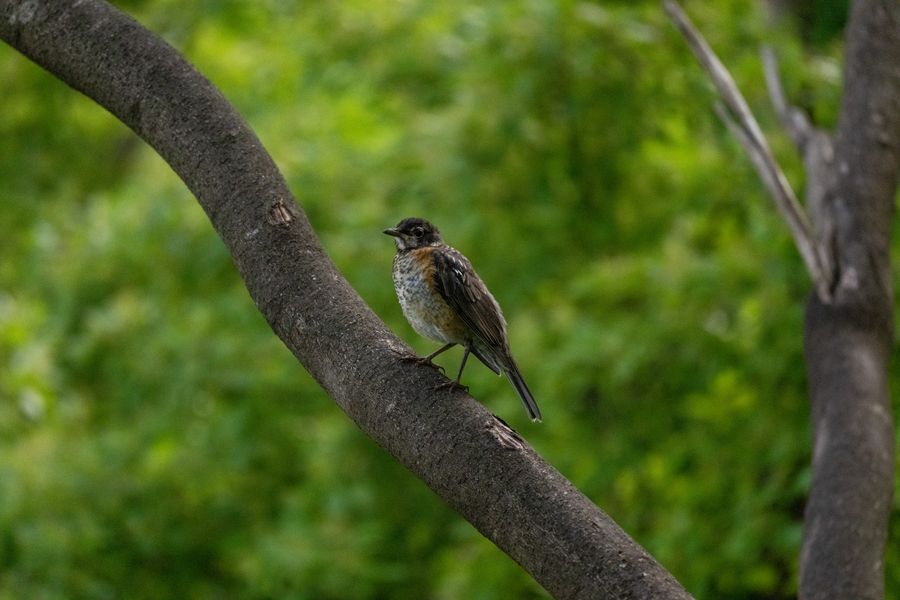
A fledgling robin not long out of the nest, in the Botanic Garden in mid-June. Robins nest everywhere in the city, two or three broods a summer, and June is full of young ones like this on lawns and paths, still being fed by a parent.
The heavy spotting across a still-pale breast, with rust only starting to show at the flanks, marks the age; the smooth orange breast and adult colour come in over the following weeks. The spotted juvenile plumage is the ancestral thrush pattern. American Robins are unusual among North American thrushes in losing it as adults, while a Wood Thrush keeps its spots for life.
Red-winged Blackbird, male
San Diego, 6 March 2026
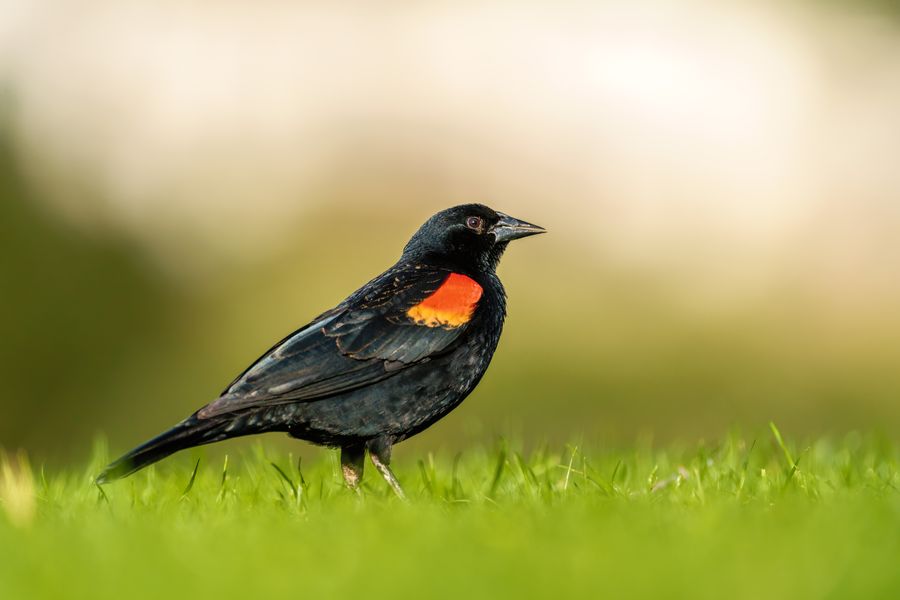
A male Red-winged Blackbird side-on, the red shoulder patch bordered by a thin band of yellow that is often the only part visible when the patch is held closed against the body. The epaulet is the whole argument: a male whose red is painted over loses his territory within days, and a male with a bigger patch holds a bigger one. Among the most abundant land birds in North America, though marsh-bound enough to be an occasional sight in a city.
Yellow Warbler, male
Prospect Park, 25 May 2026
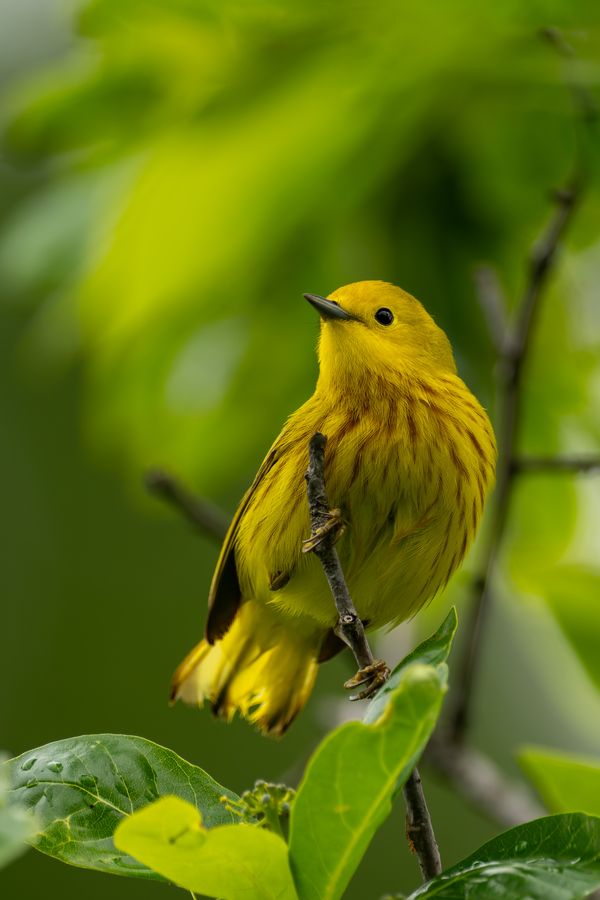
A male Yellow Warbler in Prospect Park in late May, back from Central America to breed in the willows and shrubs at the water's edge. It is the most widespread warbler in North America, from Alaska to Mexico, and one of the few that breeds in the park rather than passing through.
One of the few warblers that is genuinely, almost entirely yellow, including the wing and tail edges; the fine chestnut streaking on the breast marks a male. Yellow Warblers have a specific defence against Brown-headed Cowbirds, which lay eggs in other species' nests: on finding a cowbird egg, a Yellow Warbler will build a new nest floor over the whole clutch and start again, sometimes stacking several floors in a season.
Western Bluebird on a fence post
San Diego, 6 March 2026
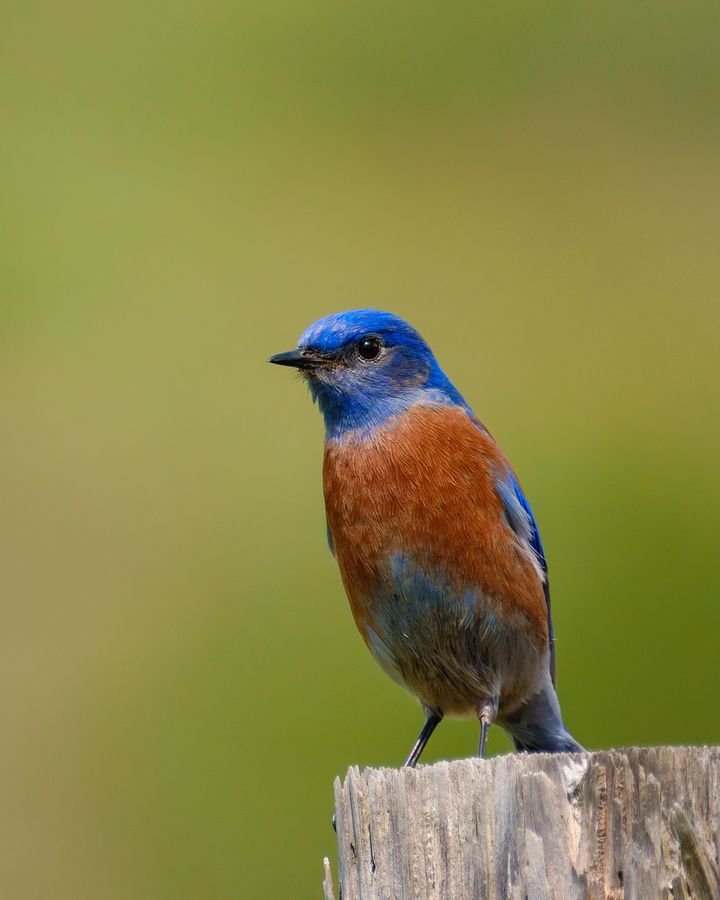
A Western Bluebird on a fence post, which is the classic hunting perch for the species: open ground below, a clear sightline, and enough height to drop onto an insect the moment it moves. This is the bluebird of the western rangelands and orchards, and a fence line is as good as a dead branch.
They are cavity nesters, dependent on old woodpecker holes or nest boxes, which makes them one of the species that benefited most from the nest-box campaigns that spread through Californian orchards and ranches through the twentieth century.
Wilson's Warbler, male
Green-Wood Cemetery, 16 May 2026
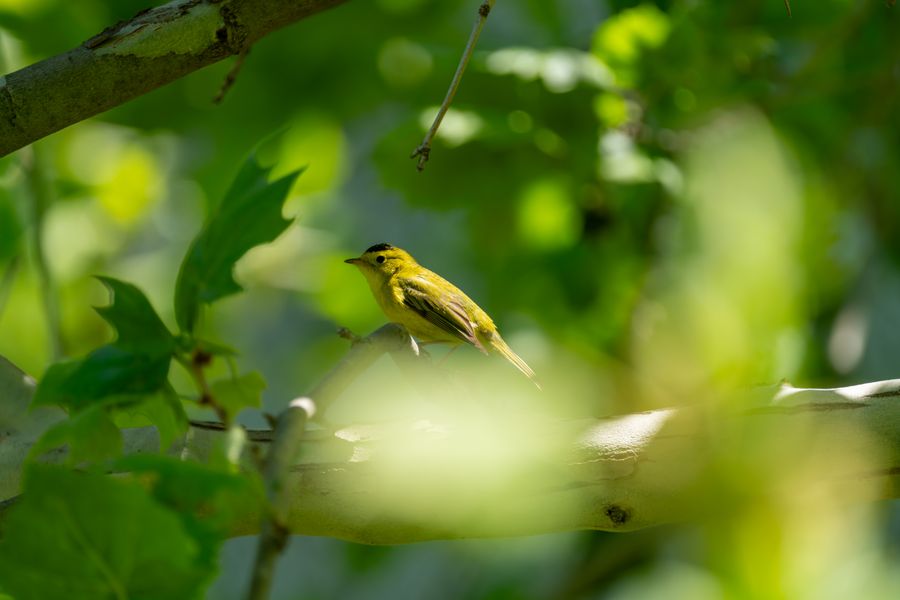
A male Wilson's Warbler in low, dense foliage at Green-Wood in mid-May, passing through on its way north. It breeds across the boreal forest and down the Pacific coast, winters in Central America, and is mostly a passage migrant here, working scrub close to the ground rather than the treetops many other warblers favour.
A small, plain, olive-yellow warbler with one clean field mark: the neat black cap, worn only by males, that names the species. Named for Alexander Wilson, the Scottish weaver who wrote the first American bird book, a generation before Audubon.
Birds, insects, plants and other wildlife, mostly from Brooklyn, with some from further afield.
Every photograph comes with notes on what it is.
Selected
Favourite shots. Filter by subject, or .
Places
Everything, by where it was taken.
Species
Larger catalogue of photos organized by species of animal or plant.
Catalogue
Every photograph, newest first. Narrow it by period, place or species; the three work together.
Updates
Coming soon. Sign up at the bottom of the page for updates.