Introduced New Yorkers
Six species that were never meant to be here
A surprising amount of the wildlife of New York arrived with people, on purpose or by accident, and did rather well.
Starling murmuration over the reserve
Dungeness, 20 December 2025
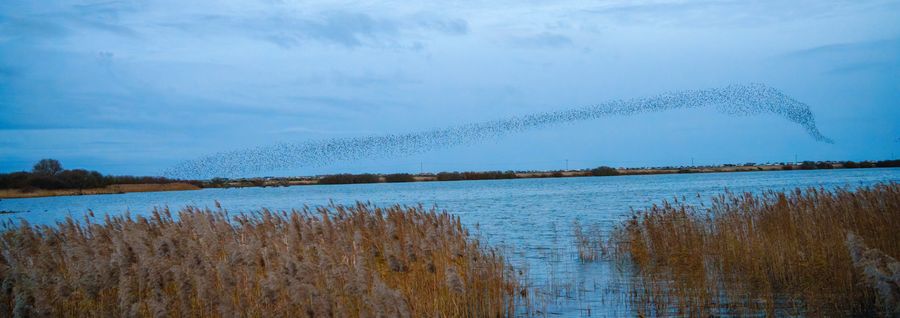
The whole starling flock pulled back to show the shape it is drawing against the evening sky at Dungeness, reeds and open water below. Dungeness is one of the better-known murmuration sites in the country, the starlings gathering over the reedbeds at dusk in winter before dropping in to roost for the night.
The display is thought to be partly defence - a Peregrine or a harrier working the roost cannot pick one bird out of a moving cloud - and partly a way of gathering the whole population of the marsh into one warm roost.
House Sparrow
Brooklyn Botanic Garden, 24 August 2025
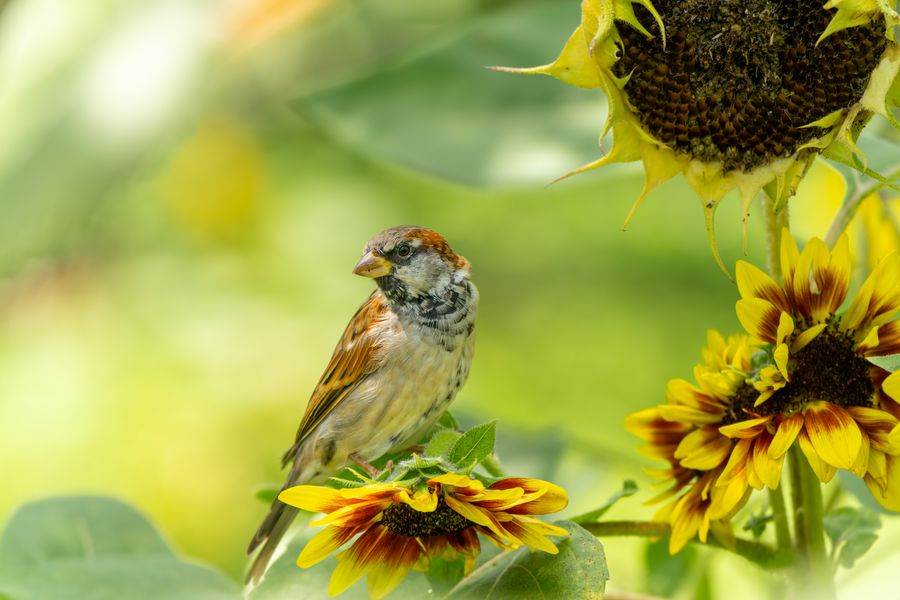
A House Sparrow on a sunflower head in the Botanic Garden in August, one of the seed sources that helped the species conquer a continent. House Sparrows live wherever people do, on every continent but Antarctica, and every one in North America descends from birds deliberately released in Brooklyn in 1851, in an attempt to control canker worms.
The population spread across the whole continent within a century. The bird is now declining across much of its range, London included, and nobody is quite sure why.
House Finch
Central Park, 26 October 2025
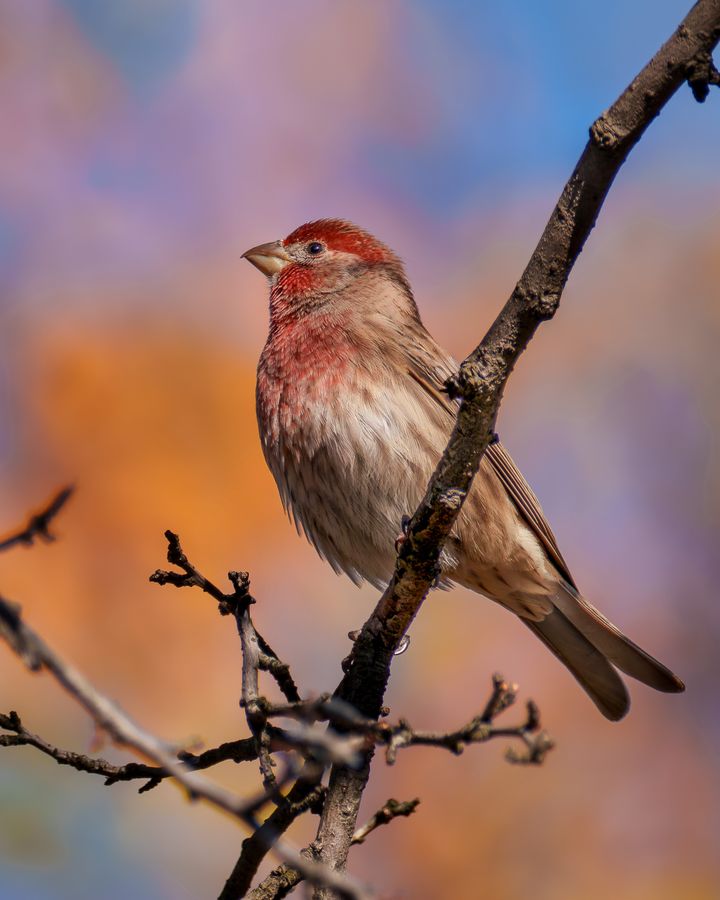
A male House Finch in raspberry-red in Central Park in October, a bird of the dry West that now lives in every town and suburb in the East as well. Every House Finch in the East descends from cage birds released on Long Island in 1940, when a dealer selling them illegally as "Hollywood finches" let them go ahead of a raid.
The intensity and even the hue of a House Finch's colour comes directly from carotenoid pigments in its diet, so redder males are often, quite literally, the better-fed ones. This one is on the raspberry side rather than the brighter orange-red some individuals show.
Monk Parakeet
Staten Island, 5 July 2026
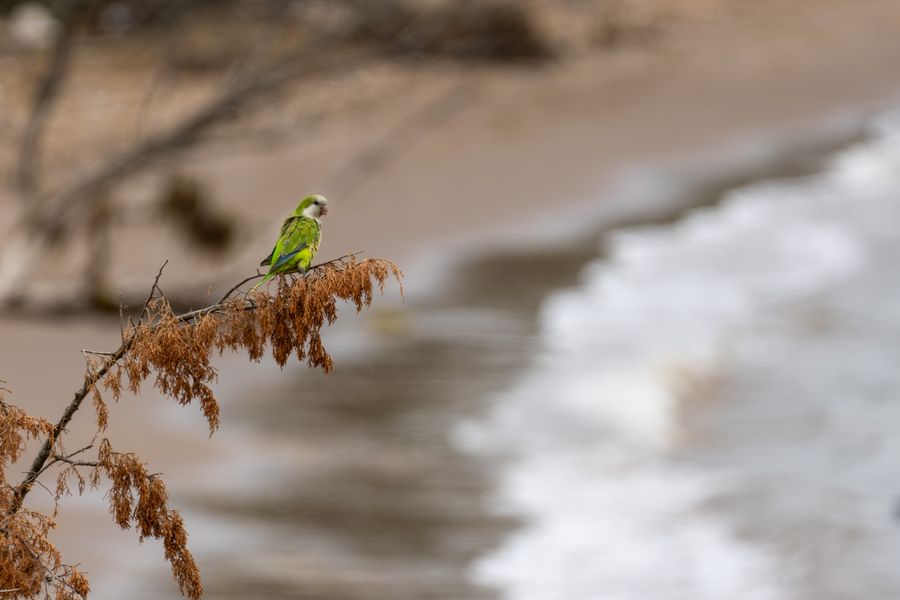
A Monk Parakeet on a dead branch on Staten Island, open water and a sandy shoreline behind it - a beach setting rather than the cemetery trees the city's colonies are usually associated with. Native to temperate South America, and established in feral colonies across parts of the United States, New York among them, from escaped cage birds in the 1960s and 70s.
Monk Parakeets are the only parrot that builds a stick nest rather than nesting in a cavity, and the nests are communal: one structure, added to year after year, can house dozens of pairs in separate chambers and get heavy enough to bring down the pole or tree it is built on. Brooklyn's best-known colony lives in the gates of Green-Wood Cemetery.
Spotted Lanternfly nymphs
Brooklyn Botanic Garden, 17 June 2026
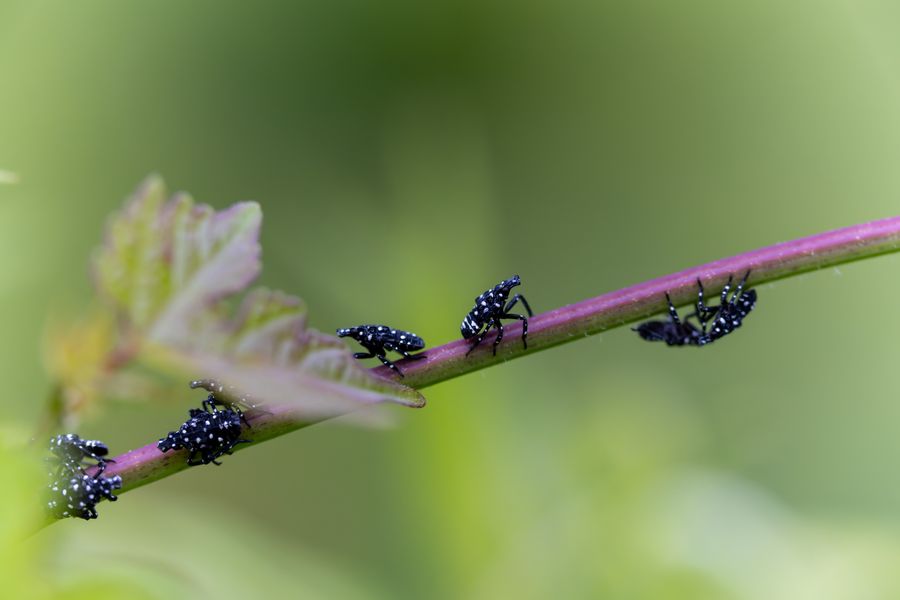
Spotted Lanternfly nymphs on a stem in the Botanic Garden in June. The species is an invasive planthopper from Asia, first found in Pennsylvania in 2014 and now well established around New York, where it feeds on tree of heaven, grapevines and a number of ornamentals.
Black with white spots is the second and third instar; by the fourth they gain the red patches that make the adult look different enough that it is easy not to recognise it as the same insect. The advice everywhere it turns up is still to kill it on sight.
Red-eared Slider
Prospect Park, 15 November 2025
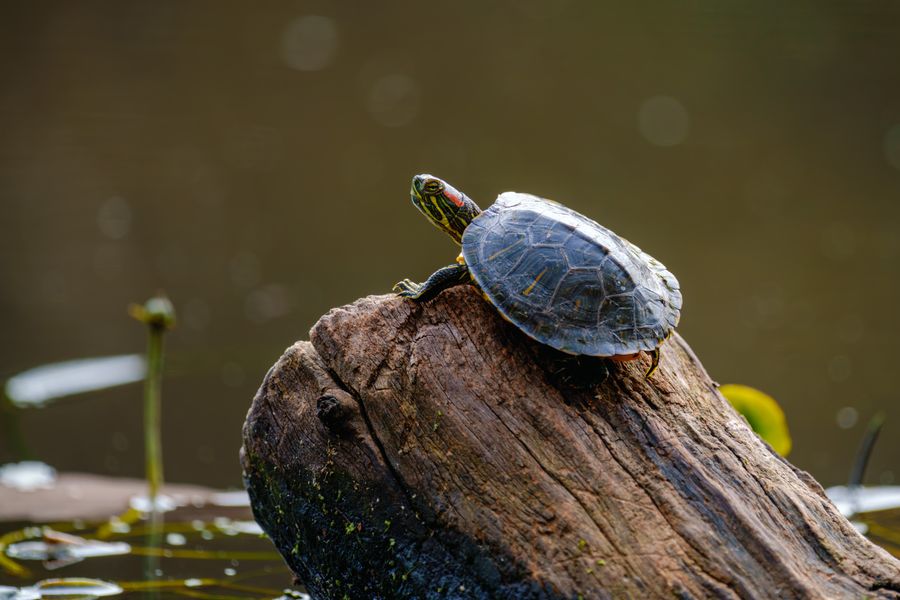
A Red-eared Slider hauled out on a log to bask in Prospect Park in November, in the last warm sun of the year. Native to the rivers of the central United States, and now the most common turtle in park ponds across much of the country, New York included, because it was so widely sold in the pet trade and so often released once outgrown.
The red stripe behind the eye gives the species its name. The pet trade has also put it on the official list of the hundred worst invasive species in the world, released and thriving on every continent but Antarctica.
Birds, insects, plants and other wildlife, mostly from Brooklyn, with some from further afield.
Every photograph comes with notes on what it is.
Selected
Favourite shots. Filter by subject, or .
Places
Everything, by where it was taken.
Species
Larger catalogue of photos organized by species of animal or plant.
Catalogue
Every photograph, newest first. Narrow it by period, place or species; the three work together.
Updates
Coming soon. Sign up at the bottom of the page for updates.