Ducks that come for the winter
What a frozen north sends south
When the lakes of Canada and the northern states freeze, the ducks that bred on them move to open water, and city lakes and coastal lagoons fill with birds that were a thousand miles north in July. Winter is the season for them.
Wood Duck, male, on a broken trunk
San Diego, 6 March 2026
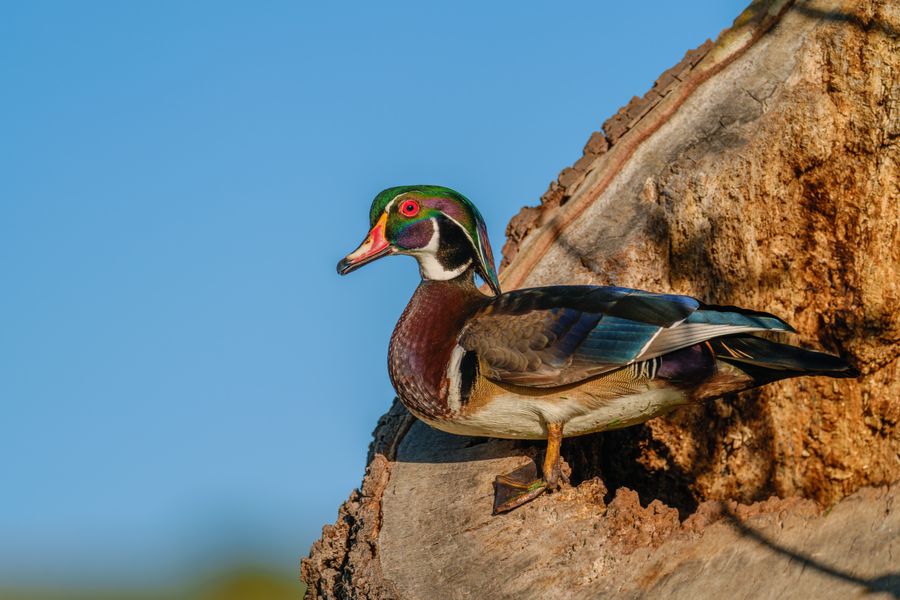
A drake Wood Duck resting on a broken trunk angled into the sun beside a San Diego pond in March, and he stayed long enough for the light and the reflection to be worked properly. Wood Ducks are birds of wooded water across the continent, and the western ones are resident all year.
They are the one North American duck that perches in trees as a matter of course - the claws are sharp enough to grip bark - and they nest in holes well above the ground, which is where the ducklings begin life with a jump.
Ring-necked Duck, male
San Diego, 6 March 2026
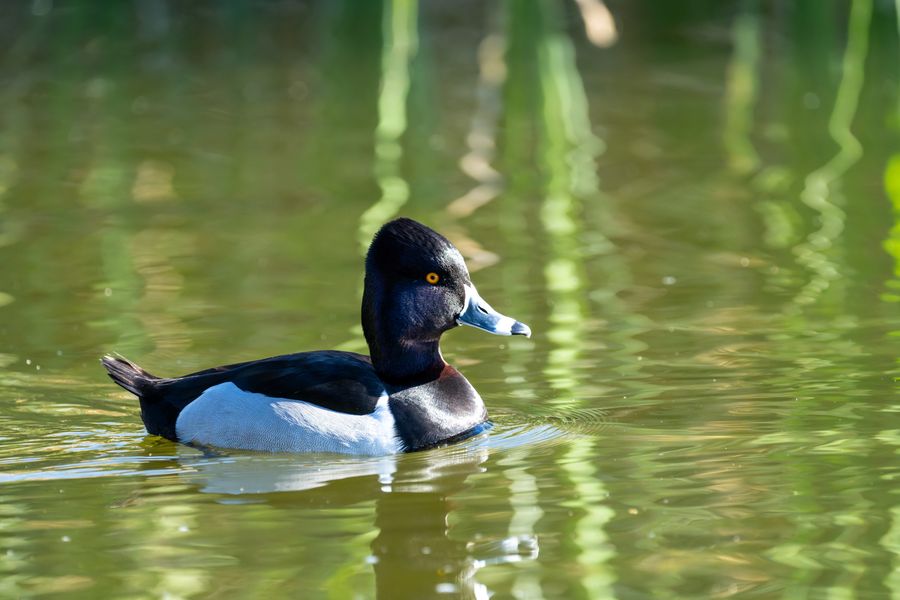
A drake Ring-necked Duck close up, wintering on a San Diego pond after a summer on the lakes of the boreal forest. It is a diving duck that prefers small, quiet water, and a park pond in California suits it well.
The pale grey bill markings show clearly enough to make sense of the species' alternative name in some older field guides, Ring-billed Duck, which was dropped mainly to avoid confusion with the Ring-billed Gull. The purple gloss on the head only shows at certain angles; in flat light the same feathers read as simply black.
American Wigeon, male
San Diego, 6 March 2026
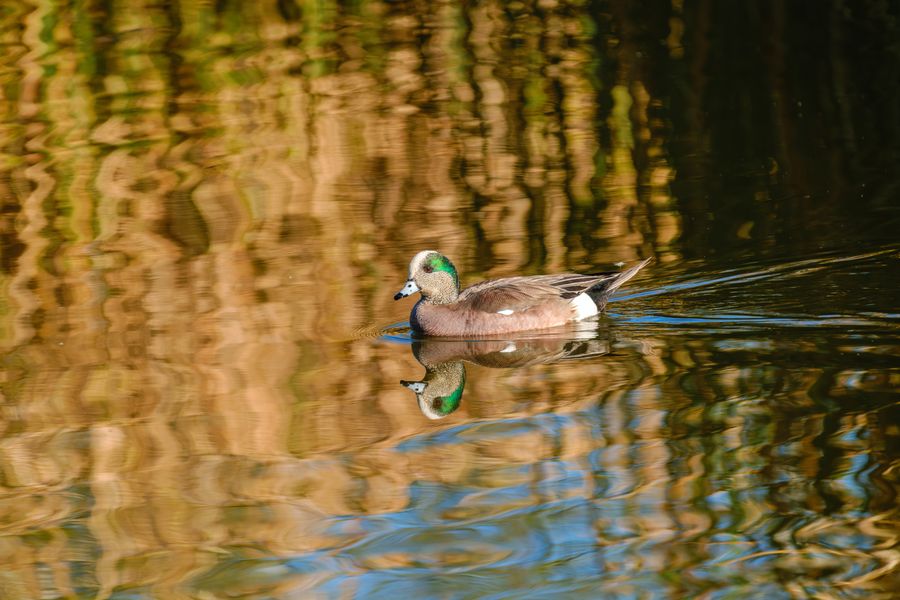
A drake American Wigeon on a San Diego pond in March, near the end of a winter spent on the ponds and flooded fields of the Southwest. Wigeon breed on the prairie potholes and the lakes of the Canadian north, and they graze more than most ducks, cropping grass on the bank as readily as weed from the water.
A white forehead and crown gave the species its old nickname of baldpate, and the iridescent green swath running back from the eye is the other quick mark on an otherwise softly patterned duck. They are also thieves: a wigeon will wait beside a diving coot and steal the weed it brings up rather than dive for its own.
Green-winged Teal
Central Park, 26 October 2025
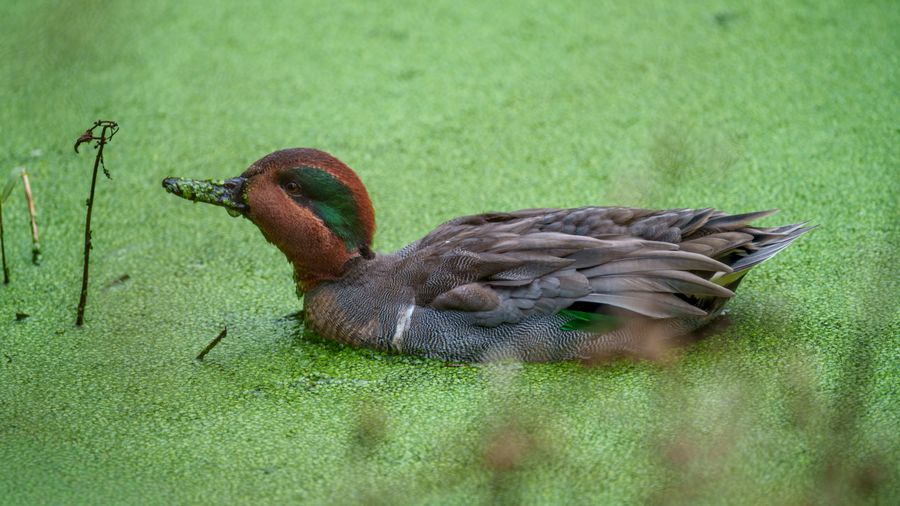
A drake Green-winged Teal on a Central Park pond in October, floating through a carpet of duckweed thick enough to have coated the tip of his own bill. Teal breed on the prairie potholes and the northern marshes and winter on ponds and marshes across the southern half of the continent; a park pond in Manhattan will do.
Chestnut head split by an iridescent green eye patch. North America's smallest dabbling duck, and one of the fastest fliers in the group despite the size - a flock twists and turns like shorebirds rather than flying in a line like most ducks.
Gadwall, male
San Diego, 6 March 2026
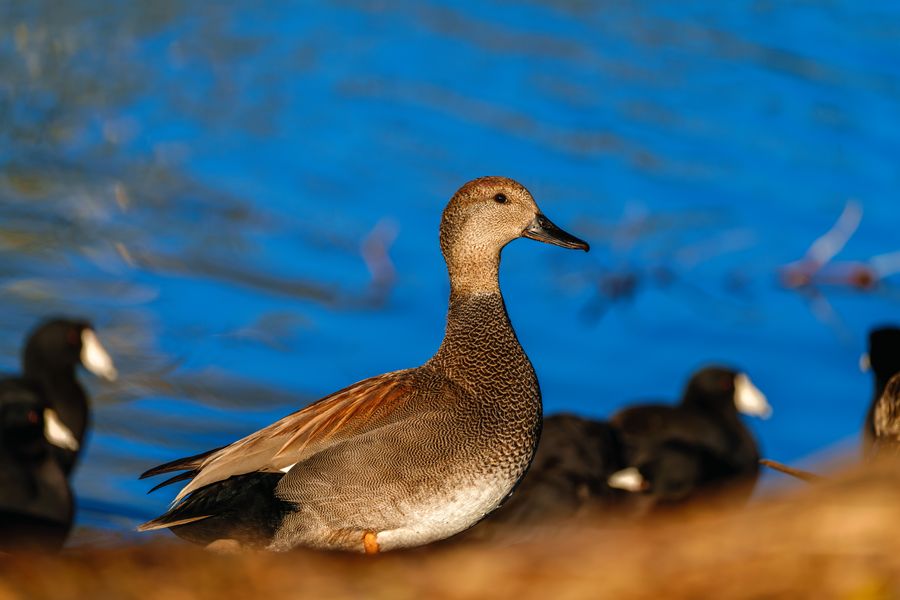
A drake Gadwall on a Californian pond in winter. Gadwall are dabbling ducks of the prairie potholes and the marshes of the West, feeding at the surface on waterweed, and they winter across the southern states and down into Mexico.
The Gadwall is the duck built entirely out of understatement: no bold colour block anywhere on the male, just a fine vermiculated grey-brown all over, a black stern, and a thin dark bill. The one flash of pattern, a chestnut-and-white patch on the inner wing, only shows in flight or at rest with the wing lifted, so most sightings are of a duck that reads as plain until you look closely enough to see how precisely the grey is patterned.
Cinnamon Teal, pair
San Diego, 6 March 2026
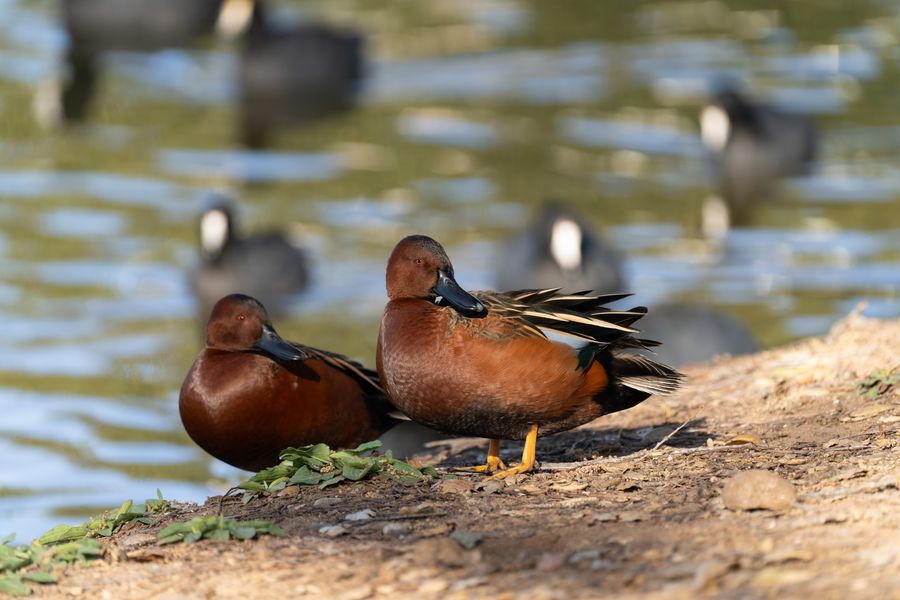
A pair of Cinnamon Teal out of the water and foraging along the bank, a scatter of American Coots behind them. Unlike most dabbling ducks, Cinnamon Teal in the West barely migrate, so a pair like this may hold the same stretch of pond for the whole season. The male's colour is the rarest in North American ducks - nothing else on the continent is this red - and it fades to the female's brown by late summer, when he moults.
Western Grebe
San Diego, 6 March 2026
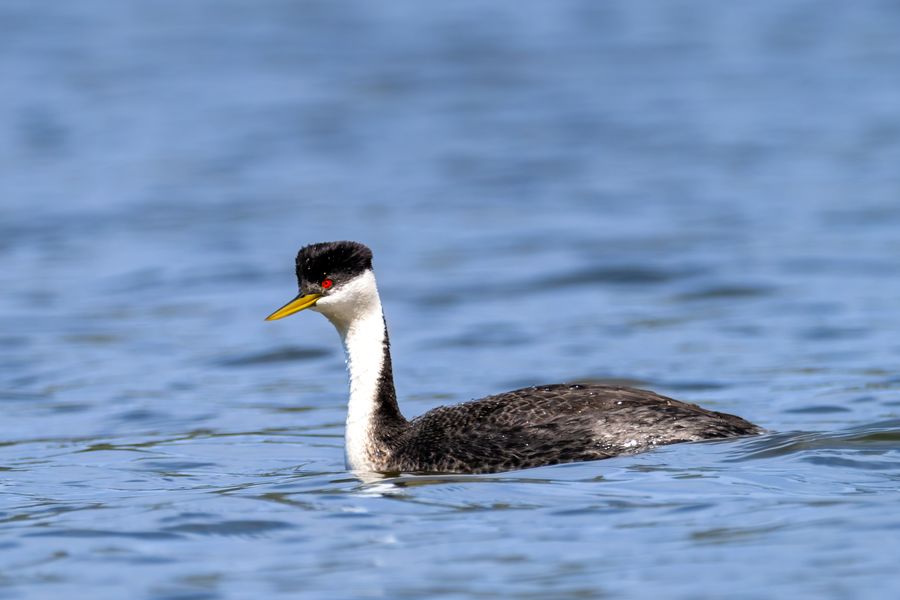
A Western Grebe on a San Diego lake in March, on the same water as its near twin the Clark's. Both breed in colonies on the big marshy lakes of the interior West and winter on the Pacific coast, and the two were treated as one species until 1985.
The black cap reaching down to enclose the eye is the mark that separates it from the Clark's, along with a duller, greener bill. They still occasionally pair with each other, which is part of why they were lumped so long. Grebes eat their own feathers, deliberately, and feed them to their chicks - a lining for the stomach that traps fish bones until they can be dealt with.
Brant
Governors Island, 19 January 2026
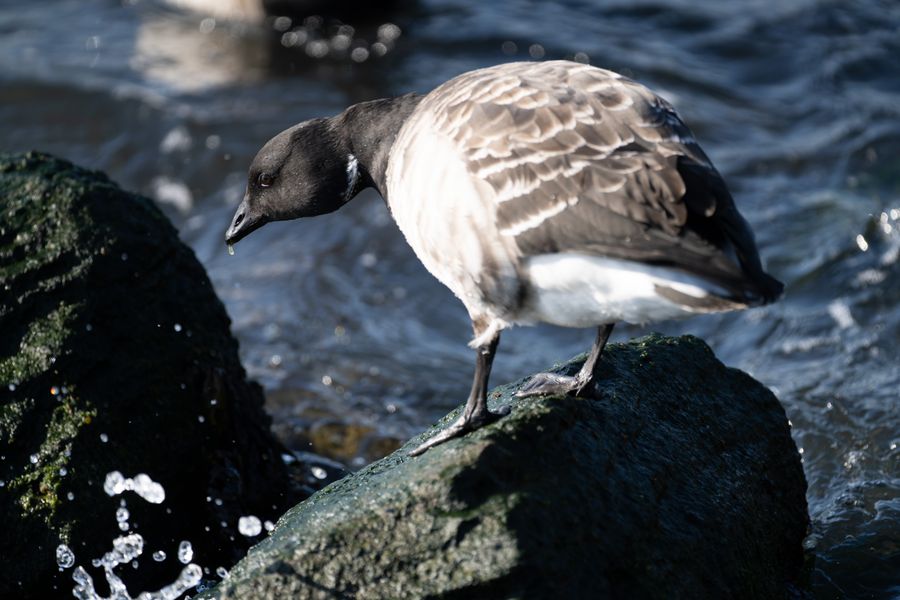
A Brant working the tideline on weed-covered rock on Governors Island in January. Brant breed on the Arctic tundra of Canada and winter along the whole New York City waterfront in numbers, grazing on eelgrass and algae in a way few other geese specialise in.
A small, dark goose with a neat white collar mark. The same bird on the Norfolk coast is the Brent Goose, and the eelgrass die-off of the 1930s nearly finished the Atlantic population before they learned to eat something else.
Birds, insects, plants and other wildlife, mostly from Brooklyn, with some from further afield.
Selected
Favourite shots. Filter by subject, or .
Places
Everything, by where it was taken.
Species
Larger catalogue of photos organized by species of animal or plant, .
Catalogue
Every photograph, newest first. Narrow it by period, place or species; the three work together.
Updates
Coming soon. Sign up at the bottom of the page for updates.