Blue without any blue
Eight animals whose colour is a trick of the light
There is no blue pigment in a bird feather, and almost none anywhere in the animal world. The blue you see here is made by structure, not by paint: tiny arrangements in a feather or a scale that scatter blue light and let the rest through. Grind a Blue Jay feather to dust and the blue is gone.
Blue Jay
Staten Island, 5 July 2026
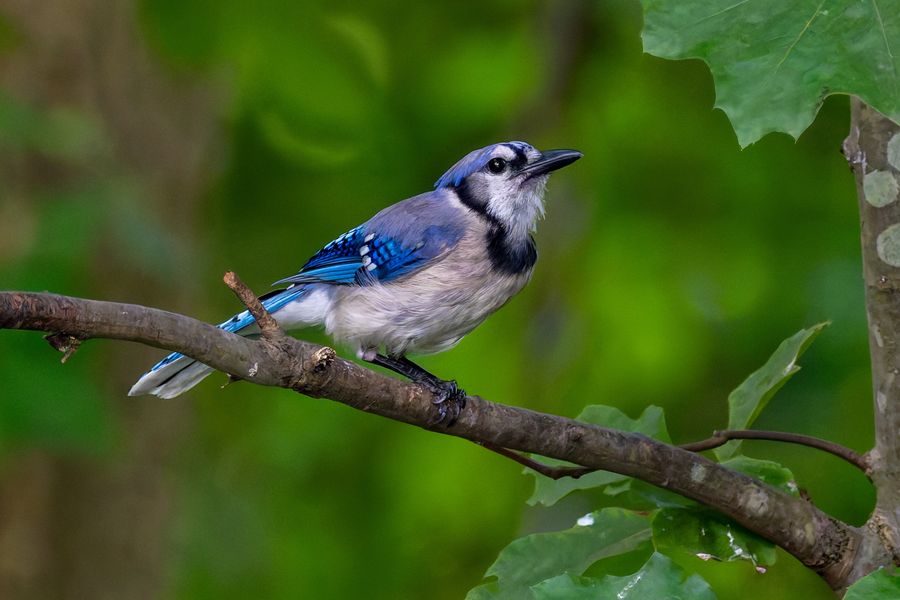
A Blue Jay on Staten Island in July, a bird of the eastern woods and every suburb in them, and one of the loudest things in a summer wood.
The blue is structural rather than pigmented; there is no blue pigment in a jay's feathers at all, and a crushed feather looks brown. Blue Jays are also accomplished mimics of Red-shouldered Hawk calls, a trick thought to help clear other birds off a feeder or a berry patch.
Indigo Bunting, male
Prospect Park, 23 May 2026
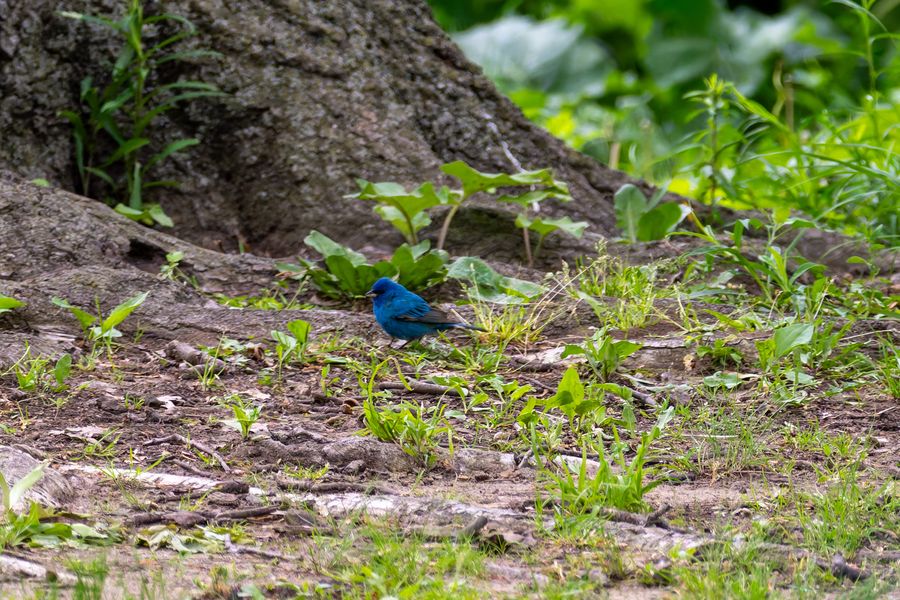
A male Indigo Bunting in Prospect Park in late May, back from Central America to breed at the edges of woods and old fields across the East. In the park it turns up for a few days on passage and occasionally stays.
None of that blue is pigment. An Indigo Bunting's feathers contain no blue pigment at all - the colour comes from the microscopic structure of the feather scattering light, the same effect behind a blue sky, over a base of black melanin. They also migrate at night, and are one of the few songbirds known to navigate by the stars, learning the night sky's rotation around Polaris as fledglings before ever making the journey.
Black-throated Blue Warbler, head-on
Prospect Park, 27 September 2025
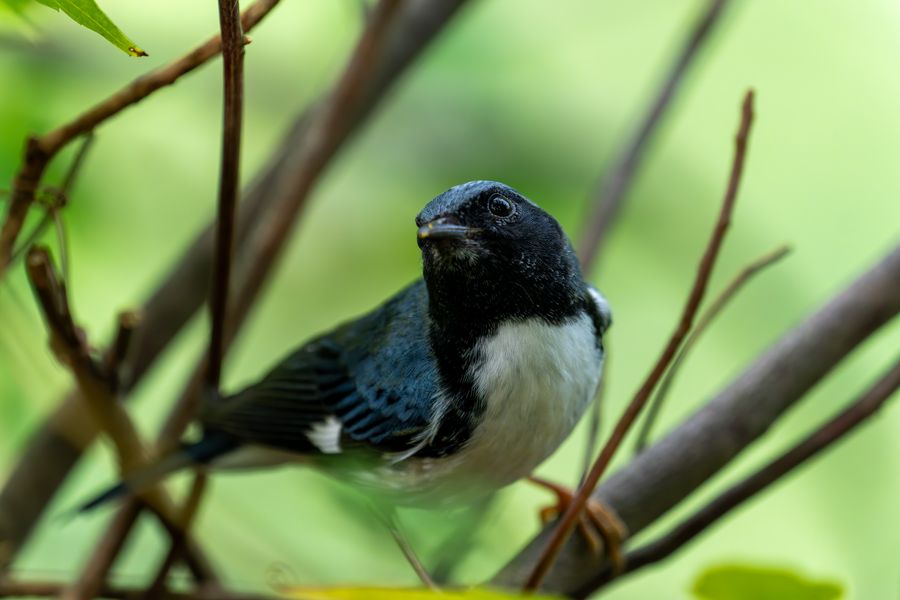
A male Black-throated Blue Warbler looking straight down the lens in Prospect Park at the end of September, the black face mask running unbroken into the throat. A bird passing through on its way south, breeding grounds in the mixed forests of the Northeast and Appalachians behind it, the Caribbean still ahead.
It will spend the winter in the same patch of Jamaican or Cuban forest it used last year, and defend it against other warblers.
Tree Swallow
Arverne Preserve, 20 June 2026
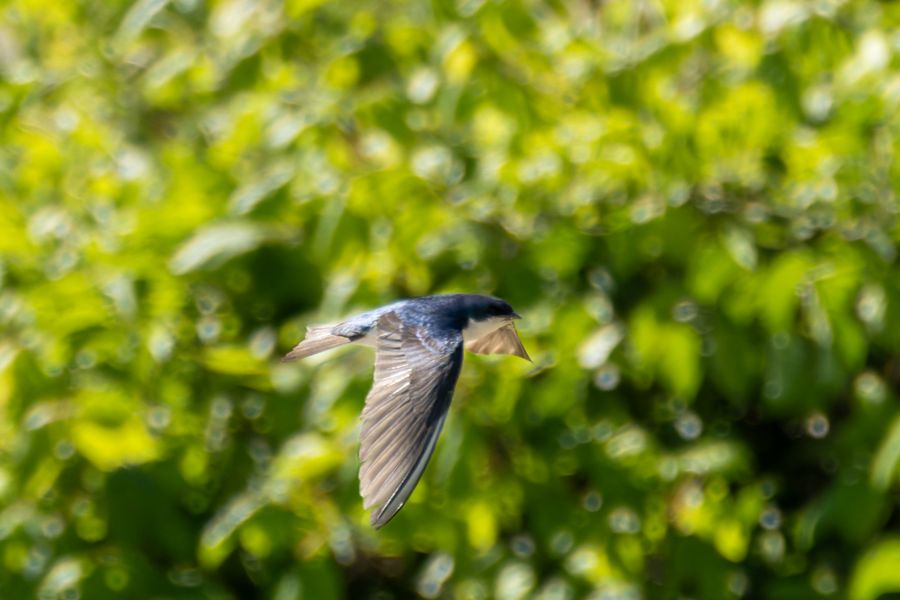
A Tree Swallow at Arverne in June, where the preserve's open marsh and standing snags hold a good number through the summer. Tree Swallows breed across the northern half of the continent and nest in cavities, readily taking to boxes over open water.
Iridescent blue-green above and clean white below, with none of the rusty throat a Barn Swallow shows - the cleanest-cut of the swallows that breed around the city. They are the swallows that can winter on bayberries when the insects fail, which is why they are the first back in spring.
Western Bluebird on a fence post
San Diego, 6 March 2026
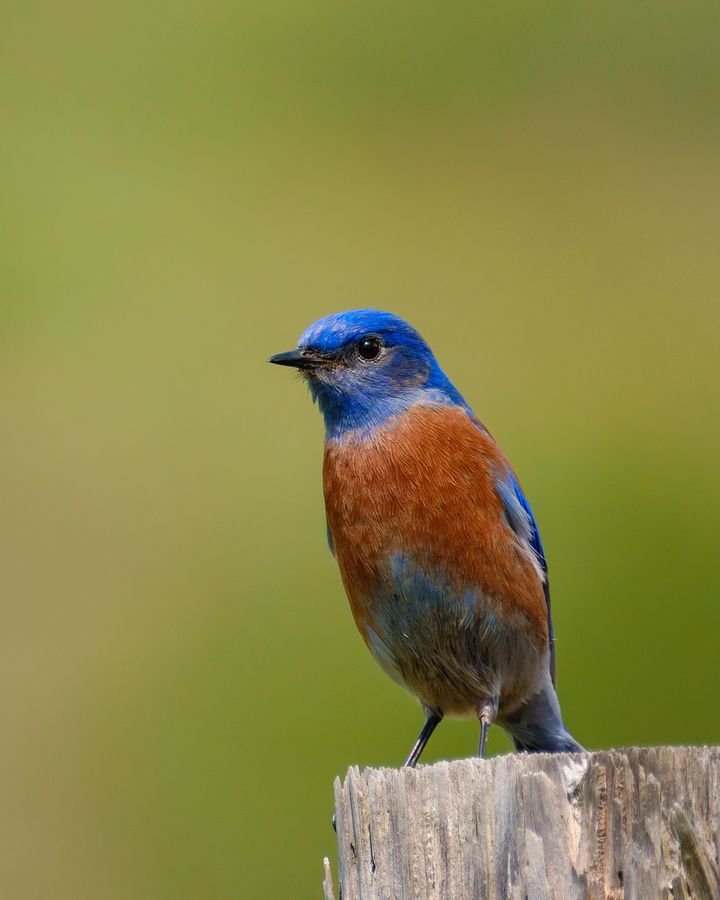
A Western Bluebird on a fence post, which is the classic hunting perch for the species: open ground below, a clear sightline, and enough height to drop onto an insect the moment it moves. This is the bluebird of the western rangelands and orchards, and a fence line is as good as a dead branch.
They are cavity nesters, dependent on old woodpecker holes or nest boxes, which makes them one of the species that benefited most from the nest-box campaigns that spread through Californian orchards and ranches through the twentieth century.
Blue Morpho, underside
Carlsbad, 7 March 2026
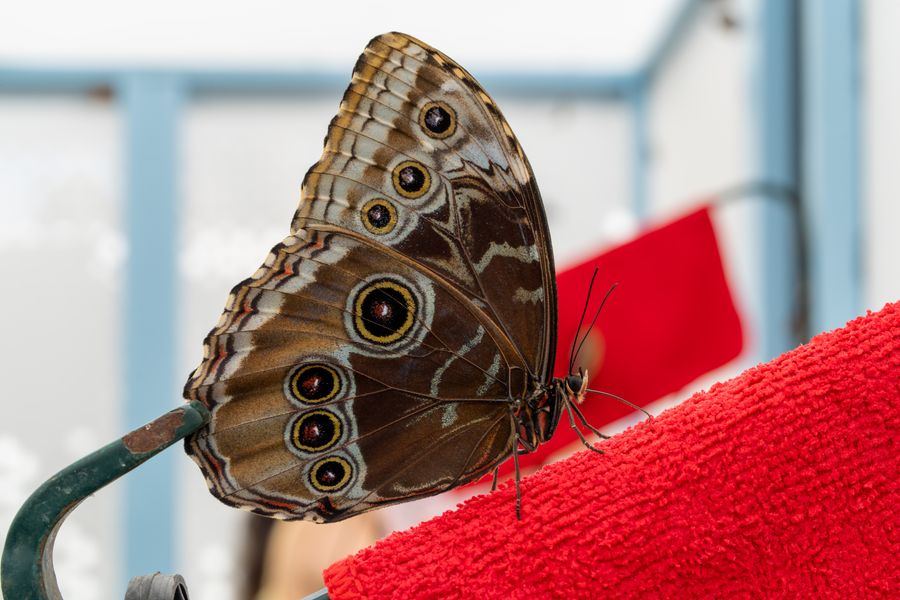
A Blue Morpho with the wings closed, in the butterfly house at Carlsbad. In the rainforests of Central and South America this is how it rests, on a trunk or a leaf in the understory, and how it stays alive.
The famous electric blue is entirely on the upper surface, gone the instant the wings close. What is left is this: a dead-leaf brown scattered with owl-like eyespots, each one a small deception aimed at a bird's instinct to avoid anything that looks like it is already looking back.
Bluet
Brooklyn Botanic Garden, 13 August 2026
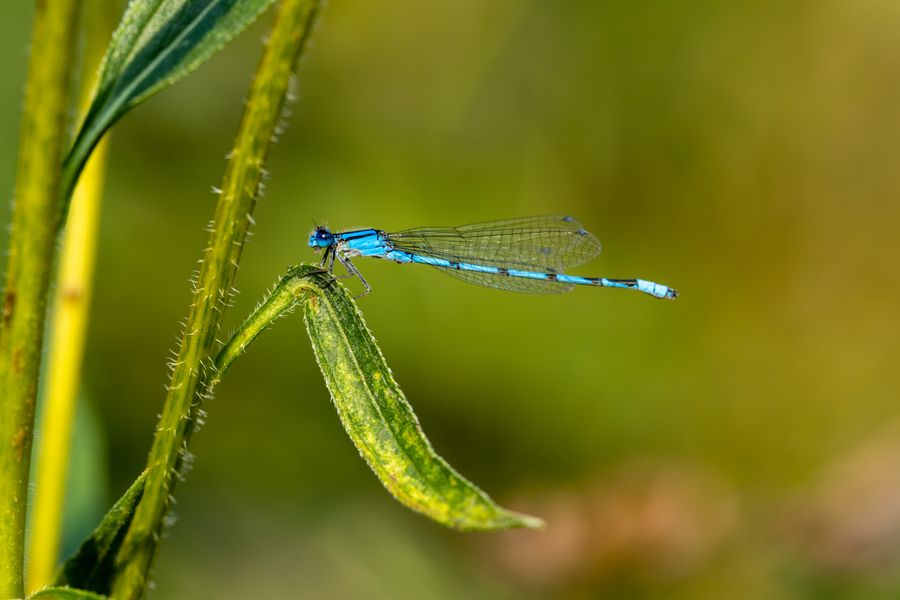
A bluet in the August border at the Botanic Garden, one of the pond damselflies that breed in the garden's water and hunt the borders around it. The bluets are the largest damselfly genus in North America and among the hardest to separate.
Several species share this exact blue-and-black pattern, and a confident call usually needs a clear view of the tip of the abdomen, which isn't on offer here. Damselflies fold their wings along the body at rest, which dragonflies never do, and the eyes sit wide apart on a head like a hammer; a dragonfly's meet in the middle.
Blue Dasher, female
Brooklyn Botanic Garden, 13 August 2026
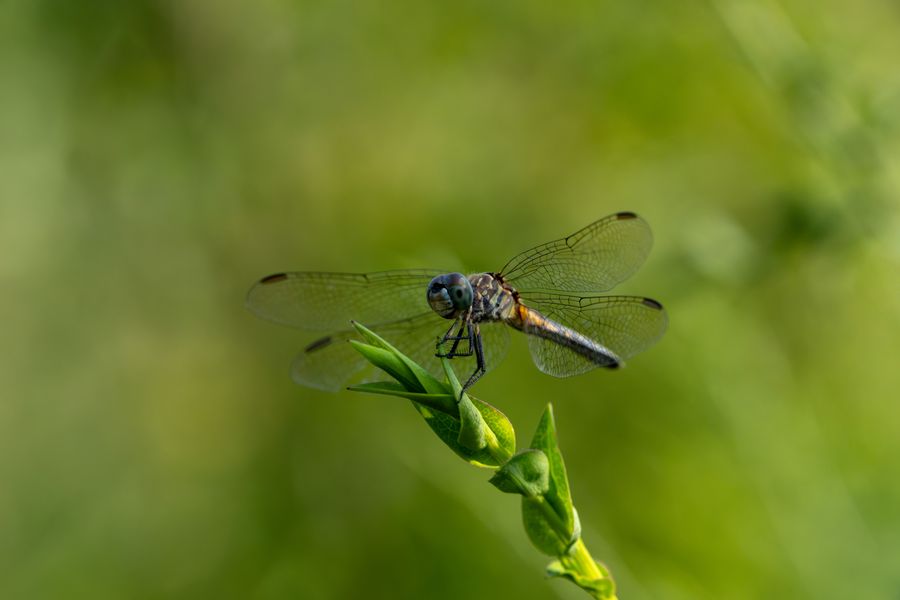
A female or immature Blue Dasher at the very tip of a leaf bud in the August border, wings held slightly forward. Blue Dashers are the commonest pond dragonfly across most of the United States, and the Botanic Garden's ponds breed them by the hundred; this one is well back in the planting, which the species does as readily as it sits over water.
Green eyes and a plain tawny-brown body mark a female or a young male. Only mature males take on the powder-blue abdomen that gives the species its name.
Birds, insects, plants and other wildlife, mostly from Brooklyn, with some from further afield.
Selected
Favourite shots. Filter by subject, or .
Places
Everything, by where it was taken.
Species
Larger catalogue of photos organized by species of animal or plant, .
Catalogue
Every photograph, newest first. Narrow it by period, place or species; the three work together.
Updates
Coming soon. Sign up at the bottom of the page for updates.