Birds that came back
Seven species that were nearly lost, and were not
Most of the birds in this set were in serious trouble within living memory, from plume hunting, from pesticides, from having nowhere left to nest. Each one is common enough now that it is easy to forget.
Osprey over Prospect Park
Prospect Park, 30 May 2026
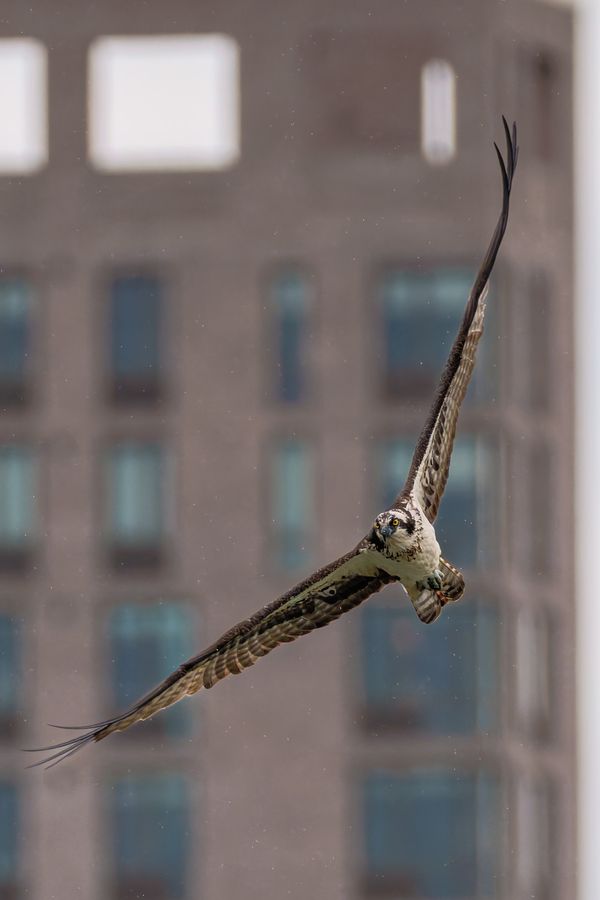
An Osprey banking hard against an apartment block on the edge of Prospect Park, nowhere near open water and simply passing overhead rather than hunting the neighbourhood. Ospreys eat almost nothing but fish, and the park's lake is too small and shallow to be much of a draw; the harbour is where this bird nests.
The bent, angular wings and dark wrist patches give the silhouette away at a distance, gull-like in a way a Red-tailed Hawk's never is. The feet are the real specialisation: a reversible outer toe lets an osprey grip a fish with two talons forward and two back, and spiny pads on the soles keep a wet, thrashing catch from sliding free.
Brown Pelican in the evening light
San Diego, 6 March 2026
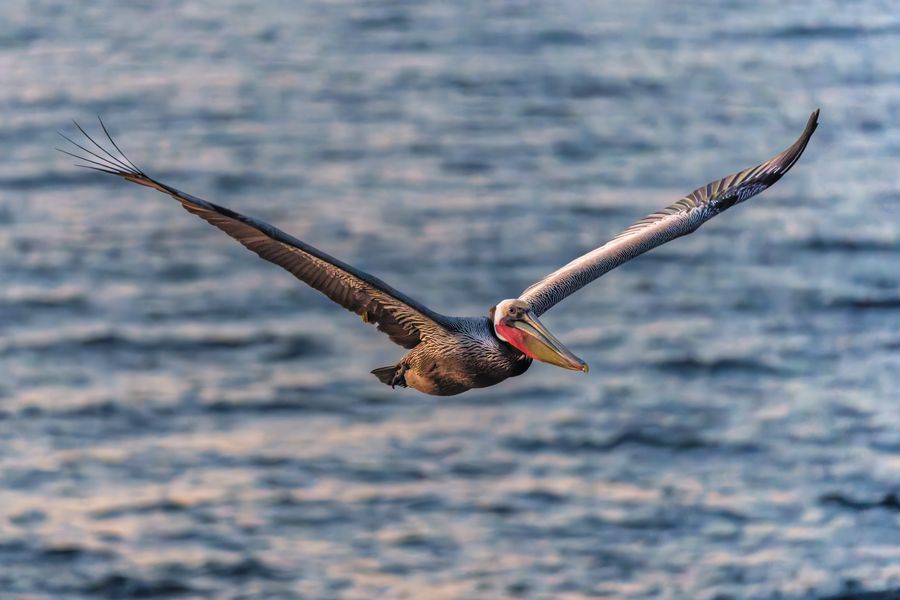
A Brown Pelican in the evening light at La Jolla, in full breeding plumage: red gular pouch, dark belly, the wine-coloured stripe down the back of the neck. The low sun turns the underside gold rather than the usual flat grey-white.
The plumage is at its richest for a few weeks around nesting; by midsummer the pouch fades and the neck goes back to white. The pouch itself holds three gallons, more than the stomach, and the bird drains it before swallowing the fish.
Great Egret in flight
Staten Island, 5 July 2026
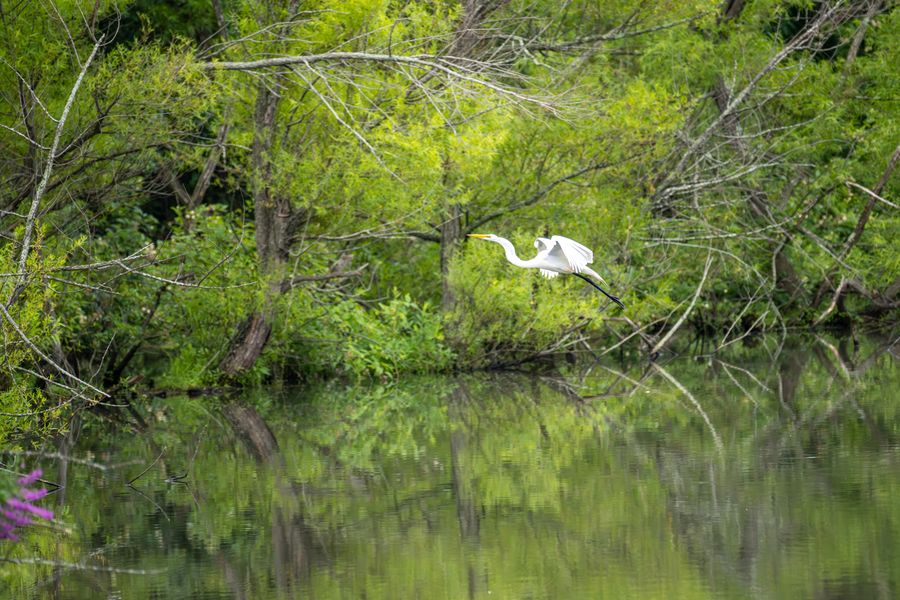
A Great Egret over a pond on Staten Island in July, one of the harbour's breeding birds on its way between the roost islands and a feeding pond. Great Egrets nest in colonies on the small islands of New York harbour and fish every park pond in the city.
The yellow bill and black legs separate it from the smaller Snowy Egret, which reverses both colours. Egrets were hunted almost to disappearance around 1900 for their breeding plumes, and the outrage helped found the National Audubon Society - worth remembering looking at a bird now common enough to be unremarkable over a pond like this.
Wood Duck, male, on a broken trunk
San Diego, 6 March 2026
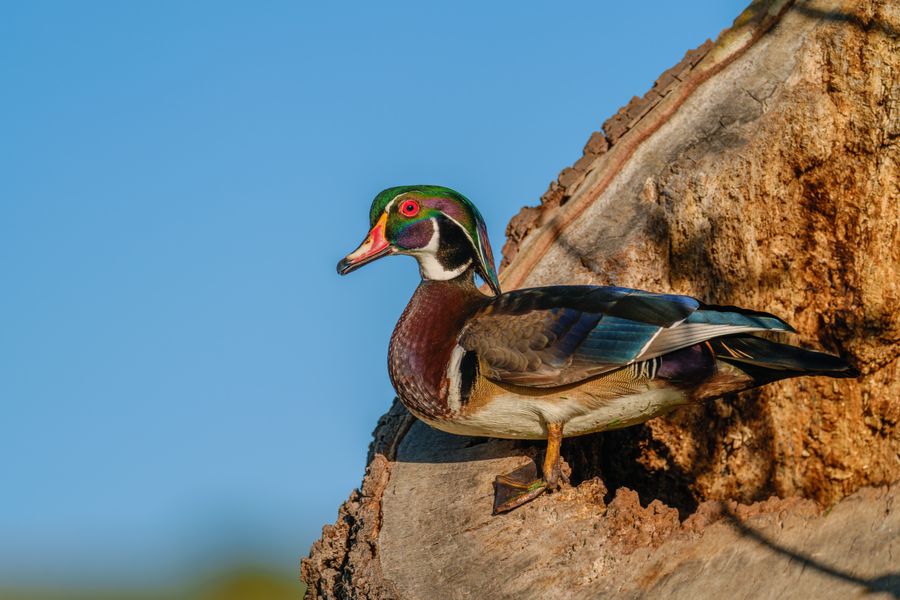
A drake Wood Duck resting on a broken trunk angled into the sun beside a San Diego pond in March, and he stayed long enough for the light and the reflection to be worked properly. Wood Ducks are birds of wooded water across the continent, and the western ones are resident all year.
They are the one North American duck that perches in trees as a matter of course - the claws are sharp enough to grip bark - and they nest in holes well above the ground, which is where the ducklings begin life with a jump.
American Oystercatcher
Arverne Preserve, 20 June 2026
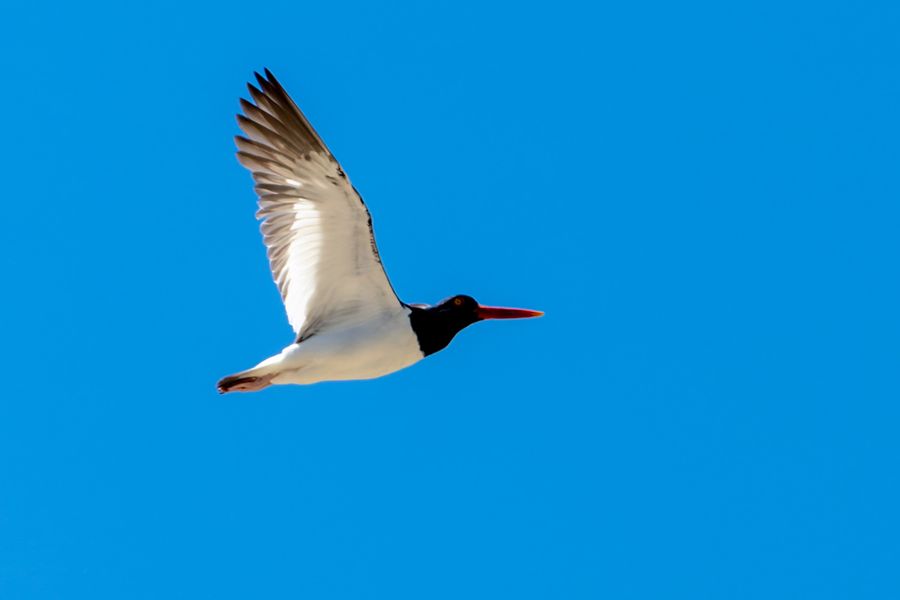
An American Oystercatcher on the beach at Arverne, a bird of sandy coasts from New England to Argentina that has expanded back onto New York City beaches over recent decades and now breeds on quiet stretches of Rockaway shoreline like this one.
The improbably long red-orange bill is a chisel, not a probe, built for prying open bivalves and hammering through the shells of oysters, clams and mussels rather than picking through mud like most shorebirds. Each bird learns one technique from its parents, stabbing or hammering, and keeps it for life.
Piping Plover chick, foraging
Arverne Preserve, 20 June 2026
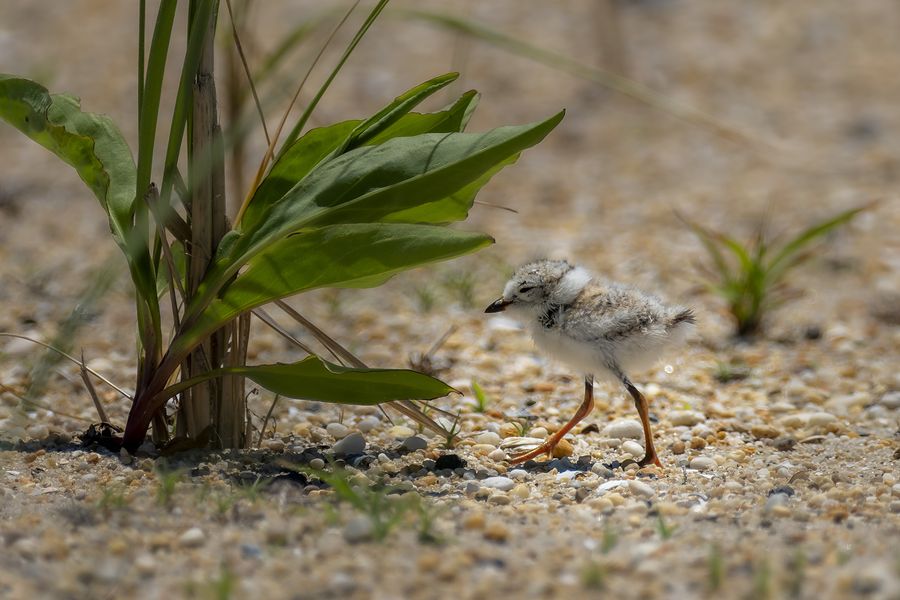
A Piping Plover chick pecking along the tideline debris at the base of the dune plants at Arverne in June. Piping Plovers nest on the open Atlantic beaches from Newfoundland to the Carolinas, and the Rockaway beaches are among the few in the city where they still do.
A chick this age is already finding its own food, small invertebrates picked out of the wrack and wet sand; the parents never feed it, only guard it. The whole Atlantic population is a few thousand pairs, and a chick has roughly one chance in four of reaching the age to fly, which is why the beach here is roped off for the summer.
Purple Martin at the nest box
Staten Island, 5 July 2026
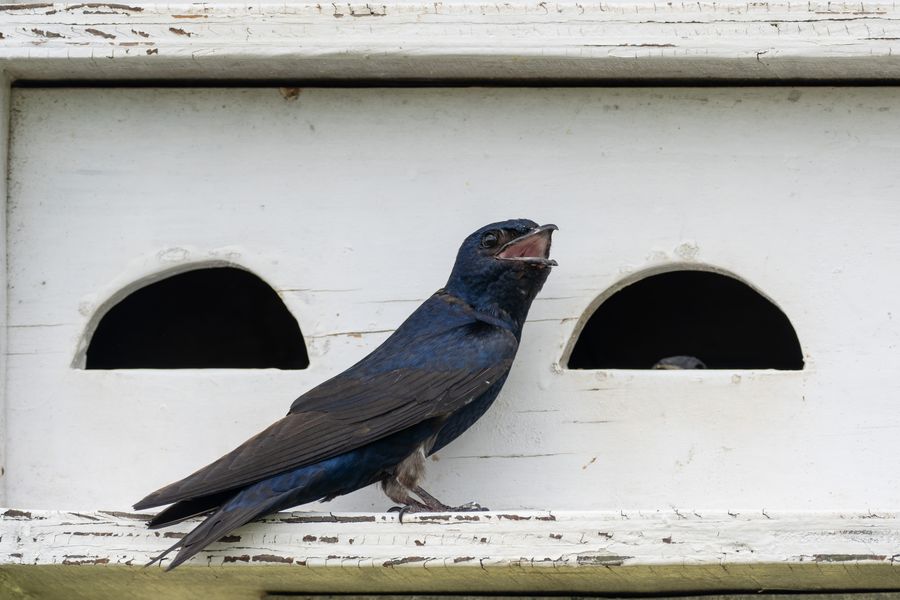
A Purple Martin calling from the threshold of a proper martin house on Staten Island, crescent-shaped entrance holes and all, with a neighbour visible in the next compartment. Martins are colonial nesters of open country near water, and in the East they live almost entirely in houses like this one.
They are famously site-faithful: the same colony, and often the same individual birds, return to a house year after year, which is why active martin housing tends to accumulate a following of dedicated landlords who track return dates each spring. The whole eastern population winters in the Amazon basin.
Birds, insects, plants and other wildlife, mostly from Brooklyn, with some from further afield.
Selected
Favourite shots. Filter by subject, or .
Places
Everything, by where it was taken.
Species
Larger catalogue of photos organized by species of animal or plant, .
Catalogue
Every photograph, newest first. Narrow it by period, place or species; the three work together.
Updates
Coming soon. Sign up at the bottom of the page for updates.